



Key Summary
Science activities for infants nurture early curiosity, stimulate brain development, and help babies understand cause and effect through play. These activities transform everyday moments into learning opportunities that build lifelong problem-solving and observation skills.
Infants are too young for structured play, and many parents are unsure of how to support their learning. Activities can seem monotonous, making parents question whether their infants are learning important skills. Babies may lose out on early exploration, which lays the groundwork for later curiosity and problem-solving. “Am I doing enough to stimulate my baby’s mind?” is a concern for parents. Infant science activities hold the key to the solution. These enjoyable, sensory-rich activities foster early reasoning, curiosity, and self-assurance using commonplace materials.
This guide will discuss the importance of simple science play in early childhood development and how it aids in brain development.
Table of Contents
Why Science-Related Activities Are Important
Babies touch, drop, shake, and observe everything because they are inherently scientific. sparked by simple activities like shaking a rattle or watching ice melt.
Advantages consist of:
- increases one’s capacity for observation and focus
- enhances sensory and motor abilities
- promotes understanding of cause and effect
- encourages early dialogue through cooperative play.
According to NAEYC, early science experiences help babies link actions to results, setting the stage for stronger cognitive development
What Infants Learn Through Exploration
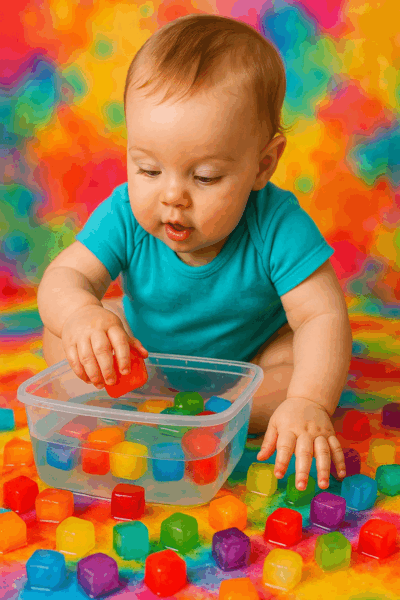
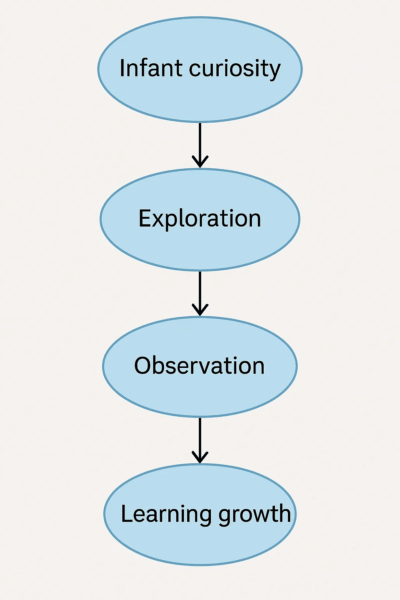
Science play builds more than curiosity; it shapes how infants think and feel. When a baby drops a ball or feels a cold surface, they’re conducting early experiments.
Key skills developed:
- Cognitive: Understanding patterns and outcomes
- Language: Learning new words (“cold,” “wet,” “float”)
- Motor: Reaching, grasping, and pouring
- Social: Engaging with caregivers
Harvard’s Center on the Developing Child notes that such hands-on play strengthens brain connections essential for attention and memory. These same foundations support later cognitive activities for infants.
Setting Up the Learning Environment
Before you begin, focus on creating a safe, inviting, and stimulating environment.
Tips to prepare:
- Use clean, non-toxic materials
- Keep small objects away from mouths
- Choose simple setups using household items
- Let your baby explore freely, observe, don’t direct
- Repeat activities; repetition builds understanding
Action for Children recommends using open-ended play to encourage curiosity and discovery. This approach benefits all infants, including those with sensory sensitivities or autism level 2.
Best Science Activities for Infants
Here are fun and easy science-based activities perfect for home or daycare environments.
Activity Examples
- Melting Ice / Temperature Exploration: Freeze coloured ice cubes; allow the infant to touch them and watch them melt in a tub of water. Talk about “cold”, “melting”, and change.
- Sink vs Float: Fill a shallow container with water. Offer different safe household items and ask (or model) a guess whether they will sink or float, then test. Helps build cause/effect and prediction skills
- Color Mixing in Bags or Water: Place coloured mixtures in sealed plastic bags or a tub of water and let infants press, squish, and observe changes in colour and texture.
- Nature Walk & Senses: Take the infant outdoors; point out sights, sounds, smells. Talk about what you hear, what you see, what you feel underfoot. Supports sensory-rich exploration and vocabulary.
- Open-ended Exploration with Household Items: Give safe everyday objects (plastic containers, spoons, cloths) and allow free exploration: stacking, tapping, listening to sound, exploring textures. Research shows this supports development just as well as toy-specific play.
Tips for Each Activity
- Always supervise and stay engaged to support language and shared observation.
- Narrate what’s happening: “The ice is cold. Now it’s melting.” This boosts language and thinking.
- Ask open-ended prompts: “What do you think will happen next?” Even infants will respond in their own way (reach, look).
- Repeat the activity with variations: different colours, different objects, different textures. Repetition builds understanding.
- Include time to reflect or clean up together; the process becomes part of the learning.
Activity Table: Ages, Materials & Skills
|
Age Range |
Materials Needed |
Learning Focus |
|
0–6 months |
Mirrors, soft cloths, rattles |
Sensory exploration & visual tracking |
|
6–12 months |
Water tub, ice cubes, plastic cups |
Cause & effect, prediction |
|
12–18 months |
Zip bags, spoons, colored water |
Observation, coordination, and color recognition |
Frequently Asked Questions
When can I start science play with my baby?
You can start as early as 3–4 months with simple sensory activities. Babies are naturally observant learners.
Do I need special toys?
Not at all! Everyday items like cups, spoons, and water tubs offer endless learning possibilities.
How long should each activity last?
Keep sessions short (3–10 minutes). It’s the consistency and interaction that matter, not duration.
Are these suitable for children with autism or delays?
Yes! Open-ended play allows every child to participate at their own pace, making it perfect for diverse developmental needs.
What if my baby gets bored easily?
Change materials, move outdoors, or repeat favorite activities with small variations. Babies love familiarity with a twist.
Final Thoughts
Science activities for infants show that learning starts long before school. Every splash, texture, and sound builds understanding and confidence. Make each day a chance to observe, question, and wonder together. Try one new science activity today and watch your baby’s eyes light up with discovery.
References
cognitive activities for infants https://talkearlyed.com/fun-and-developmental-activities-for-your-3-month-old-infant/
Parents’ Engagement with Autism Children: A Guide https://talkearlyed.com/parents-engagement-with-autism-children-a-guide/
Is Level 2 Autism Considered High-Functioning? A Complete Guide https://talkearlyed.com/is-level-2-autism-considered-high-functioning-a-complete-guide/
Comments are closed