



Key Summary
This blog explores the best outdoor sensory play ideas for babies and toddlers that are fun, safe, and developmentally enriching. From mud kitchens to nature walks, outdoor play offers unique multi-sensory experiences that support brain development, motor skills, emotional regulation, and curiosity. The guide includes age-appropriate activity ideas, safety tips, a sample outdoor play routine, and answers to common parent questions.
Getting outside with your baby or toddler can feel overwhelming, especially when you’re not sure what to do once you’re there. Many parents underestimate how powerful simple outdoor experiences can be for young children.
Outdoor environments offer rich, unpredictable sensory input that indoor spaces simply cannot replicate. The textures of grass, the sound of wind, and the smell of rain-soaked soil are all powerful learning experiences for a developing brain.
Understanding why early experiences matter so much is the starting point for every parent. Our article on why child development is important explains the science behind these critical early years.
Table of Contents
Why Outdoor Sensory Play Matters
Outdoor play provides children with a unique combination of physical, sensory, and cognitive stimulation. Research from the American Academy of Pediatrics confirms that unstructured outdoor play is essential for healthy child development.
The sensory and movement experiences gained outdoors directly feed into later cognitive growth. To understand this connection, explore our guide on cognitive development in middle childhood to see how early foundations shape later learning.
Sensory System |
Outdoor Input |
| Touch | Grass, sand, mud, bark, leaves |
| Vision | Natural light, colors, movement |
| Hearing | Birds, wind, water, rustling leaves |
| Smell | Flowers, soil, fresh air |
| Proprioception | Climbing, crawling, running |
Key Benefits of Outdoor Sensory Play
- Stimulates brain development and neural pathways
- Improves gross and fine motor skills
- Builds emotional regulation and resilience
- Encourages language development through discovery
- Reduces stress and supports mental well-being
- Promotes vitamin D absorption and physical health
Best Outdoor Sensory Play Ideas for Babies (0–12 Months)
1. Grass Exploration
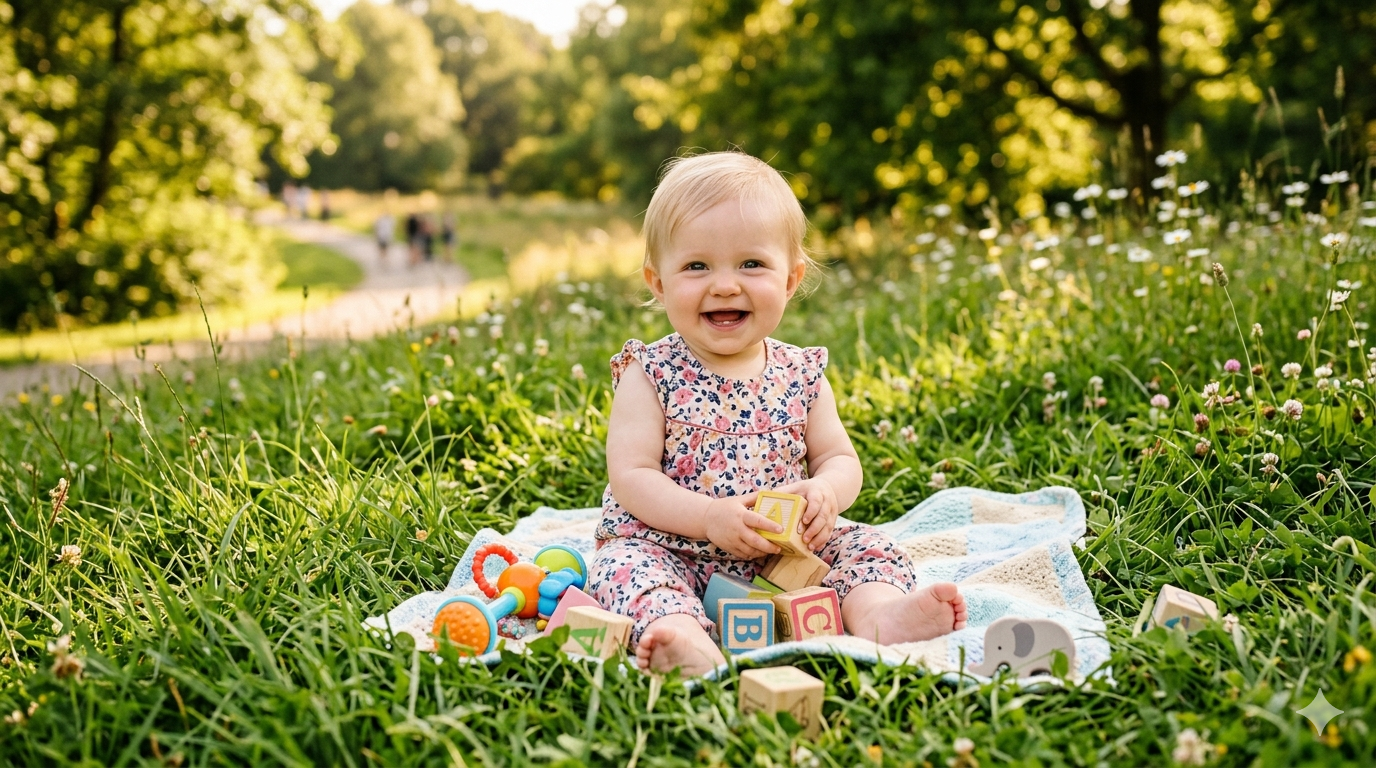
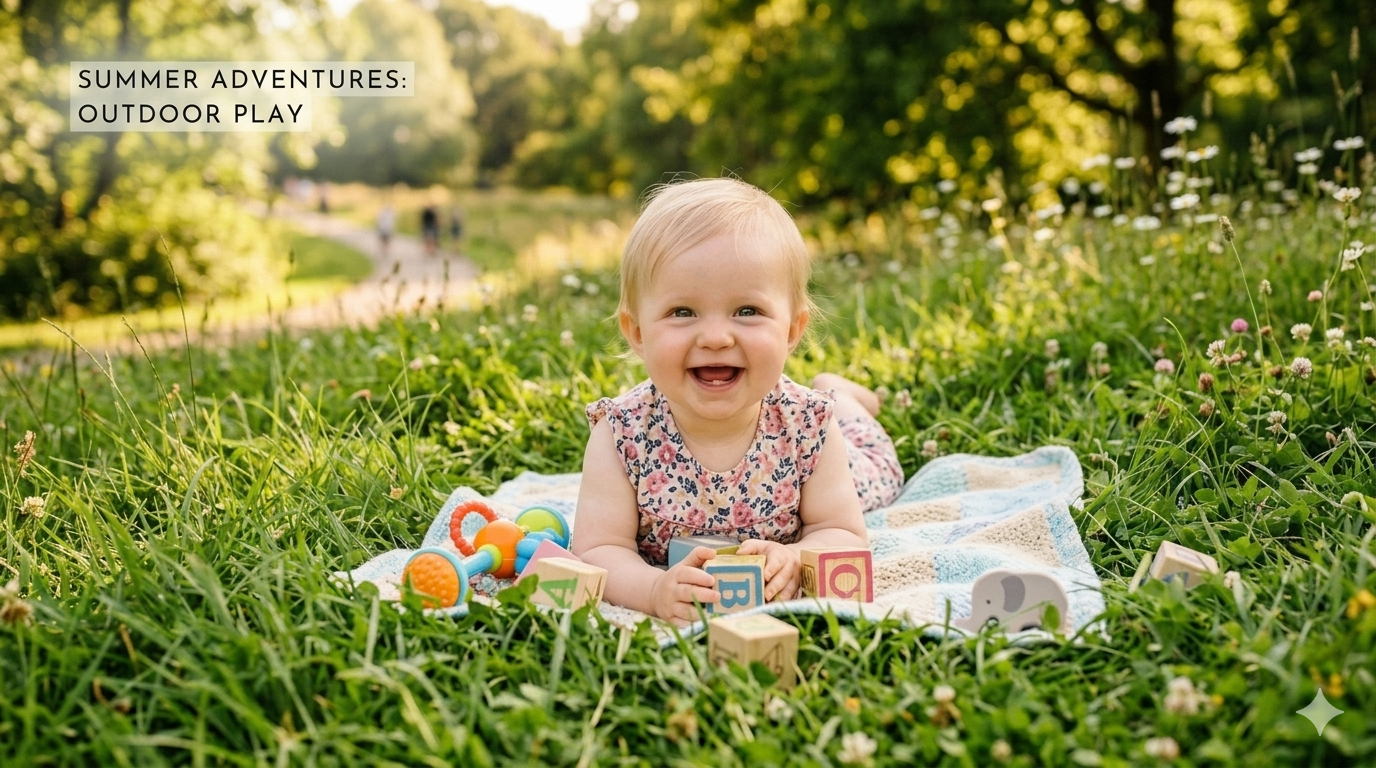
Lay your baby on a soft blanket on the grass. Let their feet touch the blades and observe their reaction to the texture and temperature.
Benefits: Develops tactile sensitivity and encourages body awareness.
2. Nature Sound Listening
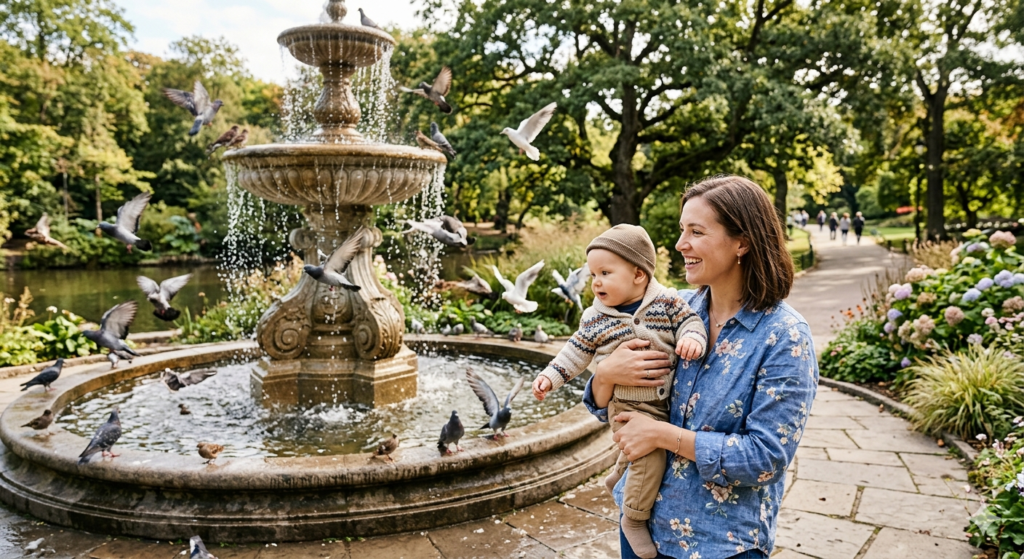
Sit outdoors during bird activity or near a water feature. Let your baby listen and look for the source of sounds.
Benefits: Builds auditory discrimination and cause-and-effect understanding.
3. Sunlight and Shadow Play
Hold your baby under a tree with dappled light. Watch their eyes track the moving shadows and light patterns.
Benefits: Enhances visual tracking and stimulates curiosity.
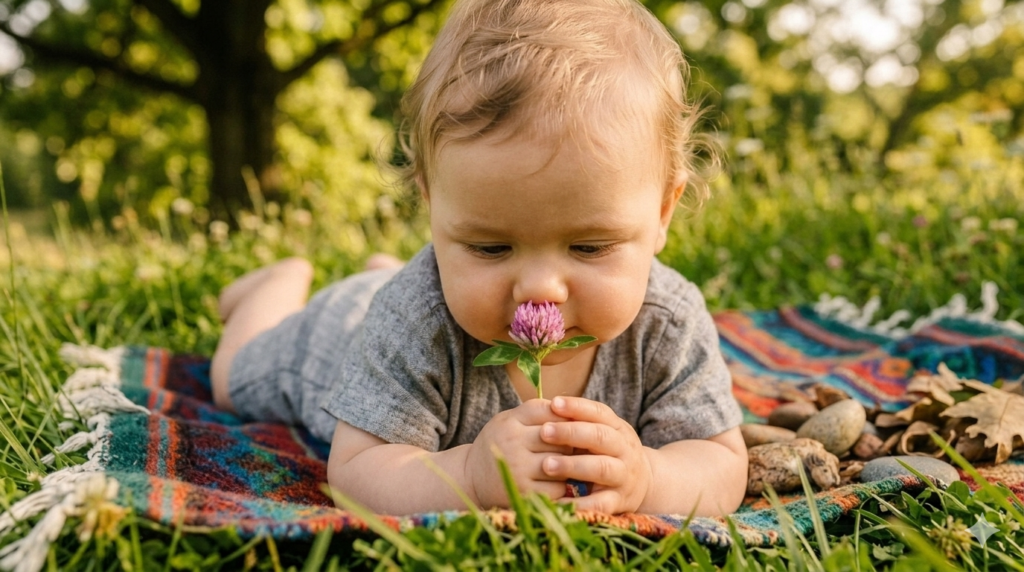
4. Flower and Leaf Sniffing
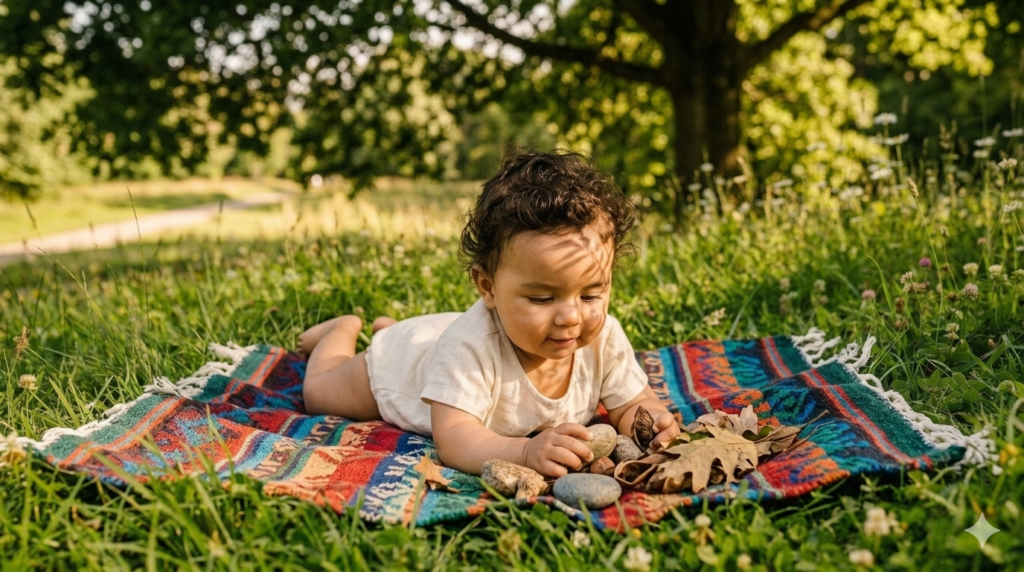
Gently introduce safe flowers and leaves to your baby’s nose. Always supervise to prevent touching the mouth.
Benefits: Develops olfactory senses and vocabulary for scents.
Best Outdoor Sensory Play Ideas for Toddlers (1–3 Years)
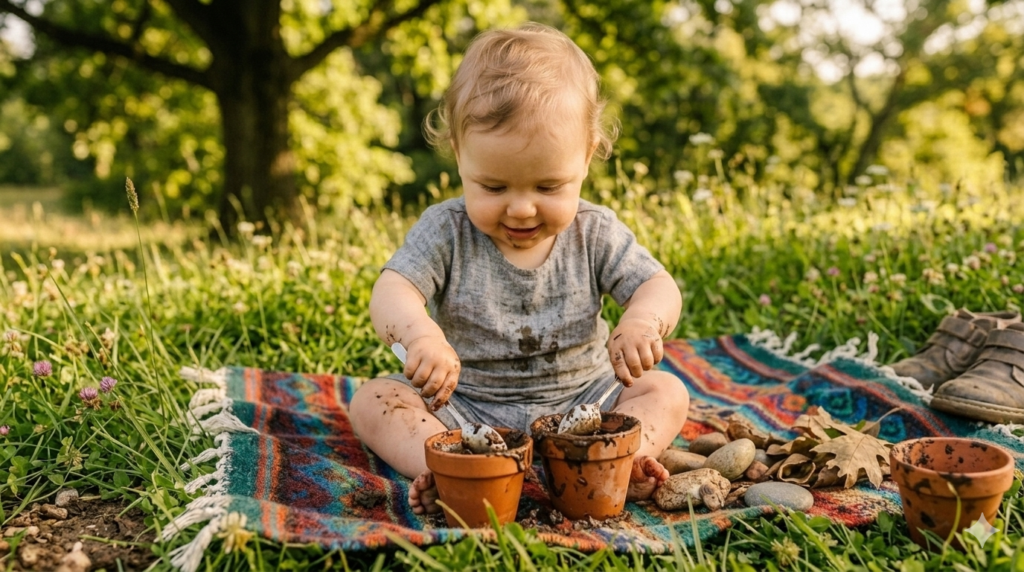
5. Mud Kitchen Play
Set up a simple mud kitchen with old pots, spoons, and water. Let your toddler mix, pour, and create freely.
Benefits: Develops fine motor skills, imaginative play, and early scientific thinking.
Supporting your toddler’s growing independence during messy play connects to how we respond as parents. See our guide on two positive parenting tips for toddlers (2–3 years) for practical strategies.
6. Water Table or Sprinkler Play
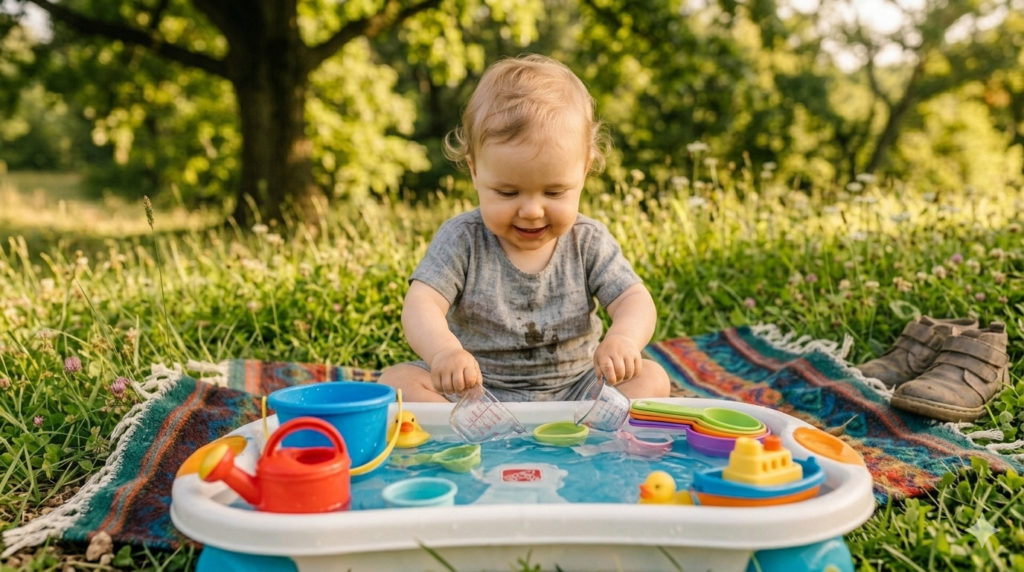
Fill a shallow tub with water and toys, or run through a sprinkler. Introduce containers of different sizes for pouring.
Benefits: Teaches cause-and-effect, hand-eye coordination, and volume concepts.
7. Nature Scavenger Hunt
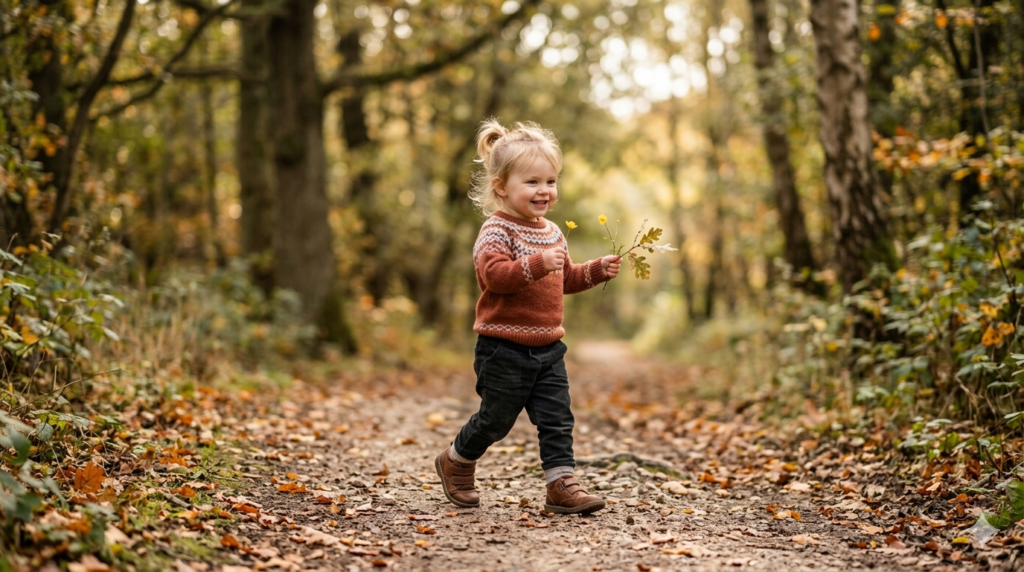
Create a simple picture list of items to find, such as a rock, leaf, flower, or stick. Walk around the garden or park together.
Benefits: Boosts observation skills, vocabulary, and attention span.
8. Sensory Garden Exploration
Create a small sensory garden with plants of varied textures such as soft lamb’s ear, spiky rosemary, and smooth hostas. Let your toddler explore safely.
Benefits: Deepens sensory vocabulary and encourages gentle handling.
Imagination is deeply sparked by nature exploration.
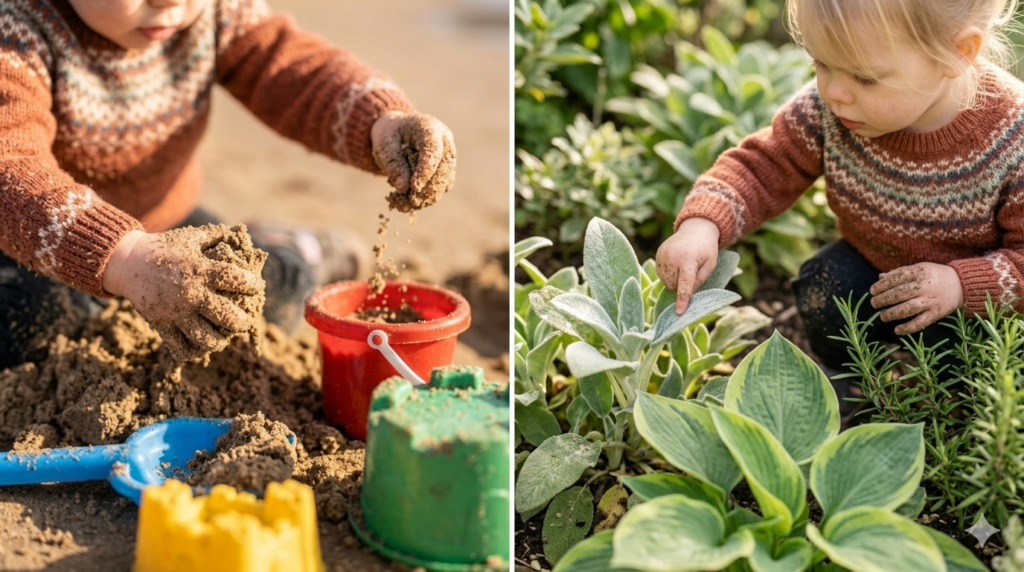
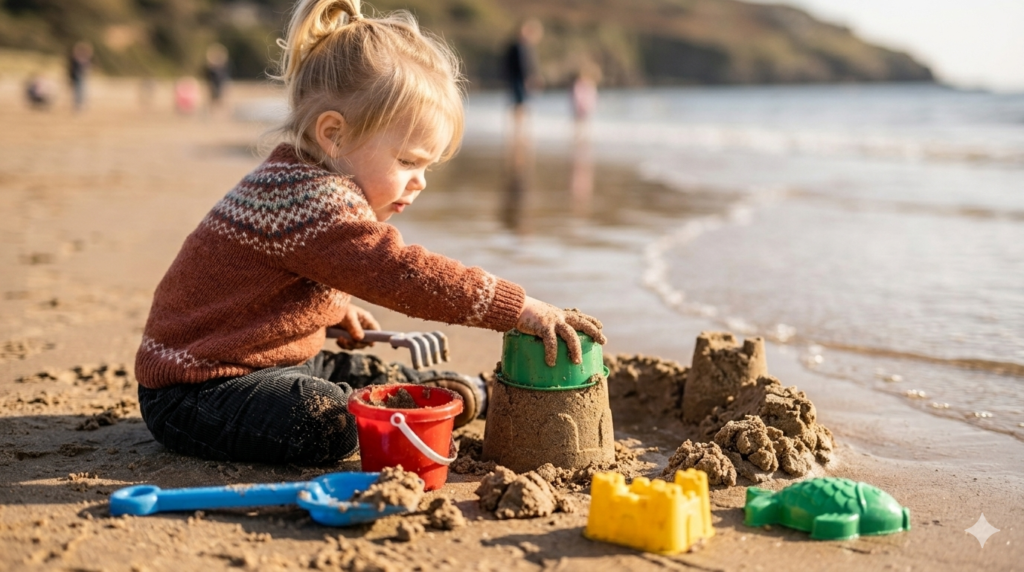
9. Sand Play
Simple sandpit play with scoops, molds, and water is endlessly engaging for toddlers.
Benefits: Develops fine motor control, creativity, and early math concepts.
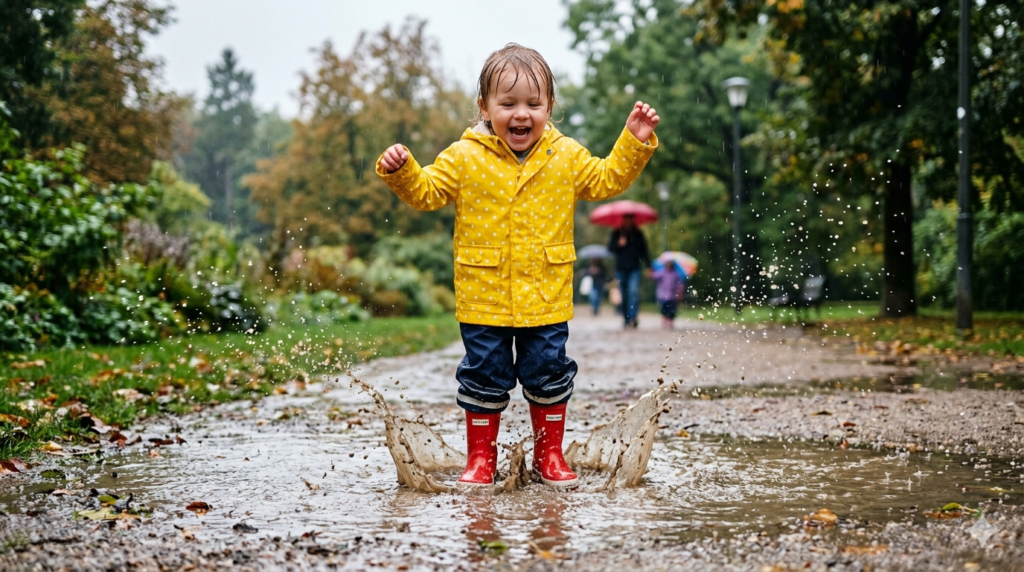
10. Puddle Jumping and Rain Play
On rainy days, dress your toddler in rain gear and let them splash freely. The sensory input from rain is uniquely stimulating.
Benefits: Builds gross motor skills, risk assessment, and emotional joy.
Outdoor Sensory Play Routine
Time of Day |
Activity |
Duration |
| Morning | Grass exploration or nature walk | 15–20 min |
| Midday | Water or sand play | 20–30 min |
| Afternoon | Mud kitchen or scavenger hunt | 15–25 min |
| Evening | Quiet garden sit, bird watching | 10–15 min |
Safety Tips for Outdoor Sensory Play
- Always supervise babies and toddlers during outdoor play
- Check outdoor areas for hazards such as sharp objects, toxic plants, and insects
- Use sunscreen and appropriate clothing
- Ensure sand and soil areas are clean and pet-free
- Avoid very hot or cold weather extremes for infants
- Teach toddlers not to put found objects in their mouths
Frequently Asked Questions
At what age can babies start outdoor sensory play?
Babies can enjoy supervised outdoor sensory experiences from birth. Even a short time in fresh air on a blanket provides valuable stimulation.
How long should outdoor play sessions be?
For babies, 10–20 minutes is ideal. For toddlers, 30–60 minutes of outdoor play daily is recommended.
Is mud play safe for toddlers?
Yes, with supervision. Ensure the soil is free from chemicals, and always wash your hands thoroughly afterward.
What if my toddler refuses to touch grass or sand?
Sensory sensitivity is common. Introduce new textures gradually without pressure. Let them observe first before touching.
Final Thoughts
The outdoors is the world’s greatest sensory classroom. Whether you have a large garden or just a nearby park, the natural world offers endless opportunities for babies and toddlers to touch, hear, smell, see, and move.
The benefits of regular outdoor sensory play ripple far beyond the early years, building the foundation for confident, curious, and resilient children.
References
- American Academy of Pediatrics – Benefits of Outdoor Play
- CDC – Developmental Milestones for Infants and Toddlers
- Zero to Three – Sensory Development in Early Childhood
- Harvard Center on the Developing Child – Brain Architecture and Play
Comments are closed