



Key Summary
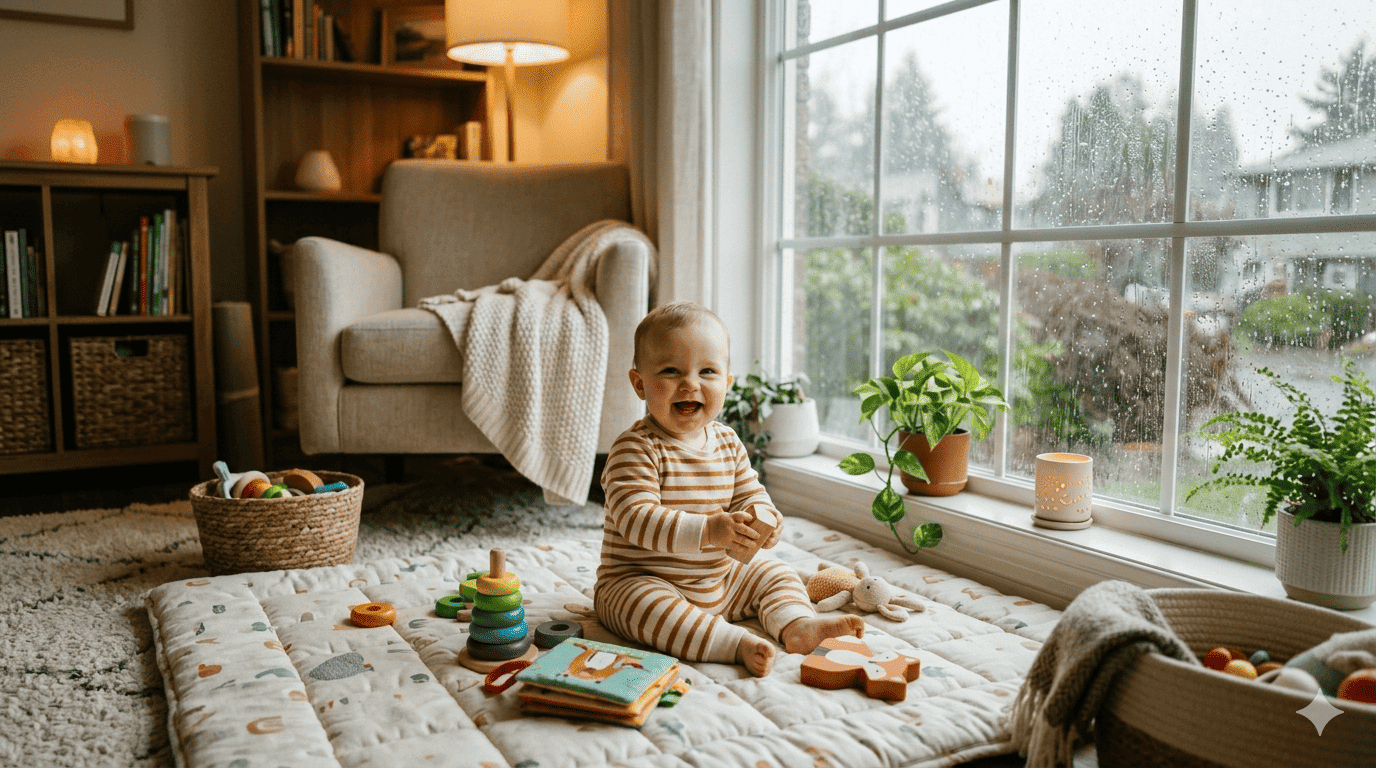
This blog provides practical indoor sensory activities for infants to keep them engaged and support development on rainy days. It highlights the importance of sensory play in brain development, motor skills, emotional growth, and curiosity.
Activities include texture baskets, water play, sound bottles, tummy time, light and shadow play, baby massage, rain sound experiences, and mirror play. Safety tips, a simple daily routine, and signs of enjoyment are also included to ensure a fun and enriching experience for babies at home.
Rainy days can feel long and limiting, especially when you’re caring for an active infant who needs stimulation and engagement. Being stuck indoors often leaves parents wondering how to keep their baby entertained and support their development at the same time.
The challenge is real: infants need sensory experiences to build brain connections, but outdoor play isn’t always an option. Without enough stimulation, they may become fussy, restless, or disengaged.
The solution? Creative indoor sensory activities that are simple, safe, and incredibly effective. With just a few everyday items, you can turn a gloomy rainy day into a rich learning experience for your baby.
If you’ve already explored basic sensory activities for infants, this guide takes it a step further by helping you adapt those ideas specifically for cozy, indoor rainy-day play.
Table of Contents
Why Sensory Activities Are Important for Infants
Sensory play is essential for early childhood development, helping babies process information and interact with their environment.
According to Harvard University Center on the Developing Child, early experiences shape brain architecture, making sensory interaction critical in the first year.
You can dive deeper into how this connects to physical growth in How Sensory Play Helps Infant Motor Skill Development, where sensory input directly supports movement and coordination.
Key Benefits:
- Supports brain development and neural connections
- Enhances motor skills and coordination
- Encourages curiosity and exploration
- Improves emotional regulation
- Builds early problem-solving skills
Understanding Infant Sensory Development (0–12 Months)
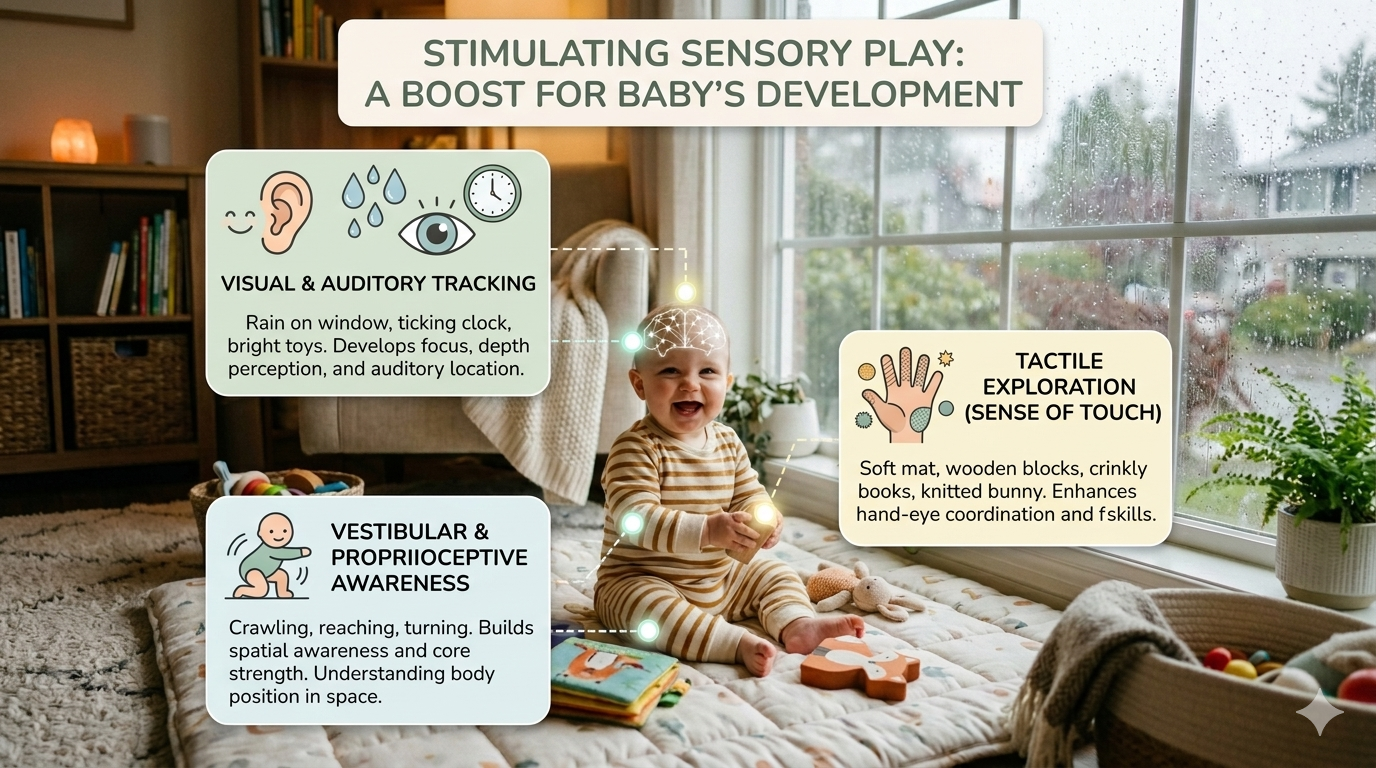
| Sense | Development Stage |
|---|---|
| Touch | Highly sensitive; responds to textures |
| Vision | Prefers bright colors & high contrast |
| Hearing | Recognizes voices and sounds |
| Smell | Can identify familiar scents |
| Movement | Learns through body motion |
Best Indoor Sensory Activities for Rainy Days
1. Texture Exploration Basket
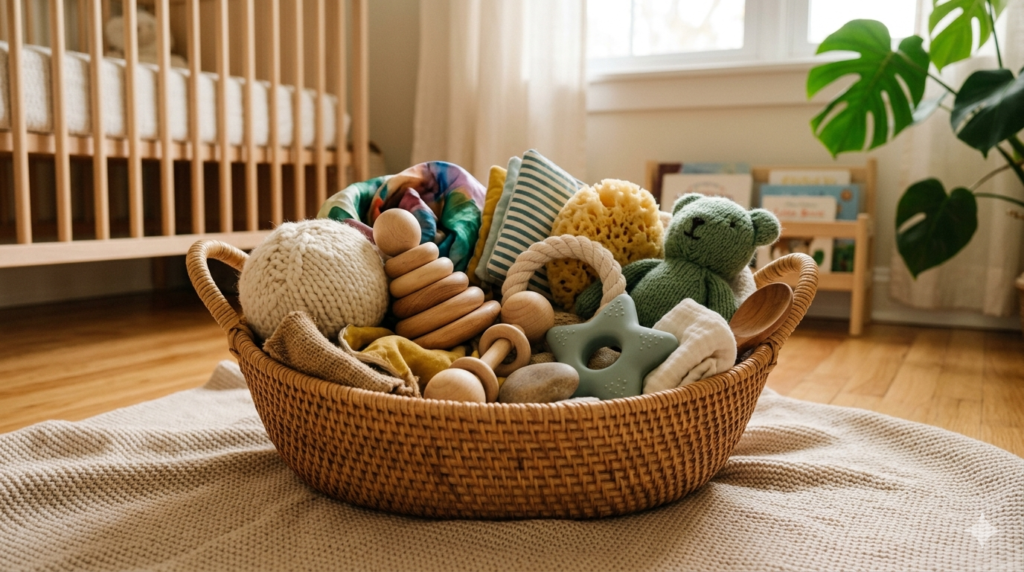
Create a small basket with safe household items.
Items to include:
- Soft cloth
- Sponge
- Wooden spoon
- Silicone teether
Benefits:
- Enhances tactile awareness
- Encourages grasping skills
2. Water Play (Mess-Free Version)
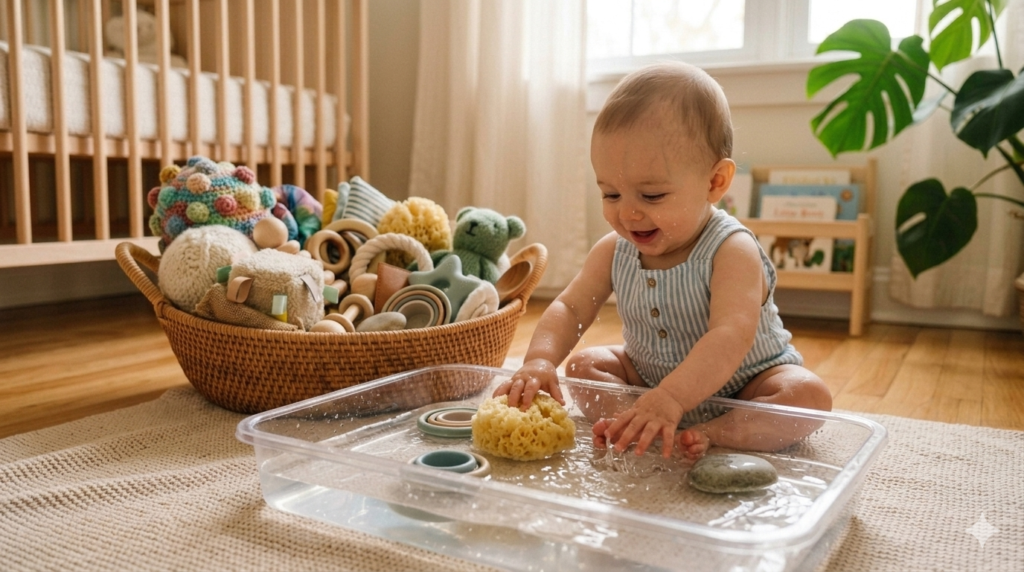
Rainy days are perfect for water-based sensory fun. Perfect for indoor baby activities on rainy days.
How to do it:
- Fill a shallow tray with a little water
- Add floating toys or cups
- Supervise closely
Benefits:
- Improves hand-eye coordination
- Introduces cause-and-effect learning
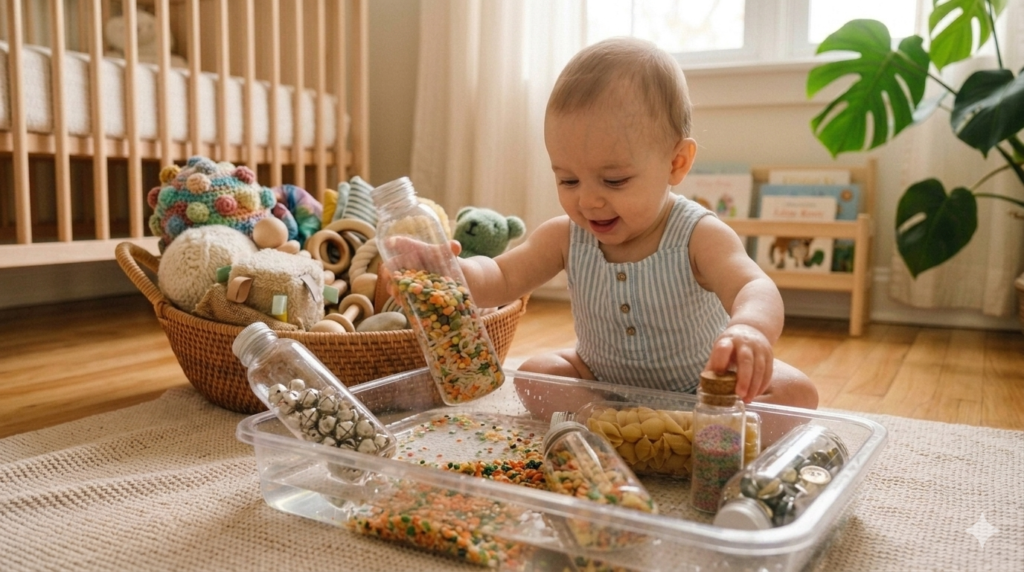
3. Sensory Sound Bottles
DIY sound bottles are easy and engaging. Supports auditory development in infants.
What you need:
- Plastic bottles
- Fill with rice, beads, or water
Benefits:
- Develops auditory senses
- Keeps babies engaged for longer periods
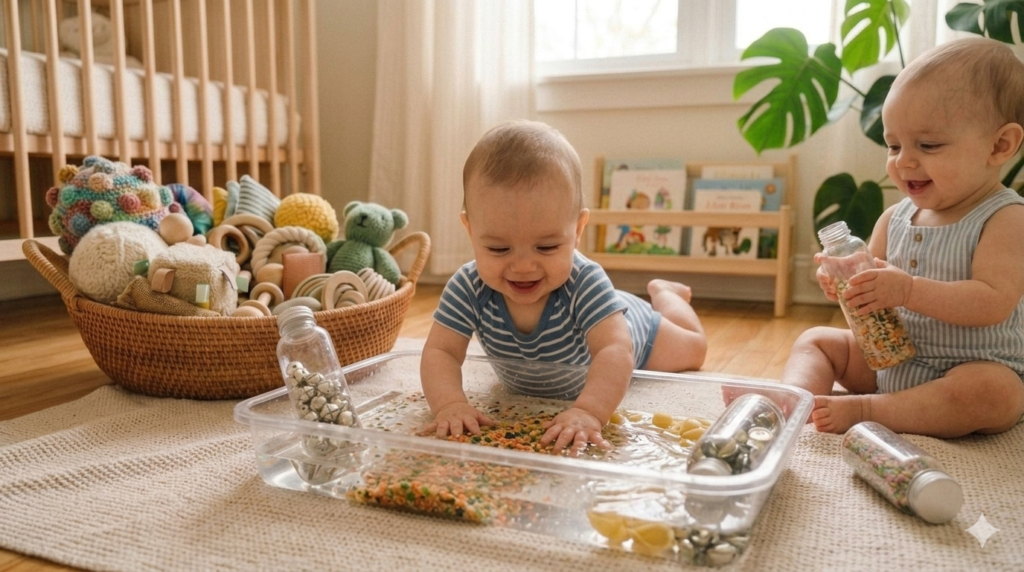
4. Tummy Time with Sensory Twist
Make tummy time more exciting. Boosts infant motor skills and strength.
Ideas:
- Place textured mats
- Add mirrors or soft toys
Benefits:
- Strengthens muscles
- Encourages exploration
5. Light and Shadow Play
Use soft lighting to create visual stimulation. Great for visual tracking development.
How to do it:
- Use a flashlight or lamp
- Move objects to create shadows
Benefits:
- Enhances visual tracking
- Stimulates curiosity
6. Baby Massage with Different Textures
Combine touch and bonding time. Enhances sensory bonding activities.
Tips:
- Use gentle oils
- Try different fabrics during a massage
Benefits:
- Promotes relaxation
- Strengthens emotional bonding
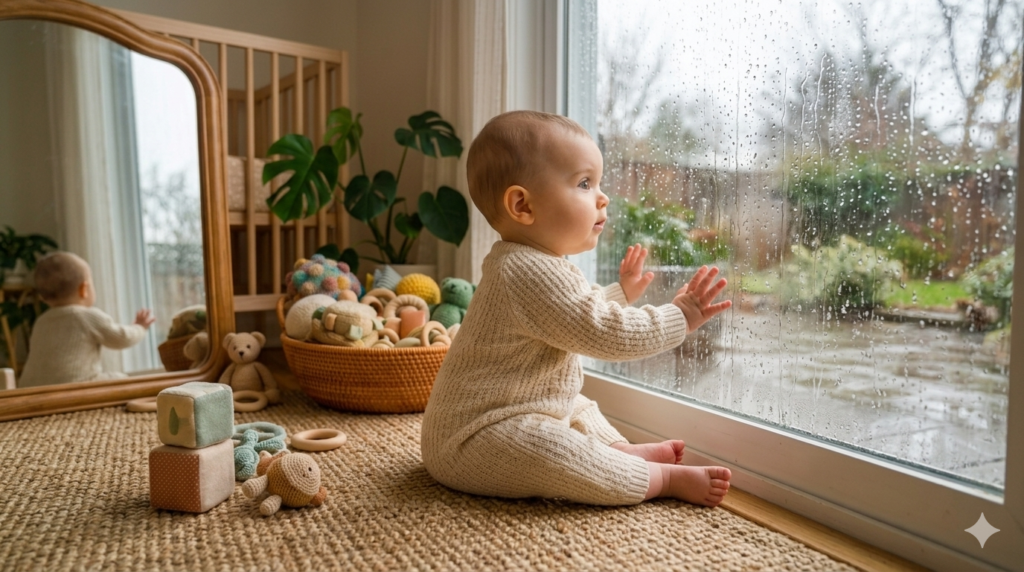
7. Indoor “Rain Sound” Experience
Turn the rainy atmosphere into a sensory activity. A natural calming sensory activity for babies.
What to do:
- Sit near a window
- Let your baby listen to rain sounds
- Talk about what they hear
Benefits:
- Builds auditory awareness
- Creates a calming effect
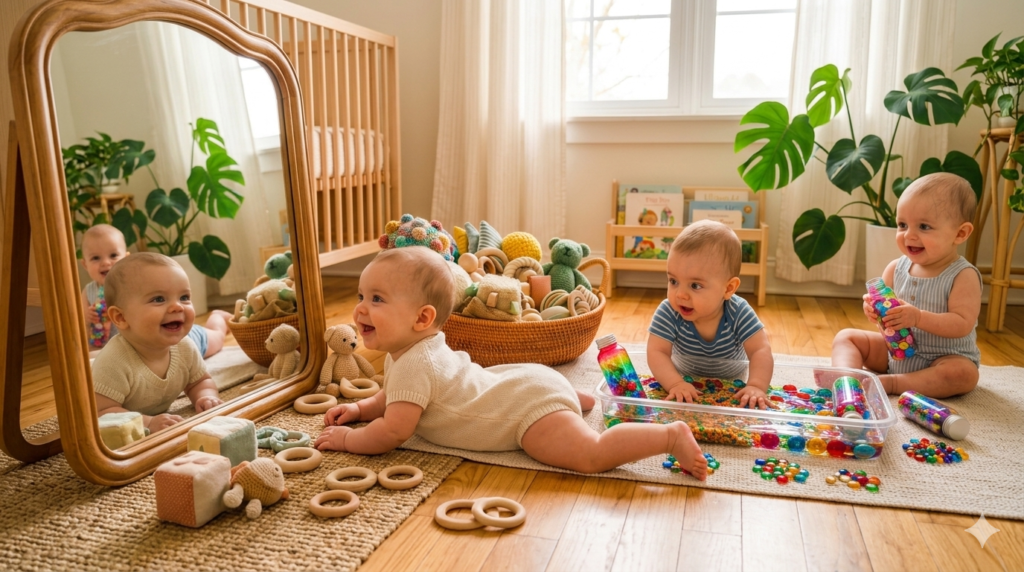
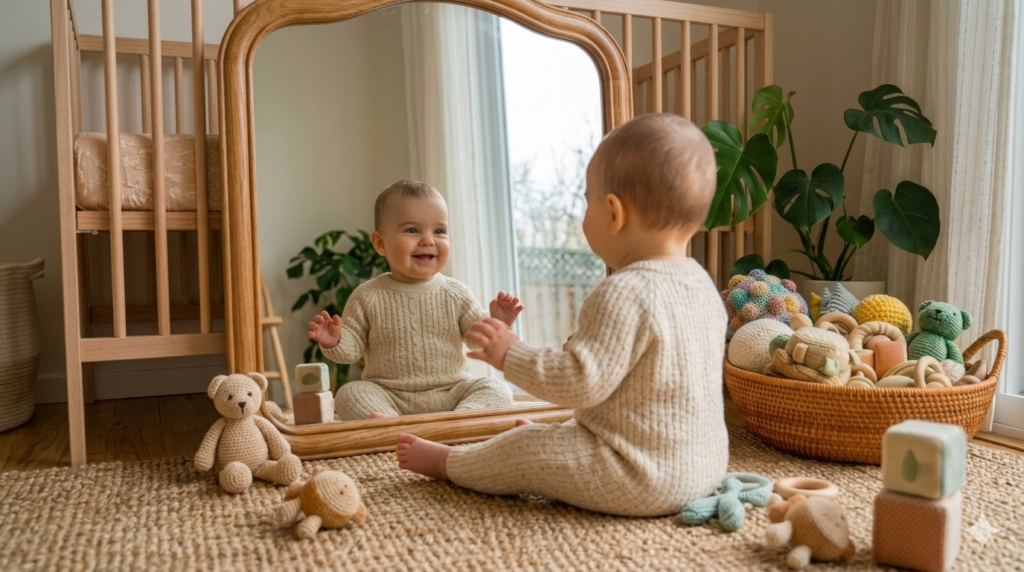
8. Mirror Play
Babies love looking at faces, including their own. Encourages self-recognition and social development.
How to do it:
- Use a baby-safe mirror
- Let them explore during playtime
Benefits:
- Encourages self-recognition
- Boosts social development
As your baby grows, these sensory foundations evolve into structured learning. For toddlers, explore Educational Toy Ideas That Encourage Creativity and Motor Skills in 2-Year-Olds to continue development progression.
Simple Rainy Day Routine for Infants
| Time | Activity |
|---|---|
| Morning | Tummy time + texture play |
| Midday | Water play + sound bottles |
| Afternoon | Massage + mirror play |
| Evening | Calm sensory (rain sounds + cuddles) |
Safety Tips for Indoor Sensory Play
- Always supervise your baby
- Avoid small choking hazards
- Use non-toxic, baby-safe materials
- Keep activities short (5–15 minutes)
- Watch for signs of overstimulation
Signs Your Baby is Enjoying Sensory Activities
- Reaching and grabbing objects
- Smiling or laughing
- Making sounds or cooing
- Focusing on objects or sounds
- Calm and engaged behavior
Frequently Asked Questions
Are sensory activities good for infants?
Yes, they support brain development, motor skills, and emotional growth.
How do I entertain my baby indoors on rainy days?
Use simple sensory play like water trays, sound bottles, and tummy time setups.
How often should sensory play be done?
2–3 short sessions daily are ideal?
What if my baby loses interest quickly?
That’s normal; infants have short attention spans.
Final Thoughts
Rainy days don’t have to limit your baby’s development. In fact, they can become an opportunity to create meaningful, sensory-rich experiences right at home.
The key is to keep things simple, safe, and engaging. Whether it’s the sound of rain, the feel of different textures, or the joy of water play, every small activity contributes to your baby’s growth in a big way.
With a little creativity, your home can become the perfect environment for learning, bonding, and discovery, even on the rainiest days.
References
- American Academy of Pediatrics – Early Brain Development and Sensory Play
- Centers for Disease Control and Prevention – Developmental Milestones (0–12 Months)
- Harvard University Center on the Developing Child – Brain Architecture and Early Experiences
- Zero to Three – Infant Sensory and Emotional Development
Comments are closed