




Key Summary
Level 2 Autism takes a lot of support and is intermediate between Level 1 (mild) and Level 3 (severe). It does not commonly fit into the category of being high functioning, but people can demonstrate other strengths. This knowledge will aid families, educators, and caregivers in offering the appropriate interventions because of the understanding of its characteristics.
When families are told about such issues as Level 1, Level 2, or Level 3 Autism, they may be confused about where their child fits in the continuum of autism. The misunderstandings of these labels may disorient and cause false expectations. The big question posed by many parents is whether or not their child with Level 2 Autism is high-functioning. This term may be reassuring, yet it will likely not be relevant to the needs of the child. Mislabeling may bring about difficulties in getting appropriate support either at school, day care, or even in the process of daily activities like eating, playing, or socializing.
This guide provides the general perspective of Level 2 Autism, whether it is high-functioning or not, and what makes the difference, and how the families and the caregivers can be more helpful in supporting children with such a diagnosis.
Table of Contents
What is Level 3 Autism?
Level 2 Autism is classified as requiring substantial support according to the DSM-5 (Diagnostic and Statistical Manual of Mental Disorders). Unlike Level 1 Autism, where individuals may function relatively independently, those with Level 2 often struggle more significantly with communication, social interaction, and adapting to change.
Children may resist changes to daily routines, struggle with verbal expression, or show distress when exposed to new environments. For example, food-related struggles are common, linking closely to strategies from Practical Tips for Promoting Healthy Eating Habits in Children. These challenges make personalized support essential.
(Reference: CDC – Autism Spectrum Disorder)
Is Level 2 Autism Considered High-Functioning?
The term “high-functioning autism” is outdated and not recognized in clinical practice today. Instead, autism is described in terms of support needs.
While some individuals with Level 2 Autism may show strengths, such as strong memory skills, deep focus on interests, or unique problem-solving approaches, they typically cannot be classified as “high-functioning” because they require substantial support to navigate daily life. According to Autism Speaks, the focus should not be on labels like “high” or “low functioning” but rather on creating supportive environments tailored to the person’s needs.
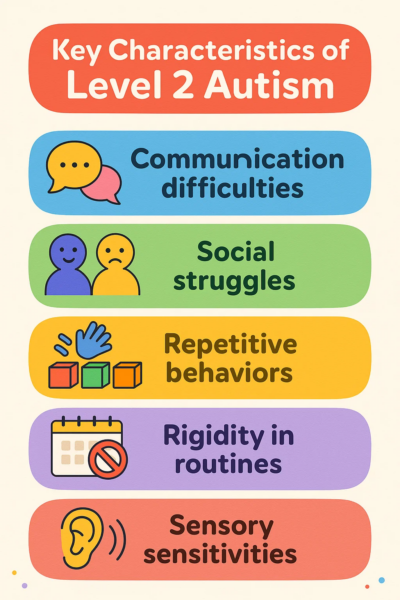
Key Characteristics of Level 2 Autism
Individuals with Level 2 Autism often share common characteristics, though these vary by person. Key features include:
- Communication difficulties: Limited verbal skills, difficulty maintaining conversations.
- Social struggles: Trouble making friends, interpreting social cues, or joining group play.
- Repetitive behaviors: Hand-flapping, rocking, lining up toys, or fixating on specific interests.
- Rigidity in routines: Strong resistance to change in environment, food, or schedules.
- Sensory sensitivities: Overreaction to sounds, lights, or textures.
Tip: For parents exploring options, comparing daycare vs stay-at-home child development can help determine the most supportive environment for children with autism.
Comparing Level 1, Level 2, and Level 3 Autism
Autism Level | Support Required | Communication Abilities | Social Interaction | Flexibility with Change | Example Behavior |
Level 1 | Some support | Can speak in full sentences | Some difficulty with relationships | Can manage with help | Difficulty making friends |
Level 2 | Substantial support | Limited verbal communication | Noticeable struggles | Strong resistance | Meltdown when routine changes |
Level 3 Autism | Very substantial support | Minimal or no speech | Severe social challenges | Extreme rigidity | Complete withdrawal from group activities |
Challenges Faced by Individuals with Level 2 Autism
Children and adults with Level 2 Autism face daily challenges that impact education, friendships, and independence. For instance, mealtime can be overwhelming if the child has sensory issues, a concern linked with healthy eating habits in children.
Other challenges include:
- Difficulty transitioning from one activity to another.
- Higher risk of anxiety and meltdowns.
- Dependence on structured routines and familiar caregivers.
Struggles with academic environments without personalized support.
Strengths and Abilities Often Overlooked
Despite challenges, many children with Level 2 Autism have unique strengths:
- Detail-oriented thinking: Strong focus on specific subjects.
- Visual learning: Many excel in recognizing patterns and images.
- Memory skills: Retaining facts, dates, or information with accuracy.
Passion-driven learning: Intense interest in specific topics, which can later evolve into career pathways.
Support and Interventions That Make a Difference
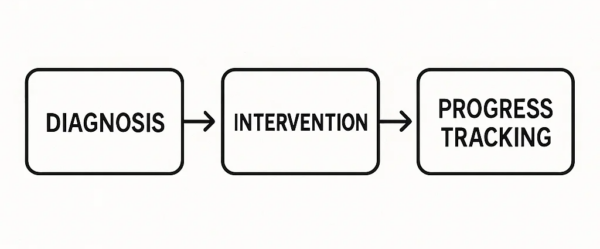
Early and continuous intervention plays a significant role in supporting children with Level 2 Autism. Some effective approaches include:
- Speech therapy for improving verbal and non-verbal communication.
- Applied Behavior Analysis (ABA) for reducing repetitive behaviors.
- Occupational therapy for sensory integration and daily living skills.
- Social skills training to practice communication in safe settings.
- Parent training to ensure strategies continue at home.
Role of Family and Education in Development
Family involvement is crucial in helping children with Level 2 Autism thrive. For instance, engaging them in structured physical activities like gymnastics and its effects on child development can improve motor skills and confidence.
Educational institutions play a major role as well:
- Inclusive classrooms foster peer interaction.
- Individualized Education Programs (IEPs) ensure tailored learning.
- Collaboration between teachers, therapists, and parents creates consistency.

Frequently Asked Questions
Is Level 2 Autism permanent?
Yes, autism is a lifelong condition, but early interventions can greatly improve quality of life and independence.
Is level 2 autism high-functioning?
The lines between the tiers are somewhat blurred, so people often ask, “Is Level 2 autism high-functioning?” and the answer is that it can be. It depends on the individual and the symptoms they exhibit.
Can children with Level 2 Autism attend regular schools?
Yes, with appropriate support like IEPs, classroom accommodations, and therapy, many children succeed in mainstream schools.
What causes Level 2 Autism?
There is no single cause. Research suggests a combination of genetic, neurological, and environmental factors.
How is Level 2 Autism diagnosed?
Diagnosis is typically made by developmental pediatricians or psychologists using DSM-5 criteria, behavioral evaluations, and input from parents and teachers.
Can level 2 autistic people work?
Most people on level 2 are not able to work regularly, but some of them are, especially with proper accommodations. Many level 2 people do various activities independently and have friendships or romantic relationships. Some people on level 2 have an intellectual disability. And so on and so on.
Final Thoughts
Level 2 Autism is not generally considered “high-functioning,” but that does not mean individuals cannot thrive. With the right support, therapy, and structured environment, children can grow into independent, capable adults who bring unique strengths to their communities.
References
- Autism Speaks – Levels of Autism https://www.autismspeaks.org/levels-of-autism
- National Institute of Health – Autism Research Findings
- CDC – Autism Spectrum Disorder Information https://www.cdc.gov/ncbddd/autism
Comments are closed