




Key Summary
Sometimes, tics can suddenly appear in children for various reasons, such as stress, family history, or a problem in the brain. Most tics disappear shortly, but some endure and mean something more like it’s Tourette’s Syndrome inside. Early detection, identification of the triggering factor, and parental support go a long way in controlling. Changes at home, a visit to the expert, and the use of certain therapy ways help make tics happen less and not so strong.
Few tics are more dramatic for a parent than to see a child develop sudden, periodic episodes of blinking incessantly, clearing his throat, or doing some repetitive movements that seem out of control. Such tics are not gradual but sudden in onset and can be very perplexing and worrisome. The first reaction of a parent is likely to be that of worry. Is it serious? Is this some kind of neurological disorder? Will it go away by itself? Such uncertainties are the cause of stress and leave families often at loose ends, apprehensive about what steps to take next.
This isn’t going to make everything better overnight for a child with tics, but by having parents who know what tics are, why they probably happen, and how to treat them in the first place, it certainly does equate to the right kind of care and peace of mind Luckily there’s now a scientific, everything parent’s guide to quickly developing tics in kids that covers reasons, treatment, and parental strategies
Table of Contents
What Exactly Are Tics?
Tics are defined as sudden, quick, repetitive movements or sounds that are not rhythmic and cannot be easily controlled by the child. They may include simple eye blinking, facial grimacing, shoulder shrugging, or vocal tics such as throat clearing, sniffing, or humming. Most children develop some form of tics during their childhood years; however, with time, they disappear. Children can develop any kind of tic during normal development. Most children outgrow these tics. According to the National Institute of Neurological Disorders and Stroke (NINDS), most children experience tics at some point in their lives, though they often fade with time (NINDS, 2022).
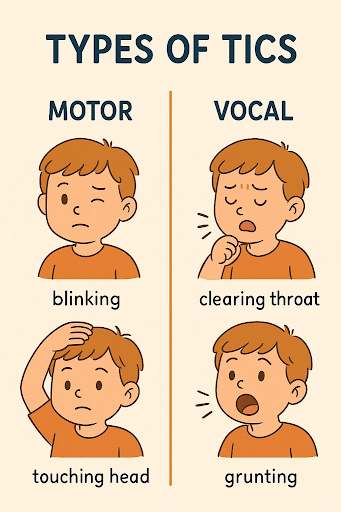
Tics are broadly separated into two categories.
- Motor tics (by movement, for example, jerking or blinking)
- Vocal tics (by sound, for example, grunts, whistles, or words that are repeated)
They may also be either simple (short, repetitive, involving few muscles) or complex (coordinated sequences involving more than a single muscle group
Common Causes of Sudden Tic Development in Children
They may be caused by a number of factors. It is always important to try and understand what has led to their development. Some common causes include:
- Stress- and anxiety-related precipitating factors
- Neurological, genetic predisposition
- Side effects of medication (e.g., stimulants used for ADHD)
- Presence of an underlying condition, e.g., Tourette’s Syndrome, OCD
- Environmental and cultural influence on behavior and coping mechanisms
For instance, studies have shown that stress and fatigue often exacerbate tics, making them more noticeable during periods of transition such as starting school or adjusting to a new environment (Mayo Clinic, 2023).
Stress, Anxiety, and Emotional Triggers
Emotional well-being counts a lot in the development of children. Stressful environments, family alterations, and even academic pressure can lead to tics in children. Child development experts have indicated that children sustain high sensitivity to emotional content, and this sensitivity is manifested more often through physical expressions such as tics.
The role that emotional triggers play should be considered, particularly if the child is undergoing major transitions in life. This ties back into knowing advanced methodologies in the development of children, which emphasize the fact that at different stages of development, children process stress differently.
Neurological and Genetic Factors
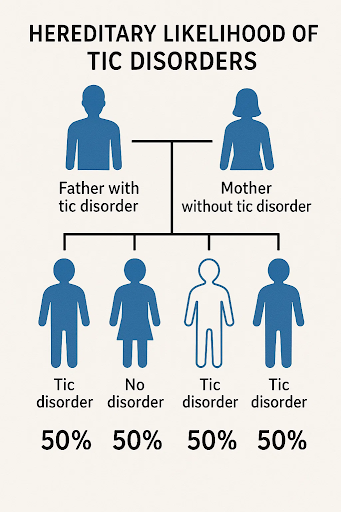
Not all tics are stress-related. In many cases, there is a genetic or neurological component. Tourette Syndrome, for example, is a condition characterized by chronic tics and often has hereditary links. If there’s a family history of tics, OCD, or ADHD, children are more likely to experience them.
Understanding this also ties into the bigger question of why child development is important, since recognizing neurological differences early allows parents and educators to create supportive environments.
Role of Environment and Culture in Child Development
- A child’s environment (home, school, community) affects how tics appear and how the child copes with them.
- Supportive surroundings help children feel safe and reduce stress, which can make tics less severe.
- Stressful or critical environments may increase tics and lower a child’s confidence.
- In some cultures, tics are seen as behavioral problems, leading to punishment or stigma.
- In other cultures, tics are viewed as medical conditions, leading families to seek help and show understanding.
- Cultural attitudes decide whether children feel supported or ashamed of their condition.
- Research shows children in empathetic environments have better coping skills and less anxiety.
- Parents and caregivers should focus on empathy, patience, and support rather than criticism.
- Educating teachers, friends, and family can reduce bullying and misunderstanding.
- A kind and accepting environment helps children grow with confidence and resilience.
Research on how culture affects child development shows that cultural attitudes can either help children feel supported or contribute to shame and stress, which may worsen tics. Parents should strive for environments that emphasize understanding and empathy over criticism.
When to Seek Medical Help
Not every tic is cause for alarm, but there are situations where medical evaluation is essential:
- Tics persist for more than a year
- They interfere with daily functioning or self-esteem
- They are accompanied by other symptoms like obsessive behaviors or hyperactivity
- They worsen progressively or occur with sudden behavioral changes
Consulting a pediatrician, neurologist, or child psychologist ensures that underlying conditions are identified early.
Diagnosing and Understanding Tic Disorders
Diagnosing tic disorders involves several steps to make sure doctors understand what is happening and to rule out other possible causes. The process usually starts with looking at the child’s medical history and then continues with physical and behavioral evaluations. Correct diagnosis is very important because it helps in planning the right treatment and support.
How Doctors Diagnose Tic Disorders
- Medical History Review—Doctors ask questions about when the tics started, how often they occur, and if there is any family history.
- Neurological Examination—A check-up to make sure there are no other brain or nerve-related problems.
- Behavioral Assessments – Observing the child’s behavior to see how tics affect daily life and social interactions.
- Ruling Out Other Causes – Checking if the tics are linked to stress, other conditions, or side effects of medicines.
Types of Tic Disorders
- Transient Tic Disorder – Tics that last less than one year.
- Chronic Motor or Vocal Tic Disorder – Tics (either movement or sounds) that last more than one year.
- Tourette Syndrome – Both motor and vocal tics that continue for more than one year.
Why Diagnosis is Important
- Helps doctors and families understand the exact type of tic disorder.
- Allows for treatment plans that are specific to the child’s needs.
- Reduces confusion and stress by providing a clear explanation of the condition.
- Supports parents, teachers, and caregivers in responding with understanding and the right strategies.
Management and Treatment Options
While many tics fade naturally, some require management. Approaches include:
- Behavioral Therapy (CBIT – Comprehensive Behavioral Intervention for Tics)
- Medication (in severe cases, antipsychotics or ADHD medications)
- Stress management techniques such as mindfulness, yoga, and relaxation exercises
- Parental support strategies that avoid drawing excessive attention to tics
According to a study published in JAMA Psychiatry, CBIT has shown significant success in reducing tic severity among children (Piacentini et al., 2010).
Parenting Strategies for Supporting a Child with Tics
Parents play a pivotal role in helping children cope. Effective strategies include:
- Providing reassurance and reducing unnecessary focus on tics
- Creating a calm and structured home environment
- Encouraging imagination and play, which support emotional resilience (see: the importance of imagination in child development)
- Working with teachers to ensure classroom support
- Seeking counseling if anxiety or bullying becomes a concern
Common Types of Tics and Their Characteristics
Type of Tic | Examples | Description |
Simple Motor Tics | Eye blinking, shoulder shrugging | Involve one muscle group, brief and repetitive |
Complex Motor Tics | Jumping, touching objects, spinning | Coordinated patterns of movement, more noticeable |
Simple Vocal Tics | Sniffing, throat clearing | Short vocal sounds, often repeated |
Complex Vocal Tics | Repeating words, phrases, or inappropriate language | More complex speech-related patterns |
Frequently Asked Questions
Do tics always mean my child has Tourette's Syndrome?
No, most are short-lived and unrelated to Tourette’s. Only in rare cases does a combination of motor and vocal tics persist for over a year, at which point it may be identified as Tourettes.
Can stress make tics worse?
Yes, stress or anxiety can increase the frequency and intensity of tics.
Should I correct my child or point out the tic?
No. The act of drawing attention tends to make the tics worse. Rather, an enabling environment is supposed to be created.
Can diet affect tics?
A: Certain parents observe some reduction in caffeine and processed foods but scientific proof is very few.
Final Thoughts
Sudden development of tics in children may be worrying, but with the right knowledge and support, most cases are known to have a huge significant growth. The help of a parent is thus to know the causes, seek medical guidance where necessary, and create an enabling environment for the success of the children.
References
- National Institute of Neurological Disorders and Stroke (NINDS). Tourette Syndrome Fact Sheet https://www.ninds.nih.gov/health-information/disorders/tourette-syndrome
- Mayo Clinic. Tic Disorders Overview https://www.mayoclinic.org/diseases-conditions/tourette-syndrome/symptoms-causes/syc-20350465
- Piacentini, J., et al. (2010). “Behavior therapy for children with Tourette disorder: A randomized controlled trial.” JAMA Psychiatry. https://jamanetwork.com/journals/jama/fullarticle/185896
Comments are closed