


Key Summary
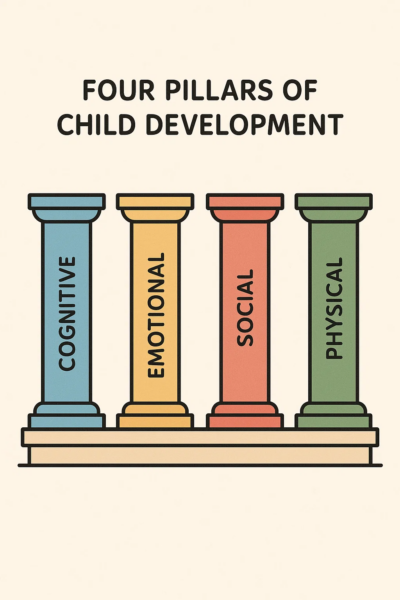
Child development classes go beyond academics, nurturing cognitive, physical, social, and emotional growth. Programs include creative arts, STEM learning, sports, language classes, and emotional intelligence workshops. The right combination of classes can support lifelong learning, problem-solving, resilience, and adaptability.
Many parents feel overwhelmed when choosing extracurricular or enrichment classes for their child. With options like arts, sports, and STEM, it’s hard to know which truly enhance growth and which are just trends. The wrong balance can lead to overscheduling or missed opportunities that support emotional, cognitive, and social skills. This blog explores the most beneficial classes for child development, backed by research and practical parenting approaches.
Table of Contents
The Importance of Classes in Child Development
Classes designed for children outside the traditional school curriculum play an essential role in supporting whole-child development. While academic learning is foundational, structured classes like arts, sports, and social learning activities target other critical dimensions of growth. Studies suggest that children involved in extracurricular classes show higher self-confidence, stronger social bonds, and improved academic performance compared to those who do not participate in such activities (Harvard Graduate School of Education, 2021).
Beyond measurable skills, these classes foster a safe environment where children can experiment, fail, learn, and improve. For example, group-based classes also encourage teamwork and problem-solving, aligning with concepts found in 3 different approaches to child development, where play-based and social learning are highlighted. In this sense, classes are more than hobbies—they are building blocks for lifelong growth.
Creative Arts and Expression Classes
Creative classes, such as painting, dance, theater, or music, play a powerful role in supporting emotional expression and imaginative thinking. Art activities help children develop fine motor skills, hand-eye coordination, and problem-solving strategies. Research from the National Endowment for the Arts highlights that students engaged in arts are more likely to participate actively in class, communicate effectively, and perform better academically (NEA, 2019).
Arts also enhance emotional regulation by giving children tools to express feelings that words cannot capture. For instance, children in theater or music often show higher empathy, linking back to cognitive development in middle childhood, where symbolic thinking and abstract reasoning start to flourish. Parents should view these classes as not merely recreational but as essential for emotional and social maturity.
Sports and Physical Development Classes
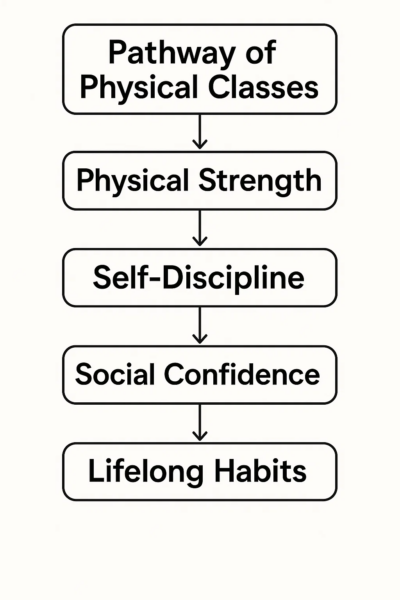
Sports are among the most influential classes for physical growth and discipline. Activities such as gymnastics, swimming, martial arts, or team sports improve gross motor development, balance, and agility. For example, the effects of gymnastics on child development demonstrate that it fosters resilience, focus, and physical confidence while also boosting self-esteem.
Sports also teach teamwork, patience, and handling both victories and defeats critical aspects of emotional maturity. According to the American Academy of Pediatrics, consistent physical activity in children improves academic performance, attention span, and mental health (AAP, 2020). Additionally, sports prevent childhood obesity and instill lifelong habits of health and wellness.
Language and Communication Classes
Language classes, including foreign languages, public speaking, and debate clubs, equip children with essential communication skills. Early bilingual exposure improves problem-solving, multitasking, and memory. In multicultural environments, language learning also supports empathy and global awareness, tying into how culture affects child development.
These classes also provide cognitive flexibility, as children shift between languages, enhancing working memory and attention. The Journal of Child Language reports that children learning a second language before age 10 show significantly stronger executive functioning compared to peers (Cambridge University Press, 2020). Parents can integrate these classes early to maximize impact.
STEM and Cognitive Development Programs
STEM classes (science, technology, engineering, math) are critical for nurturing problem-solving, creativity, and critical thinking. Programs like coding camps, robotics, or science clubs stimulate curiosity and innovation. These activities align closely with cognitive development in middle childhood, where logical reasoning and complex problem-solving become central.
A study from the U.S. Department of Education emphasizes that STEM exposure in early childhood fosters perseverance and resilience, qualities vital for adapting to future challenges. Beyond academics, these programs often involve collaboration, teaching teamwork, and adaptability. Parents should consider STEM not only for academic advantage but also for equipping children with tools to thrive in an evolving workforce.
Social and Emotional Learning (SEL) Classes
SEL programs focus on empathy, conflict resolution, mindfulness, and emotional intelligence. These classes are increasingly recognized for their role in building self-awareness, resilience, and positive relationships. According to CASEL (Collaborative for Academic, Social, and Emotional Learning), children who participate in SEL classes demonstrate a 27% improvement in academic performance and significantly reduced behavioral issues (CASEL, 2015). Emotional intelligence isn’t innate it must be cultivated, and SEL classes provide that foundation.
Cultural and Ethical Development Programs
Classes that focus on culture, ethics, or community service nurture a child’s moral compass and global awareness. These may include cultural dance, history clubs, or service-learning activities. They connect children to their roots while fostering respect for diversity. Such programs also encourage children to think beyond themselves, promoting responsibility and empathy. Research by UNESCO suggests that cultural programs in childhood lead to higher civic engagement and tolerance in adulthood (UNESCO, 2018). Parents can integrate cultural classes to help children develop both identity and social responsibility.
Comparative Table of Classes for Child Development
Class Type | Key Benefits | Example Activities | Development Area |
Creative Arts | Imagination, emotional expression | Music, dance, theater | Emotional & Social |
Sports & Physical | Strength, resilience, teamwork | Gymnastics, martial arts, soccer | Physical & Social |
Language & Communication | Memory, empathy, global awareness | Debate, foreign languages | Cognitive & Social |
STEM Programs | Problem-solving, curiosity | Robotics, coding, experiments | Cognitive |
SEL Programs | Empathy, self-regulation | Mindfulness, role-play | Emotional & Social |
Cultural Programs | Identity, ethics, tolerance | Cultural dance, service clubs | Moral & Social |
Frequently Asked Questions
At what age should I start enrolling my child in development classes?
Most experts recommend starting enrichment classes as early as preschool age, around 3–4 years, when children are naturally curious and eager to learn through play.
How many classes are too many for a child?
It’s best to avoid overscheduling. Ideally, children should balance one or two structured classes with free play, ensuring they don’t feel overwhelmed.
Do these classes replace traditional schooling?
No, they complement formal education by focusing on areas often missed in traditional classrooms, such as emotional intelligence, creativity, and resilience.
Are online classes effective for child development?
Yes, if designed interactively. For instance, online coding or language programs can be very effective when balanced with offline play.
Final Thoughts
Choosing the right classes for your child’s development isn’t about following trends—it’s about nurturing all aspects of growth: physical, cognitive, emotional, social, and cultural. From arts to STEM, each class contributes uniquely to shaping a child’s abilities and personality. Parents should carefully consider their child’s interests, cultural background, and learning style when selecting programs.
References
- Harvard Graduate School of Education. (2021). Why Extracurricular Activities Matter https://college.harvard.edu/resources/faq/how-important-are-extracurricular-activities-admissions-decisions
- National Endowment for the Arts (2019). The Arts and Child Development https://www.arts.gov/
- American Academy of Pediatrics (2020). Benefits of Physical Activity https://publications.aap.org/patiented/article-pdf/doi/10.1542/peo_document078/1745766/peo_document078_en.pdf
- Cambridge University Press (2020). Journal of Child Language https://www.cambridge.org/core/journals/journal-of-child-language
- U.S. Department of Education (2019). STEM Education https://nces.ed.gov/fastfacts/display.asp?id=1089
- CASEL (2015). The Impact of Social and Emotional Learning https://casel.org/fundamentals-of-sel/what-does-the-research-say/
- UNESCO (2018). Cultural Diversity and Development Report https://www.unesco.org/creativity/en/policy-monitoring-platform/research-diversity-cultural-sector-2018
Comments are closed