




Key Summary
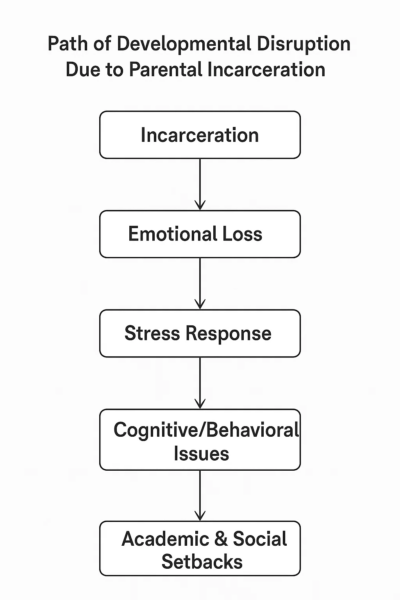
Parental incarceration profoundly disrupts a child’s emotional, social, and cognitive development. It often leads to anxiety, behavioral issues, academic struggles, and long-term psychological effects. The earlier the separation occurs, the deeper the impact, yet supportive caregiving, stable environments, and community programs can significantly reduce the harm.
The emotional barriers that a parent’s incarceration causes, particularly for their children, go well beyond the prison walls. These young people frequently deal with trauma, loss, uncertainty, and confusion, all of which can impede their ability to develop normally. Imagine a child ripped from a haven and thrust into a world of silence where breakfast conversations and bedtime stories once took place. Add to that the emotional loneliness, the financial uncertainty, the caregiver change, and the stigma. These kids are more likely to experience anxiety, perform poorly in school, have behavioral problems, or even end up behind bars.
Parents, educators, legislators, and other caregivers must comprehend how parental incarceration affects a child’s development. Research-supported understandings, focused interventions, and community support can help us lessen the detrimental effects on young lives and create a more supportive atmosphere for recovery and development.
Table of Contents
Emotional and Psychological Effects
Offspring of parents who are incarcerated frequently experience profound emotional scars that are imperceptible. The emotional effects of death, divorce, or abandonment can be mimicked by the abrupt loss of a parent, whether as a result of brief or prolonged incarceration. Internal confusion brought on by this loss, particularly when it is not adequately explained, can lead to depression or repressed anger.
In addition to externalizing behaviors like aggression, defiance, and impulsivity, many kids also display internalizing behaviors like sadness, withdrawal, and anxiety. This could result in regressive behaviors for toddlers and younger kids, such as bedwetting or thumb-sucking.
Attachment problems are frequently caused by the instability that accompanies having a parent incarcerated. The child may form insecure attachments with the remaining caregiver or experience difficulty trusting others later in life. Particularly for kids between the ages of 5 and 12, when peer relationships and emotional intelligence start to take shape, these emotional disorders can seriously impede developmental milestones. See also What Are the Milestones for Children Ages 5 to 12?
Cognitive and Developmental Difficulties
The impact on cognitive development is profound. Delays in language acquisition, problem-solving, and executive functioning are more common in children whose parents are incarcerated. The brain’s neural circuitry is disturbed by the trauma, particularly in the prefrontal cortex, which controls emotions and makes decisions.
Early childhood brain development can be hampered by a toxic stress response brought on by early trauma. Stress raises cortisol levels, which impair memory, focus, and emotional processing, all critical abilities for academic success and social adjustment.
Children whose parents are incarcerated are also at risk for nutritional neglect, particularly if they are placed in foster care or live with relatives who are struggling financially. Lethargy and slow cognitive function are caused by poor nutrition. It becomes essential to establish healthy eating habits. By adhering to guidelines such as Building Healthy Snack Habits for Toddlers, which emphasize consistency and care in daily routines, parents and caregivers can promote better results.
Disruptions in Behavior and Society
The way these kids engage with their surroundings is among the most obvious effects. They are frequently cut off from peers and adult mentors due to the stigma attached to having an incarcerated parent. Social disengagement is also fueled by bullying, shame, and secrecy.
Children may start acting out in school, becoming overly attached or aggressive. Children whose parents are incarcerated are more likely to be suspended or expelled, and many of them experience symptoms of post-traumatic stress disorder (PTSD), according to The Sentencing Project.
Disrupted routines also lead to behavioral problems. Children lose the sense of structure that promotes self-regulation when their surroundings are unstable or their caregivers change frequently. Regular family mealtimes are a useful strategy for stabilizing this. Restoring predictability and trust can be facilitated by even small routines, like organizing meals around lunch ideas for finicky eaters.
Academic Difficulties and Educational Setbacks
These kids are frequently at a disadvantage in the classroom. Lower test scores, less engagement, and even dropping out are caused by frequent moves, missed school days, and emotional distress.
Children of incarcerated parents had a 45% higher chance of repeating a grade, according to a long-term study conducted by the Annie E. Casey Foundation. According to the same study, teachers and other school personnel frequently failed to provide these kids with the proper support, and many of them were ignorant of the kids’ family situations.
Lack of parental involvement, such as helping with homework or attending school events, also widens the academic gap. Without early intervention, children may feel ignored or unimportant, which can perpetuate a cycle of poor performance. To meet the needs of these kids, schools must implement early intervention techniques and trauma-informed teaching methods.
Parenting Challenges for Caregivers Left Behind
Grandparents, relatives, or foster parents often step in as caregivers, but they face challenges of their own. Financial stress, emotional fatigue, and lack of training in trauma-informed care can hinder their ability to provide stable, nurturing environments.
Many substitute caregivers struggle with setting boundaries, providing emotional validation, and managing behavioral issues, especially if they are grieving the incarceration. Programs aimed at supporting kinship caregivers can equip them with the tools needed to raise these children effectively.
Implementing positive parenting strategies, such as creating healthy snack routines, organizing consistent playtime, and engaging in open communication, can improve the caregiving dynamic and offer emotional safety.
Support Strategies and Intervention Programs
While the effects are significant, they are not irreversible. Multiple intervention programs have shown promise in mitigating the negative outcomes of parental incarceration.
Effective strategies include
- Therapeutic mentoring and peer support groups (e.g., Big Brothers Big Sisters)
- Trauma-informed school environments
- Parental visitation programs in correctional facilities
- Parenting programs in prisons that teach inmates about child development
- Community-based initiatives for food, education, and emotional support
The Sesame Street in Communities program offers multimedia resources tailored to help young children understand incarceration in an age-appropriate way. Similarly, organizations like Foreverfamily provide holistic support to children of incarcerated parents through after-school activities and caregiver engagement.
Developmental Risks vs. Supportive Interventions
Developmental Risk | Supportive Intervention |
Emotional trauma and anxiety | Therapy and age-appropriate discussions |
Academic setbacks | Trauma-informed schools and tutoring |
Social withdrawal and stigma | Peer support groups and school counseling |
Cognitive delays due to stress or poor nutrition | Consistent routines and balanced meal planning |
Disrupted caregiving and insecure attachment | Training and support for substitute caregivers |
Frequently Asked Questions
How does parental incarceration affect toddlers?
Toddlers may exhibit regressive behaviors like bedwetting, increased separation anxiety, and tantrums. Their sense of safety is shaken, and without explanation, they may feel abandoned.
Can these effects be reversed later in life?
Yes. With timely psychological support, consistent caregiving, and educational intervention, children can overcome many long-term effects of trauma.
Are boys and girls affected differently?
Research shows boys tend to externalize emotions through aggression, while girls may internalize them, leading to anxiety or depression.
Final Thoughts
Parental incarceration is a traumatic life event that casts a long shadow on a child’s mental, emotional, and developmental well-being. But trauma does not have to define a child’s future. Whether it’s through stable caregiving, structured routines, or informed intervention programs, society plays a crucial role in reshaping their journey.
References
- https://www.childtrends.org/publications/kinship-caregivers-systems-families-collaborate-deliveringaservices
- https://www.aecf.org/resources/reading-on-grade-level-in-third-grade-how-is-it-related-to-high-school-perf
- https://www.foreverfam.org/
Comments are closed