



Key Summary:
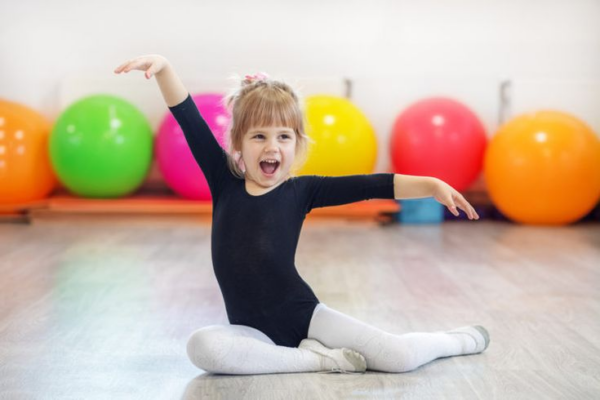
Gymnastics supports children’s growth in many important ways. It builds strength, balance, and coordination while also improving focus, confidence, and social skills. Regular participation helps develop discipline and can even support learning and school readiness. It’s a fun and effective way to encourage overall healthy development in kids.
Gymnastics is frequently overlooked by parents who only associate it with physical strength and flexibility when thinking about activities that support a child’s overall development. But what if you knew that gymnastics improves brain function, develops discipline, and strengthens emotional resilience in addition to strengthening muscles? According to studies, exposing kids to structured physical activities like gymnastics at a young age can have a positive impact on their development long after they are in their formative years.
We’ll look at the physical, mental, social, and emotional advantages of gymnastics for kids in this blog. In order to assist parents in making wise choices, we will also contrast it with other activities and offer insights supported by research.
Table of Contents
Gymnastics' Benefits for Physical Development
A child’s coordination, gross and fine motor skills, and general body awareness are all strongly anchored by gymnastics. Young children benefit from regular practice in developing strength, agility, and balance as well as learning how to control their movements and posture. Children who participate in physical activities like gymnastics have better cardiovascular health and muscular endurance than their peers who lead sedentary lifestyles, according to the American Academy of Pediatrics.
In particular, gymnastics supports bilateral coordination, which is the ability to use both sides of the body simultaneously, the skills required for daily tasks such as binding the shoelaces or holding the ball. This physical development also has cross-references for academic abilities. In addition, regular movement increases the spirit of our body conditions, which is necessary to prevent injuries in other physical activities.
Parents often see that children walk in gymnastics programs and move more confidently and display better currency and flexibility. These basic physical symptoms are particularly beneficial during childhood, when motor patterns are becoming rapid. According to this report on structured physical activity, the experience of early movement is important for lifelong physiological ability
Young Gymnasts' Cognitive and Brain Development
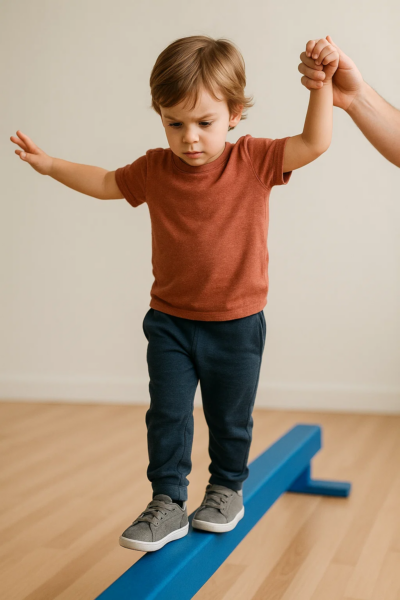
Gymnastics stimulates the brain in intricate ways, so it’s not just a physical activity. Sequencing, memory, attention, and spatial awareness, all essential elements of early cognitive development, are needed for movements. The prefrontal cortex, the part of the brain in charge of executive function and self-regulation, is strengthened by high-focus exercises like cartwheels and handstands.
Early reciprocal attention-response activities improve brain architecture, according to Harvard University’s Center on the Developing Child. These brain-building interactions are supported in gymnastics through cue listening, sequence following, and routine adaptation.
Additionally, gymnastics fosters creativity and problem-solving in kids, particularly when they are faced with unfamiliar routines or skills. As we cover in our related blog, The Importance of Imagination in Child Development, these cognitive processes are intimately related to pretend play and imagination.
It’s also worth noting that early physical activity has been linked to better academic readiness. A study published in Frontiers in Psychology found that preschoolers who engaged in structured movement activities scored higher in memory retention and early numeracy skills compared to inactive peers.
Self-esteem and emotional development
One of the most profound impacts of gymnastics lies in emotional development. Children often face fears in learning new skills, whether it’s attempting a backflip or performing in front of others. Overcoming these fears builds emotional resilience and boosts self-confidence. This fosters a growth mindset, where children learn that effort leads to improvement.
Furthermore, the structure of gymnastics programs introduces children to goal setting and delayed gratification. Mastering a skill can take weeks of practice, teaching patience and perseverance, traits strongly linked to emotional maturity.
Research from the Journal of Youth and Adolescence highlights that children involved in sports, especially those requiring discipline and self-regulation like gymnastics, are less likely to exhibit anxiety or depressive symptoms. This also ties in with what we discussed in our blog on Daycare vs Stay-at-Home, where structured environments foster healthier emotional regulation compared to unstructured ones.
Social Development and Team Dynamics
Although gymnastics is often seen as an individual sport, most gymnastics classes are held in group settings, encouraging teamwork, cooperation, and communication. Children must wait their turn, support peers, and often perform in group routines, teaching critical interpersonal skills.
Participation in gymnastics helps reduce social anxiety by giving children structured opportunities to interact and build friendships. These early social interactions prepare them for group dynamics in school, community settings, and later life. According to Zero to Three, children learn empathy and emotional cues from peer interactions during early childhood.
This collaborative environment is similar to shared meal settings discussed in our blog on Practical Tips for Promoting Healthy Eating Habits in Children, where structured group engagement fosters both nutrition and connection.
Additionally, interacting with adult coaches fosters respect for authority figures, enhances communication, and builds trust, all essential for secure emotional and social attachments.
Gymnastics vs. Other Activities for Young Children
Many activities help children grow, but gymnastics offers a special mix. It starts at an earlier age than most, and it helps with physical skills, thinking, confidence, and making friends all at the same time.
Comparison of Common Activities:
Activity | Best Starting Age | Body Skills | Thinking & Focus | Making Friends | Confidence & Emotions |
Gymnastics | 2 years and up | Very strong | Very strong | Very strong | Very strong |
Dance | 3 years and up | Very strong | Moderate | Very strong | Moderate |
Martial Arts | 4 years and up | Very strong | Very strong | Moderate | Very strong |
Team Sports | 5 years and up | Good | Basic | Very strong | Moderate |
Key Developmental Outcomes by Gymnastics Age Group
Age Group | Developmental Focus | Example Skills | Benefits |
2–3 yrs | Motor Coordination, Sensory Input | Rolling, crawling, light jumping | Builds body awareness |
4–5 yrs | Balance, Attention Span | Cartwheels, beam walking | Improves focus and motor planning |
6–8 yrs | Strength, Social Skills | Vaulting, bar routines | Boosts confidence and group interaction |
9–12 yrs | Discipline, Goal Setting | Tumbling passes | Enhances resilience and perseverance |
Frequently Asked Questions
At what age should my child start gymnastics?
Most programs offer parent-assisted classes starting at age 2. Independent participation begins around age 3–4.
Is gymnastics safe for young children?
Yes, when led by trained professionals and with age-appropriate equipment, gymnastics is a safe and beneficial activity.
Can gymnastics improve academic performance?
Indirectly, yes. Improved concentration, memory, and discipline foster better academic readiness.
How often should children attend gymnastics classes?
1–2 sessions a week are typically sufficient for developmental benefits without burnout.
Final Thoughts
Gymnastics goes far beyond just physical activity; it supports every aspect of a child’s growth. From boosting coordination and strength to enhancing confidence and discipline, it’s a well-rounded way to support healthy development. Whether your child is just starting out or already tumbling with ease, gymnastics lays the groundwork for strong mental, emotional, and social skills.
References
- Harvard University. (n.d.). Serve and Return. https://developingchild.harvard.edu/science/key-concepts/serve-and-return/
- American Academy of Pediatrics. (2016). Physical Activity and Children. https://publications.aap.org/pediatrics/article/138/3/e20161209/52576/
- Frontiers in Psychology. (2020). Physical Activity and Cognitive Development in Preschoolers. https://www.frontiersin.org/articles/10.3389/fpsyg.2020.01718/full
- Journal of Youth and Adolescence. (2011). Sports Participation and Mental Health. https://link.springer.com/article/10.1007/s10964-010-9550-8
- Zero to Three. (2020). Social and Emotional Development. https://www.zerotothree.org/resource/childhood-development-what-parents-need-to-know/
Comments are closed