



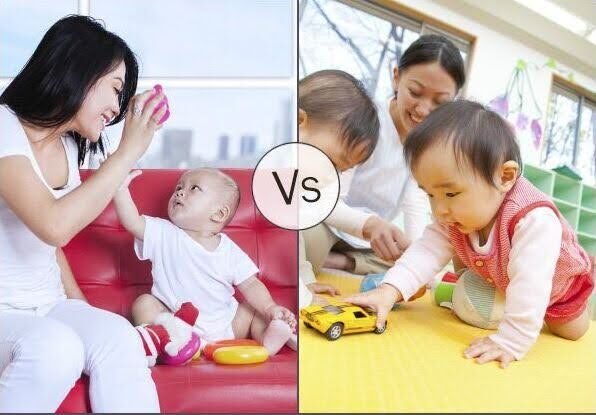
Being a new parent comes with a mountain of decisions, and figuring out whether to stay home with your child or enroll them in daycare is one of the big ones. It’s normal to feel a bit all over the place emotionally. You might feel torn, uncertain, even guilty at times. After all, this choice can shape your child’s early social and emotional development, and possibly even their learning down the line.
Maybe you’re wondering if staying home means missing out on early learning experiences. Or maybe daycare feels like a leap of faith — trusting someone else to care for your little one the way you would. Neither option is easy, and the pressure to “get it right” can feel overwhelming.
That’s where this guide comes in. We’ll walk through the pros and cons of each path, pulling from research and expert advice, so you can make the decision that truly works best for your family. Let’s take it one step at a time.
Table of Contents
Understanding Child Development in Early Years
The formative early years of a child’s life shape their future. Through these years, the brain rapidly develops, and an environment that supports it plays an essential role in managing emotions, behavior, and cognitive growth. Early experiences have been shown to actually shape the brain’s architecture National Research Council & Institute of Medicine, 2000.
Throughout these years, the child requires stable emotional support, stimulating activity, and secure attachment. In the home or daycare environment, the extent to which these are provided determines developmental achievement. Language learning, managing emotions, and learning through play are all necessary elements of early childhood, which can all flourish in an optimal setting.
Key Points
- Brain growth is highest in the first five years.
- Attachment security molds emotional and social resilience.
- Enriched environments enhance language and problem-solving abilities.
The Daycare Setting: Structure, Socialization, and Learning
Daycare settings provide routine that introduces children to social learning at an early age. In high-quality daycare, children are exposed to language skills, working together, and pre-academic ideas. The U.S. Department of Health & Human Services states that preschool-aged children who attend high-quality daycare are more likely to have improved cognitive and language abilities.
Additionally, exposure to group dynamics assists children with learning to accept diverse personalities, manage conflict, and communicate effectively. These are skills that are not easily replicated at home. That is not all there is, though. All daycare centers are not created equal. Poor quality daycare can create issues with attachment stress, over-stimulation, or inconsistent care.
Advantages of Daycare: | Challenges of Daycare: |
|
|
For a deeper dive into what your child might experience, read our blog on What to Expect in Your Child’s First Year at Daycare.

Stay-at-Home Parenting: Emotional Security and One-on-One Attention
Staying at home allows for personalized care that adapts to your child’s needs. This environment can foster deep emotional bonds and a strong sense of security. The flexible routine also enables spontaneous play and exploration, critical components for curiosity and emotional development.
Children with attentive caregivers at home often display lower stress levels and fewer behavioral issues. However, they may lack opportunities for peer interaction, especially in single-child households. Social development requires intentional effort, such as arranging playdates or participating in community groups.
According to Parents Magazine, stay-at-home parenting positively affects early emotional regulation and can strengthen resilience when supported by responsive parenting practices.
Benefits of Stay-at-Home Parenting: | Challenges of Stay-at-Home Parenting: |
|
|
For related parenting advice, explore Two Positive Parenting Tips for Toddlers (2–3 Years)

Daycare vs. Stay-at-Home Developmental Factors
Factor | Daycare Benefits | Stay-at-Home Benefits |
Emotional Development | Learns to adapt to different caregivers | Stronger bond with primary caregiver |
Social Skills | Peer interaction & group learning | Limited peer exposure unless arranged |
Language & Cognitive Skills | Guided early learning curriculum | Personalized, organic language growth |
Routine & Discipline | Structured daily activities | Flexible, child-led routines |
Health & Immunity | Builds immunity through exposure | Fewer illnesses early on |
Attachment Security | May vary with caregiver consistency | High with a responsive caregiver |
Parental Well-being | Allows return to work | Potential for isolation or burnout |
Things to Consider When Making Your Decision
Each child and family is different. Your values, budget, and child’s temperament are all factors to that decisions about childcare must satisfy. Your extroverted toddler may do well in a group daycare, but your sensitive child may do best in peaceful home settings. Consider the following when making your choice:
- Consider whether or not you can afford high-quality child care or if home is cheaper for your family.
- Consider whether you can do full-time parenting without becoming emotionally drained.
- Consider whether remaining at home may interfere with your work progress or long-term occupational aspirations.
- Notice if your child displays indications of requiring increased peer contact.
- Assess whether or not you can attain an even balance that aids both your personal and professional life.
Long-term Effects on Child Behavior and Studies
Long-term research yields inconsistent but informative findings. A study conducted over time by the NICHD Early Child Care Research Network demonstrated that children who attended high-quality daycare fared better on vocabulary and cognitive measures during early school age, while they also showed slightly higher behavioral difficulties.
On the contrary, home-raised children tend to do well with emotional control and fewer discipline problems, provided parents create rich environments with regular stimulation. Neither option is automatically best; the trick is with the quality and responsiveness of the environment you select.
To learn about the growth after early childhood, check out our Middle School Developmental Stages guide.
Frequently Asked Questions
Is daycare bad for emotional development?
Not if it’s high quality. Secure attachments with caregivers and structured activities can promote resilience and social learning.
Is it better for children to go to daycare or stay home?
Studies show that children who are loved, and well taken care of who go th day care actually are better adjusted socially and academically than those that stay home. However, If there is a parent who comfortable staying home with the child until it is time to go to regular school, there is nothing wrong with it.
Can stay-at-home parenting delay social development?
It can, if not supplemented with social interactions like playdates or community programs.
Are kids happier with stay-at-home parents?
A Harvard researcher studied the happiness of kids of working moms compared to stay-at-home moms. She found that they end up just as happy as adults as the children of moms who stayed home. Kids of stay-at-home moms grow up to be happy, too
What if I want the best of both worlds?
Part-time daycare or nanny shares can blend structured learning with personalized care.
Final Thoughts
Parenting comes with countless important choices, and one of the first is deciding between staying at home or enrolling your child in daycare. The most important thing is that your child feels safe, loved, and supported no matter the setting.
With the right guidance and a bit of research, you can make the decision that feels right for your family’s unique need
References
1. National Research Council & Institute of Medicine. (2000)
2. NICHD Study of Early Child Care and Youth Development (SECCYD) Historical/For Reference Only
3. Children’s Learning and Development Benefits from High-Quality Early Care and Education: A Summary of the Evidence
4. What research says about being a stay-at-home parent. Parents Magazine
Comments are closed