



Key Summary
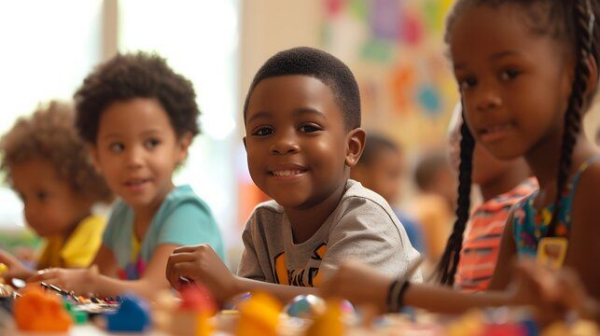
Cutting-edge approaches to child development focus on blending science, psychology, and education to support the whole child. These methods include play-based learning, early brain stimulation, mindfulness, creative expression, cultural sensitivity, and purposeful use of technology. Together, they build not just academic skills but also emotional intelligence, resilience, and adaptability for a rapidly changing world.
The concept of child development as described in the traditional models is not always able to keep up with the requirements of the modern, rapidly evolving world, where technology, cultural diversity, and new stressors are defining childhood experiences. The use of old-fashioned one-size-fits-all approaches may ignore personal learning styles and emotional requirements. Contemporary methods combine neuroscience, psychology, technology, nutrition, arts, and cultural inclusivity to develop not only academic proficiency but also emotional resilience, creativity, empathy, and adaptability, which are the key attributes to succeed in a global, innovation-based society.
Table of Contents
Neurodevelopmental Insights and Early Brain Stimulation
The early years are the neurological goldmine, and the first five years of life are when the brain develops over one million neural connections every second (Harvard Center on the Developing Child). Responsive interaction, sensory stimulation, and language-rich environments in early stimulation are shown to have a lifetime effect on the learning capacity and the ability to regulate emotions.
- Responsive caregiving, such as eye contact, imitating sounds, and responding to cues builds neural pathways related to trust, language, and emotional intelligence.
- Multi-sensory play (textures, sounds, and colors) activates several parts of the brain at the same time, which helps to solve problems and become more adaptive.
- The language immersion, reading, singing, and storytelling are directly related to better literacy skills and cognitive flexibility in later life.
Play-Based Learning as a Cognitive Catalyst
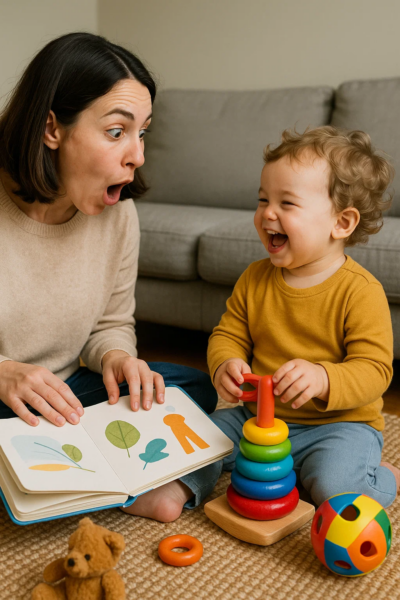
Play is not a matter of fun; it is the main form of learning for a child. The American Academy of Pediatrics research proves that free, creative play contributes to executive functioning, problem-solving, and emotional resiliency.
- Pretend play develops empathy because children can put themselves in the shoes of another.
- Blocks, LEGOs, or art materials are constructive play that enhances spatial reasoning and creative problem-solving.
- Cooperative play teaches problem-solving, communication, and teamwork.
Organized physical exercises, such as gymnastics, have the advantage of both movement and play to improve mental and physical coordination. In contemporary classrooms that embrace Reggio Emilia or Montessori-based classrooms, play is given prime importance, as it is understood that fun is the key to further involvement and retention.
Emotional Intelligence and Gentle Parenting Practices
Emotional intelligence (EQ), the ability to identify, manage, and respond to emotions, is a critical predictor of lifelong success. Gentle parenting, which emphasizes empathy, respect, and connection over punishment, nurtures this skill from an early age.
- Active listening validates a child’s feelings, making them feel safe and understood.
- Positive discipline replaces harsh punishments with guidance that teaches responsibility and problem-solving.
- Co-regulation, calming with a child instead of demanding they “calm down,” models healthy coping strategies.
Physical Development and the Role of Movement
Brain development cannot be separated from physical movement. Sports such as running, climbing, gymnastics, and dance enhance neuromotor integration that increases attention span, memory, and coordination.
- The sports or playground play enhances posture, strength, and endurance through gross motor skills development.
- Writing readiness and hand-eye coordination are developed through fine motor skills developed by drawing, bead threading, or clay modeling.
- Playing in diverse settings helps in honing spatial intelligence and problem-solving skills.
According to the research conducted in Effects of Gymnastics on Child Development, the results revealed that children who practice physical activities regularly in a structured physical activity program not only improve their fitness but also their self-confidence and ability to work in a team.
Technology Integration in Early Education
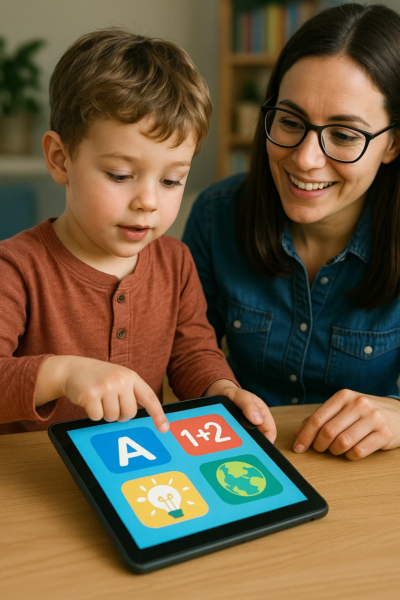
Instead of being afraid of the technology, contemporary child development strategies promote purposeful, scaffolded technology use. Adaptive learning systems, AI tutors, and immersive simulations bring the world to the classroom.
- Literacy and numeracy are enhanced by gamified learning apps that present interactive challenges.
- Virtual reality (VR) enables safe discovery of worlds, including the deep-sea ecosystem and historical sites.
- Online collaborative projects help children around the world to become aware of other cultures and learn to communicate.
Thoughtful integration of technology means devices are used as tools, not distractions, and augment but do not substitute real-life experiences.
Mindfulness and Emotional Regulation in Children
Mindfulness, which was initially regarded as an adult stress-management technique, has become a central child developmental approach. Such methods as deep breathing, guided meditation, and mindful movement help to increase focus, decrease anxiety, and improve emotional balance.
- Mindful storytelling is a relaxation and creativity practice.
- Mindfulness that is based on the senses (such as listening, walking, or mindful coloring) anchors the attention in the present moment.
- Journaling gratitude helps to have a positive attitude.
In contexts like Impact of Parental Incarceration on Child Development, mindfulness practices offer children an essential anchor, helping them cope with uncertainty and emotional turbulence.
Nutrition and Brain-Body Growth
Nutrition is a silent driver of cognitive, emotional, and physical development. Diets rich in omega-3 fatty acids, proteins, and micronutrients directly influence memory, focus, and mood stability.
- Breakfast quality correlates with academic performance.
- Iron and zinc play key roles in attention and behavior regulation.
Hydration is essential for concentration and energy.
Schools integrating nutrition education into curricula ensure that children not only eat healthily but also understand why it matters.
Art-Based and Creative Expression in Child Growth
Art is more than decoration; it is a developmental powerhouse. Drawing, painting, music, and drama activate brain regions linked to creativity, empathy, and problem-solving.
- Visual arts strengthen fine motor skills and visual-spatial reasoning.
- Music enhances auditory processing and mathematical thinking.
- Drama boosts public speaking, confidence, and social skills.
Art-based learning is especially valuable in contexts like The Importance of Imagination in Child Development, where self-expression supports mental flexibility and innovation.
Nature-Based Learning and Outdoor Exploration
Exposure to nature offers developmental benefits that technology cannot replicate. Activities like gardening, hiking, and nature journaling encourage curiosity, environmental stewardship, and resilience.
- Unstructured outdoor time promotes independence and problem-solving.
- Gardening projects teach responsibility and patience.
- Wildlife observation fosters scientific thinking and empathy for living things.
Studies show that nature exposure reduces ADHD symptoms and improves mood stability in children.
Holistic Approaches and Cultural Sensitivity
Cutting-edge strategies recognize that children do not grow in isolation; they are shaped by culture, community, and family values.
- Culturally responsive teaching validates and integrates children’s heritage.
- Community mentorship builds resilience and real-world skills.
- Family tradition integration ensures development aligns with identity.
This approach builds globally competent, empathetic citizens ready to navigate diverse environments.
Comparison of Traditional vs. Cutting-Edge Methods
|
Aspect |
Traditional Approach |
Cutting-Edge Approach |
|
Learning Focus |
Rote memorization |
Experiential learning |
|
Role of Play |
Limited |
Central to learning |
|
Discipline Style |
Punitive |
Positive discipline |
|
Technology Use |
Minimal |
Purposeful integration |
|
Cultural Adaptation |
Generalized |
Personalized & inclusive |
Frequently Asked Questions
Are cutting-edge child development methods suitable for all children?
Yes. Their flexibility allows adaptation to diverse learning needs, cultures, and developmental stages.
How can parents apply these methods at home?
Begin with simple changes: introduce mindful playtime, encourage open dialogue, provide balanced nutrition, and integrate purposeful tech use.
Do they replace traditional teaching entirely?
No. They enhance traditional frameworks by adding personalized, evidence-based strategies that reflect today’s realities.
Final Thoughts
Incorporating cutting-edge approaches to child development is not about discarding the past but building upon it with the best science, creativity, and compassion we have today. These methods equip children with the skills, resilience, and curiosity to thrive in a world that demands adaptability.
References
- Harvard Center on the Developing Child https://developingchild.harvard.edu/key-concept/brain-architecture/
- American Academy of Pediatrics https://publications.aap.org/pediatrics/article/142/3/e20182058/38649/The-Power-of-Play-A-Pediatric-Role-in-Enhancing
- UNICEF Early Childhood Development https://www.unicef.org/early-childhood-development
Comments are closed