



Key Summary
Crafts for kids develop far more than creativity; they build fine motor skills, concentration, problem-solving, self-expression, and early literacy and numeracy concepts through hands-on activity. The best children’s crafts are open-ended, process-focused rather than product-focused, and use simple, accessible materials that do not require elaborate preparation.
Crafts are also an excellent sensory and play activity for children with autism or sensory processing differences, with the right material choices and a low-pressure approach.
Arts and crafts are among the most valuable activities in early childhood. Long before children can read or write, they are painting, cutting, gluing, and creating, and in doing so, they are building the foundational skills that support every area of their development. From the pincer grip that will later hold a pencil, to the concentration required to fold paper, to the imaginative thinking that decides what colour to paint a caterpillar, crafts engage the whole child.
This guide covers the best crafts for kids across different age groups, the developmental benefits behind each activity, and practical tips for making craft time fun, easy, and genuinely educational, whether at home or in an early childhood classroom.
For sensory-based craft ideas specifically, see our guide on indoor sensory activities for infants during rainy days and outdoor sensory play ideas for babies and toddlers.
Table of Contents
Why Crafts Matter for Child Development
Craft activities engage children on multiple developmental levels simultaneously — which is why they are a cornerstone of high-quality early childhood education programmes around the world.
- Fine motor development: Cutting, tearing, gluing, threading, and painting all develop the small muscle groups in hands and fingers that are essential for writing.
- Hand-eye coordination: Placing stickers, cutting along a line, and threading beads all require the brain and hands to work together in precise coordination.
- Creativity and imagination: Open-ended craft activities with no single right answer build creative thinking, self-expression, and confidence.
- Concentration and persistence: Completing a craft project, even a simple one, builds attention span and the ability to work toward a goal.
- Language development: Talking about colours, shapes, textures, and the creative process during crafts is one of the richest opportunities for vocabulary building in early childhood.
- Sensory exploration: Different craft materials, smooth paper, rough glitter, soft fabric, cold paint, provide rich sensory experiences that build sensory processing and tolerance.
Best Crafts for Kids by Age Group
Crafts for Toddlers (18 months to 3 years)
At this age, the process is entirely the point. Toddlers are not making products, they are exploring materials. Activities should be simple, safe to touch, and involve large-scale movements.
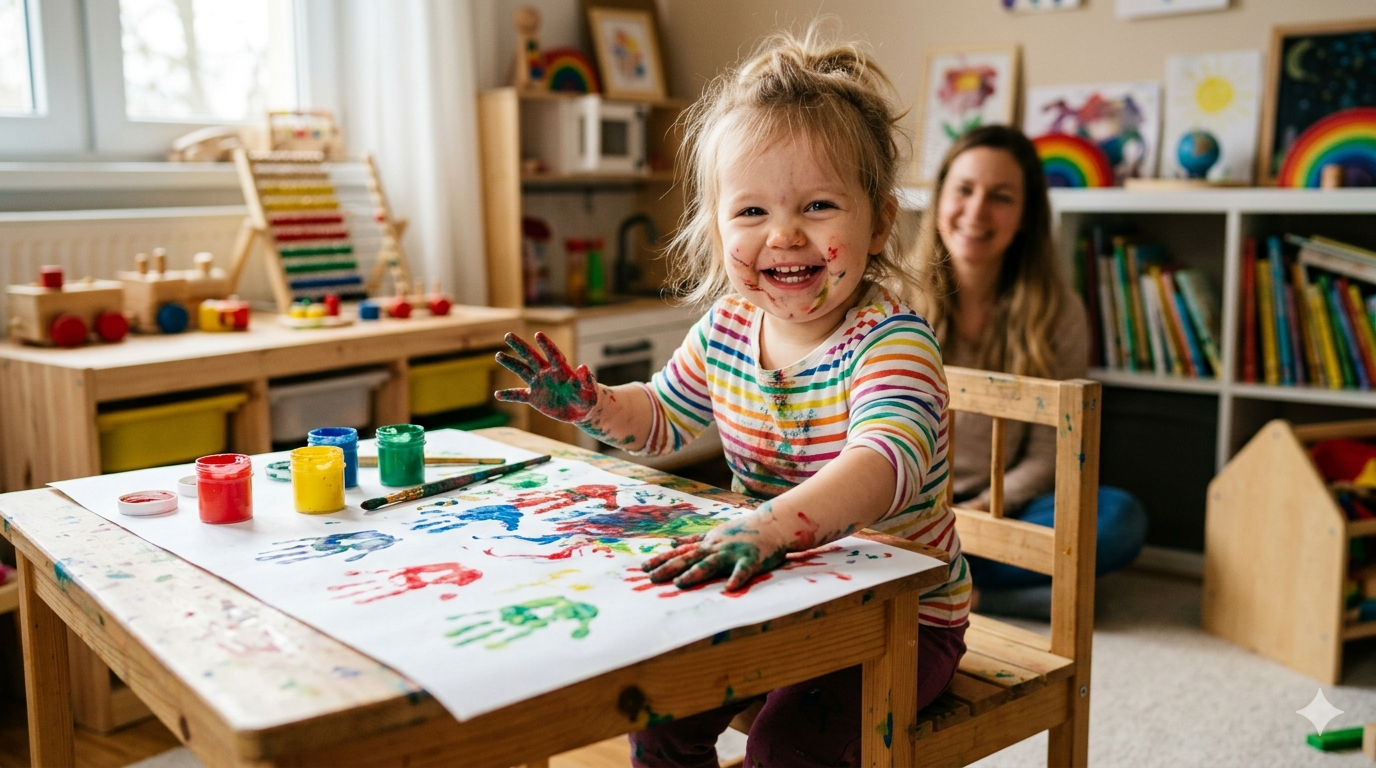
Finger painting:
The ultimate toddler craft. Use washable, non-toxic paint and large paper. The sensory experience of paint between fingers is deeply engaging and builds tactile tolerance.
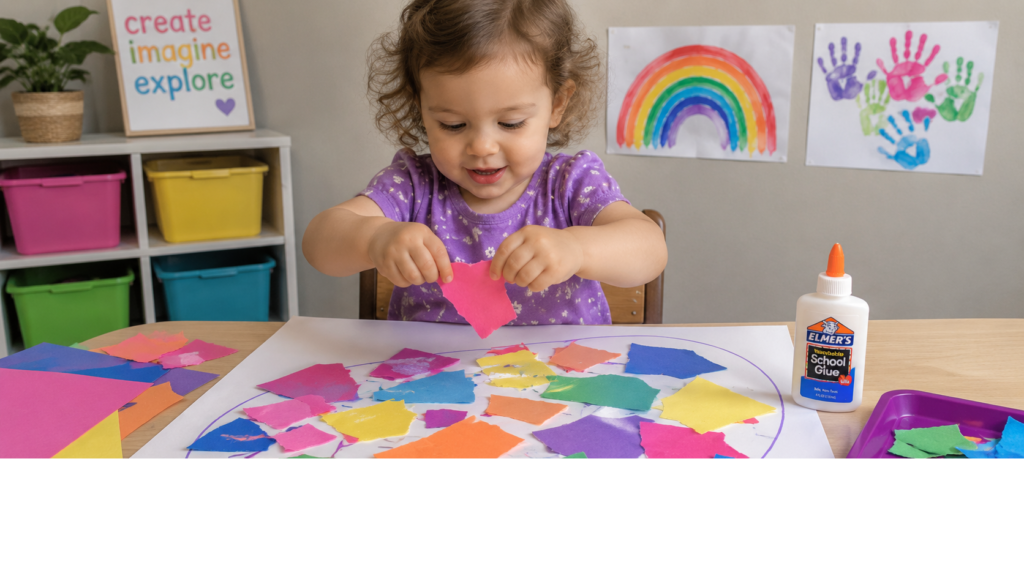
Collage with torn paper:
Tearing paper develops hand strength and bilateral coordination. Gluing pieces to a large sheet builds cause-and-effect understanding.
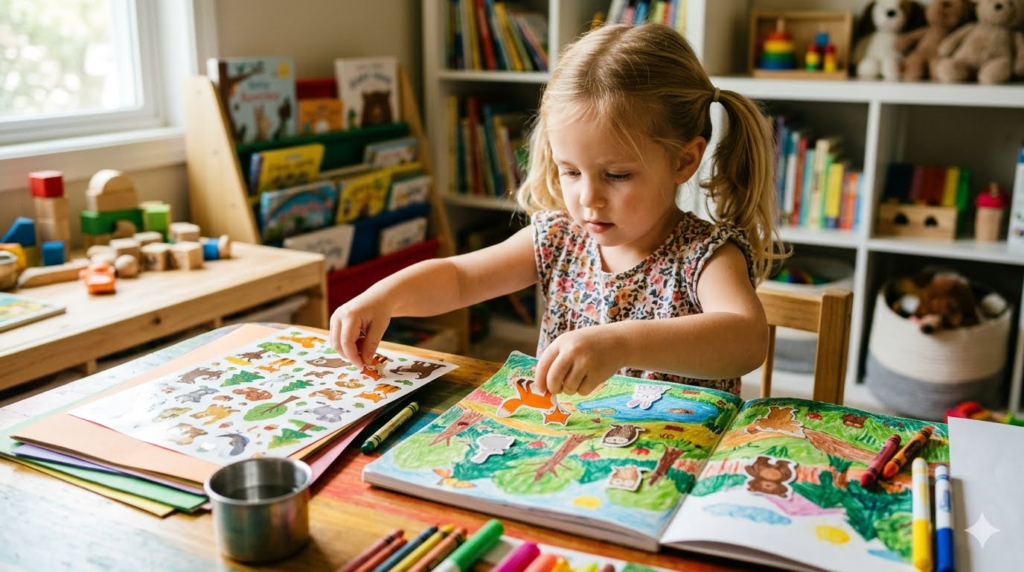
Sticker art:
Peeling and placing stickers develops the pincer grip and hand-eye coordination in a highly motivating, low-frustration activity.
Crafts for Preschoolers (3 to 5 years)
Preschoolers can manage more complex steps, use scissors (with supervision), and begin to create intentional representations of things in their world.
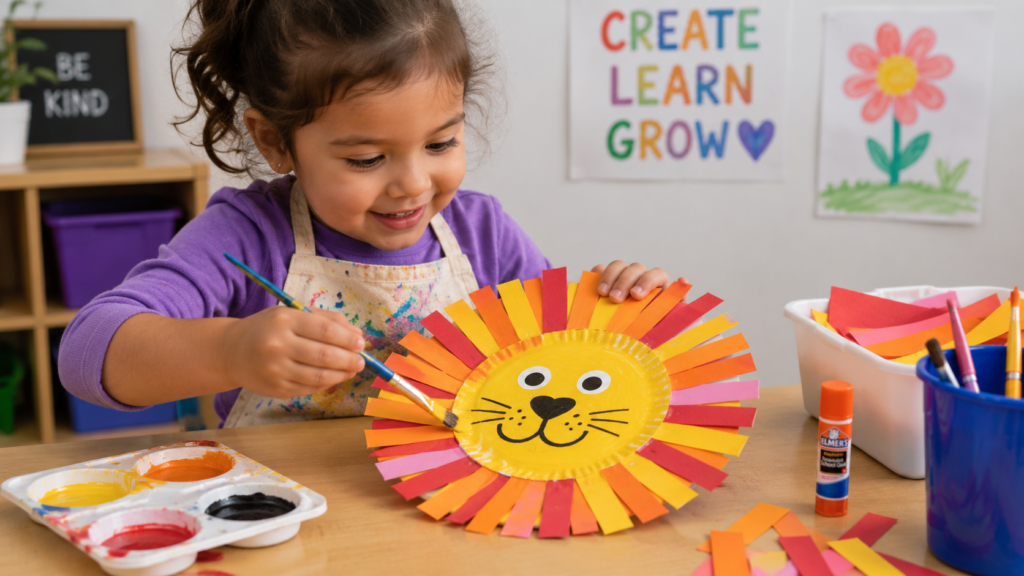
Paper plate animals:
Simple, structured, and hugely popular. Paint a paper plate, add construction paper features, and create any animal the child chooses.
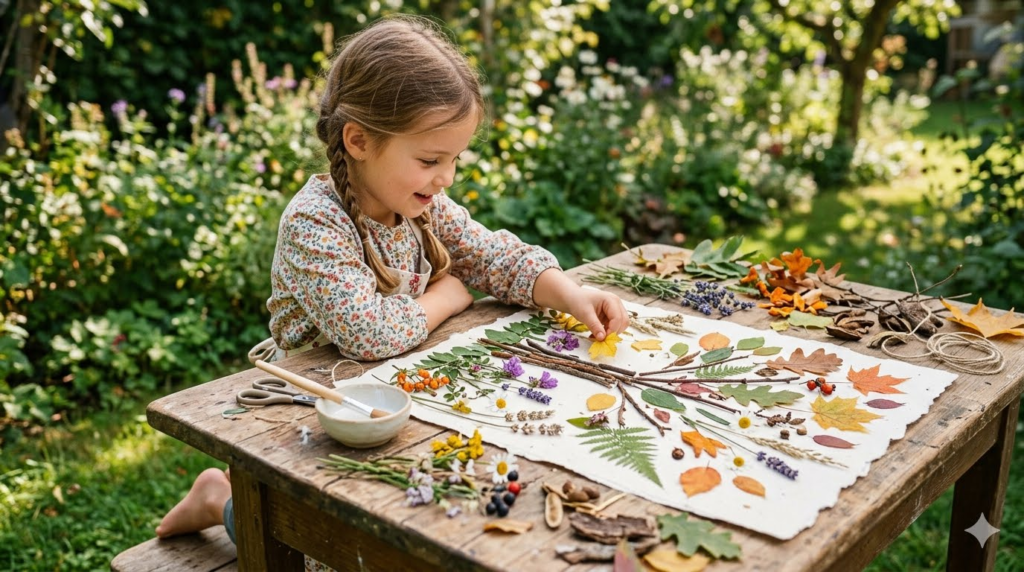
Nature collage:
Collect leaves, flowers, and sticks outdoors, then glue them to paper to create nature art. Combines outdoor exploration with creative expression.
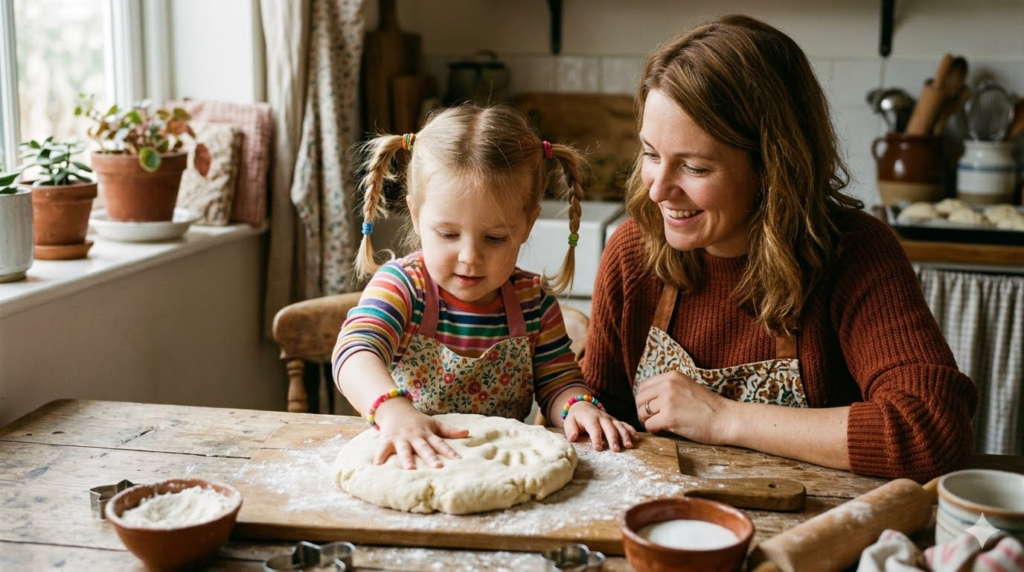
Salt dough handprints:
A classic keepsake craft that also develops sensory tolerance and fine motor awareness. Simple recipe: 2 cups flour, 1 cup salt, 1 cup water.
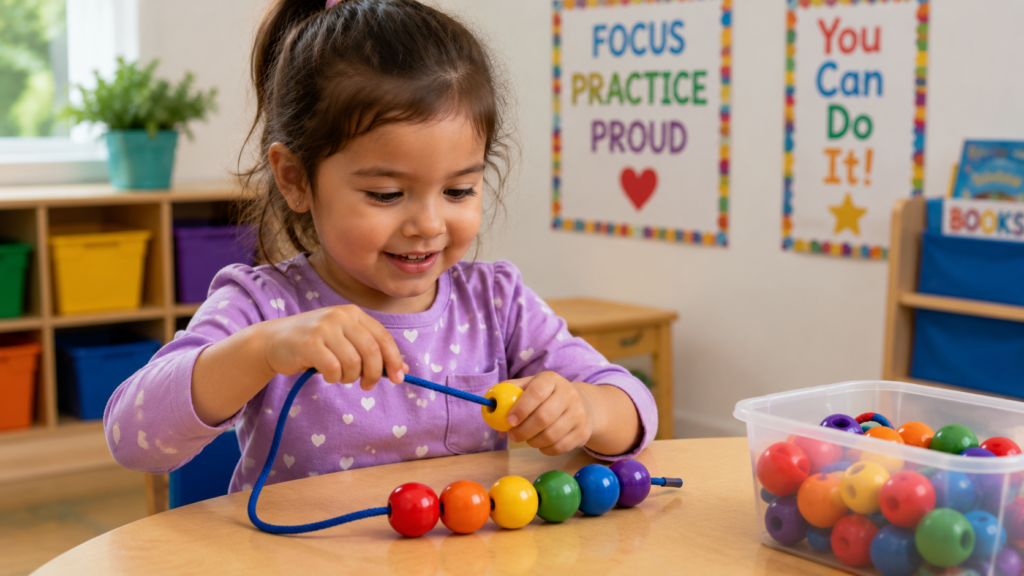
Threading and lacing:
Threading large beads onto a lace or string builds bilateral hand coordination and concentration in a beautifully structured craft activity.
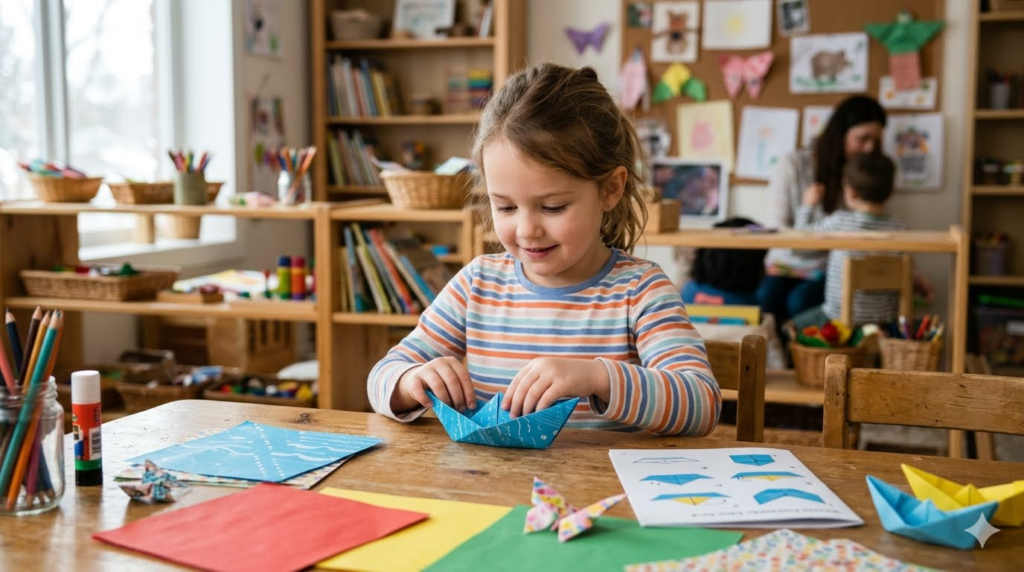
Simple origami:
Paper folding develops spatial awareness, concentration, and following multi-step instructions, all crucial pre-academic skills.
For more on sensory-informed craft and play, see our guide on how sensory play helps infant motor skill development.
Frequently Asked Questions
What are the easiest crafts for toddlers?
The easiest and most developmentally appropriate crafts for toddlers are finger painting, sticker art, tearing and gluing paper, and playdough play. These activities require minimal setup, are safe for young children, and provide excellent developmental benefits without the frustration of complex steps.
How do crafts support early childhood education?
Crafts develop fine motor skills, hand-eye coordination, creativity, concentration, language development, and sensory processing, all foundational skills for school readiness. They also provide a natural context for learning colours, shapes, sizes, and vocabulary through practical, hands-on experience.
Are crafts suitable for children with autism?
Yes, with thoughtful adaptation. Children with autism can benefit greatly from craft activities, but material choices should account for sensory sensitivities (avoiding textures that are aversive), instructions should be visual and simple, and the focus should be on enjoyable engagement rather than producing a specific end product.
At what age can children start using scissors?
Most children develop the hand strength and coordination to begin using child-safe scissors around age 3. Start with simple snipping (cutting fringe on paper) before progressing to cutting along lines. Always use safety scissors with rounded tips for young children and supervise closely.
How do I make craft time less messy?
Use a dedicated craft tray or a large plastic sheet to contain materials. Dress children in art smocks or old clothes. Choose washable paints and materials. Set up near a sink for easy cleanup. Embrace the mess as part of the learning, but manage it with practical containment strategies.
Final Thoughts
Crafts are one of the most joyful, rich, and developmentally powerful activities available to young children. Every project, no matter how simple, is building skills, confidence, and the love of creative expression that will serve children throughout their lives.
At Talk Early Ed, we believe in play-based, hands-on learning as the foundation of early childhood development. Explore our full resource library for more ideas on educational toy ideas that encourage creativity and motor skills
References
NAEYC – The Importance of Art in Early Childhood: https://www.naeyc.org
Zero to Three – Art and Creativity in Early Development: https://www.zerotothree.org