Key Summary
The best shapes ideas for preschool are fun shape activities that naturally fit into play, movement, conversation, art, food, books, and routines. Children do not need expensive materials or long lessons. They need opportunities to touch, compare, build, sort, describe, and create.
Table of Contents
Quick Answer
The best shapes ideas for preschool include shape hunts, sorting games, playdough building, craft-stick shapes, collages, movement games, sensory bins, and shape-based snacks. Start with circles, squares, and triangles, then introduce rectangles, ovals, and simple 3D shapes through short, hands-on activities using familiar household or classroom materials.
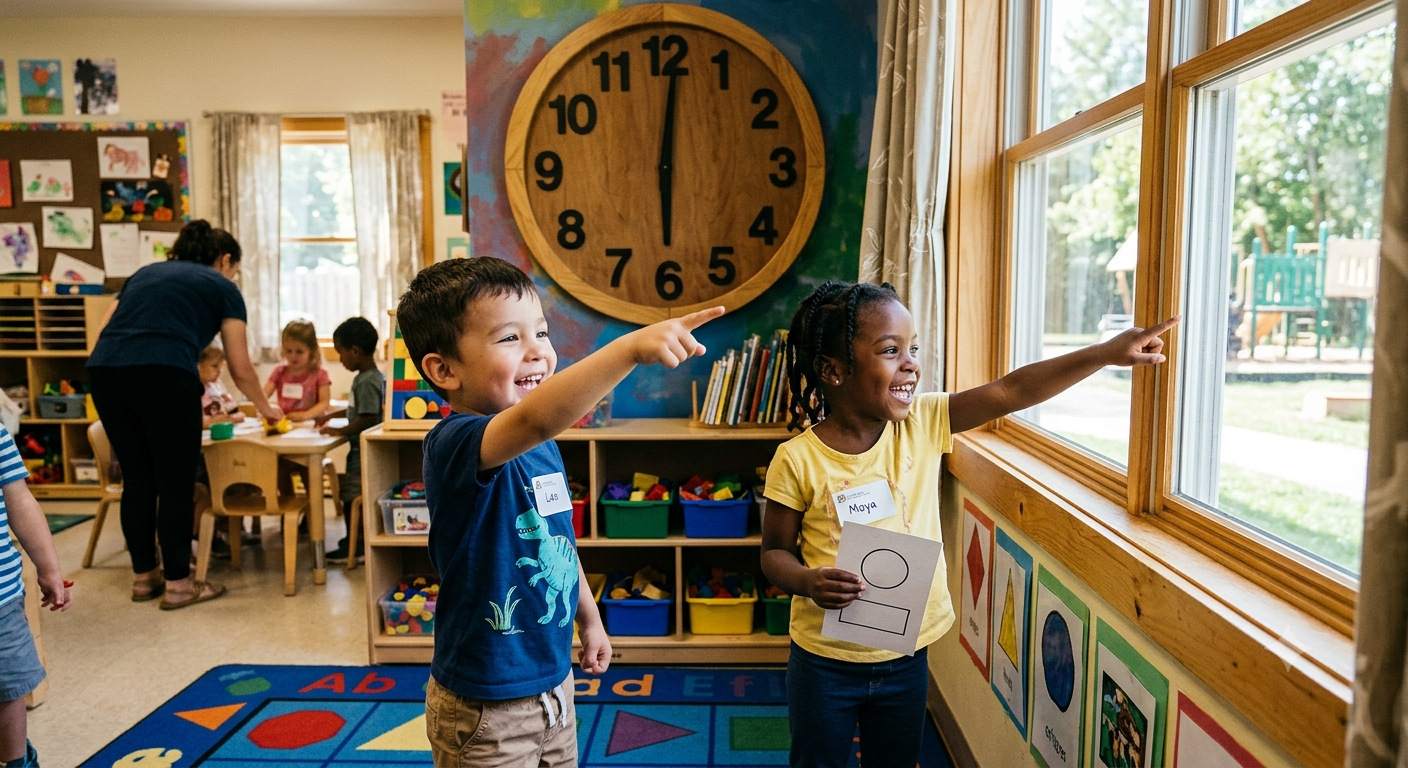
Children see shapes everywhere: round plates, rectangular doors, triangular roofs, square blocks and oval eggs. The best shape ideas for preschool get kids to notice these familiar shapes through play, not worksheet memorisation.
These preschool shape activities help children develop language and coordination by comparing, sorting, combining and creating shapes.
Why Is Learning Shapes Important for Preschoolers?
Shape learning is early geometry, but the best preschool math activities are more than just naming circles and squares. Shape recognition activities assist with spatial awareness, problem solving, motor control and vocabulary through comparing curves, sides, corners, sizes and positions.
NAEYC encourages families to identify, create, name, compare, and deconstruct shapes in routine. In preschool geometry and spatial learning, Head Start includes identifying, describing, comparing and composing shapes.
What Shapes Should Preschoolers Learn?
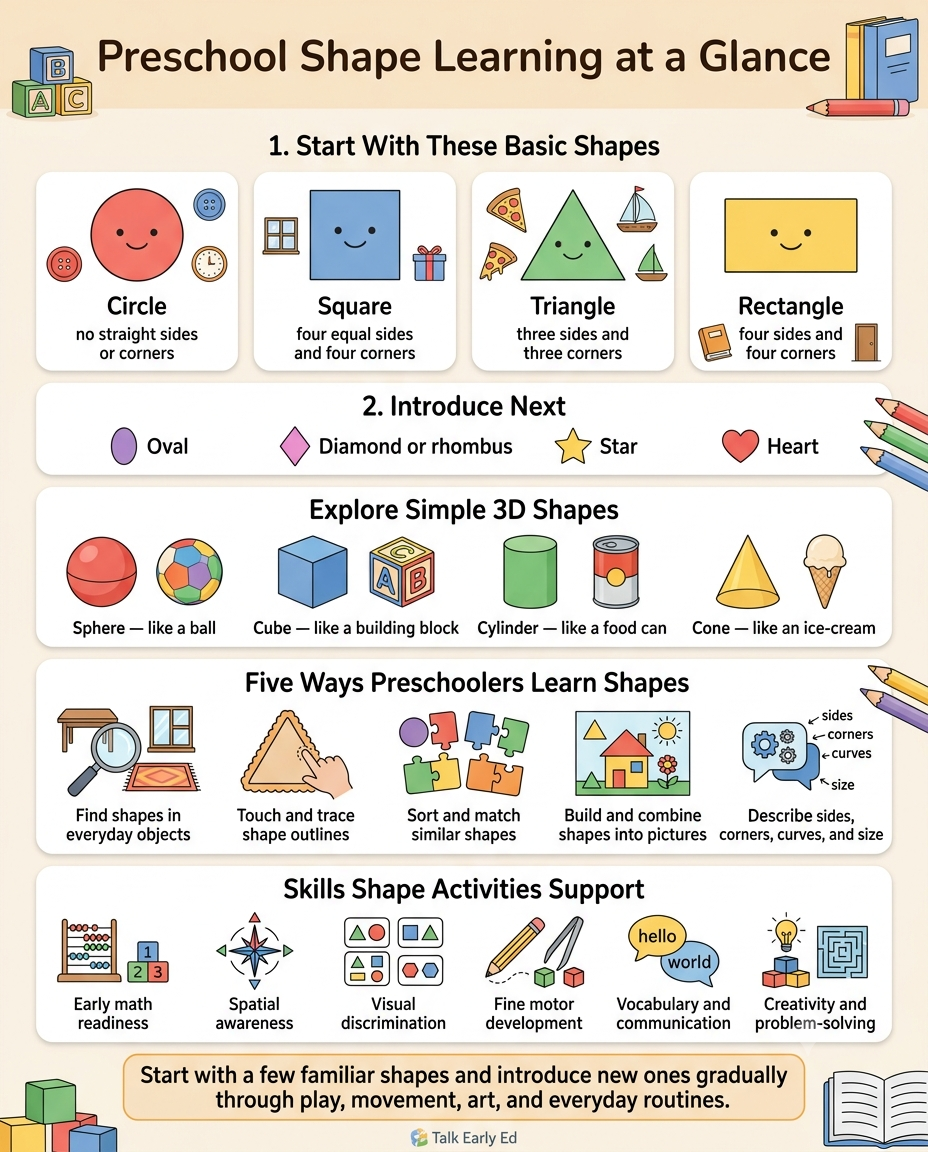
Start with 2D shapes for preschoolers that appear often in daily life:
- Circle
- Square
- Triangle
- Rectangle
- Oval
- Diamond or rhombus
- Star
- Heart
Begin with circles and squares and triangles. Later add in rectangles, ovals, diamonds, stars and hearts. Show children a variety of sizes, colours and directions so that they learn features, not one fixed picture.
Let's casually introduce 3D shapes: a ball is a sphere, a block is a cube, a can is a cylinder, an ice-cream cone is a cone. The aim is exposure. Head Start emphasises that children develop at different rates and thrive on play, exploration, discovery and problem solving.
25 Shapes Ideas for Preschool
Hands-On Shape Activities
These shape activities for preschoolers focus on touching, matching, and building.
1. Home or Classroom Shape Hunt
- Materials: A picture checklist, clipboard, and crayon.
- How: Search the room for three or four target shapes and mark each discovery.
- Learning: Real-world recognition and descriptive language.
- Variation: Ask why an object matches or finds the same shape in two sizes.
2. Shape Sorting Baskets
- Materials: Labeled baskets and safe objects or large shape cutouts.
- How: Label each basket with a shape. Children sort objects, then check the groups.
- Learning: Sorting, matching, and visual discrimination.
- Variation: Sort again by color or size.
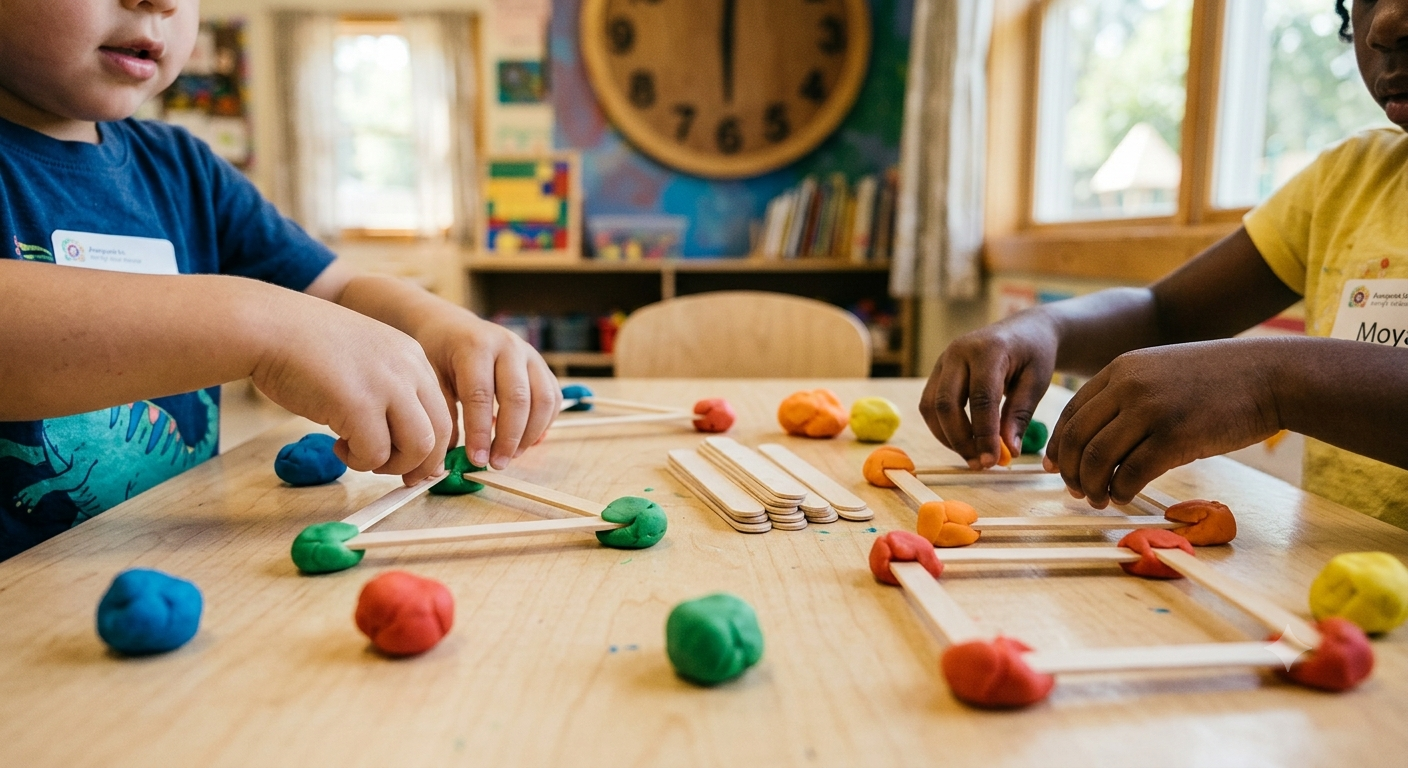
3. Build Shapes With Craft Sticks
- Materials: Craft sticks, yarn, or reusable adhesive.
- How: Arrange sticks into triangles, squares, rectangles, and diamonds; count sides and corners.
- Learning: Shape structure and geometry vocabulary.
- Variation: Ask, “Can you make two triangles with five sticks?”
4. Playdough Shape Building
- Materials: Playdough, rolling tools, and optional shape cards.
- How: Roll dough into “snakes,” then bend and join them into shapes.
- Learning: Fine motor strength, spatial sense, and shape composition.
- Variation: Build a square, then explore a cube with dough and sticks.
5. Shape Matching Cards
- Materials: Two sets of homemade shape cards.
- How: Match two sets that show shapes in different colors and orientations.
- Learning: Recognition beyond one familiar example.
- Variation: Play memory or match shapes to object photos.
6. Mystery Shape Bag
- Materials: Cloth bag and chunky wooden, foam, or cardboard shapes.
- How: Feel one hidden shape and describe its curves, sides, or corners before guessing.
- Learning: Tactile discrimination and math language.
- Variation: Offer beginners two choices; ask advanced learners to justify.
7. Shape Puzzles
- Materials: Shape sorter, inset puzzle, tangram-style pieces, or homemade cardboard puzzle.
- How: Rotate pieces until they fit, discussing what changes when a shape turns.
- Learning: Spatial rotation, persistence, and problem-solving.
- Variation: Match each piece to a traced outline first.
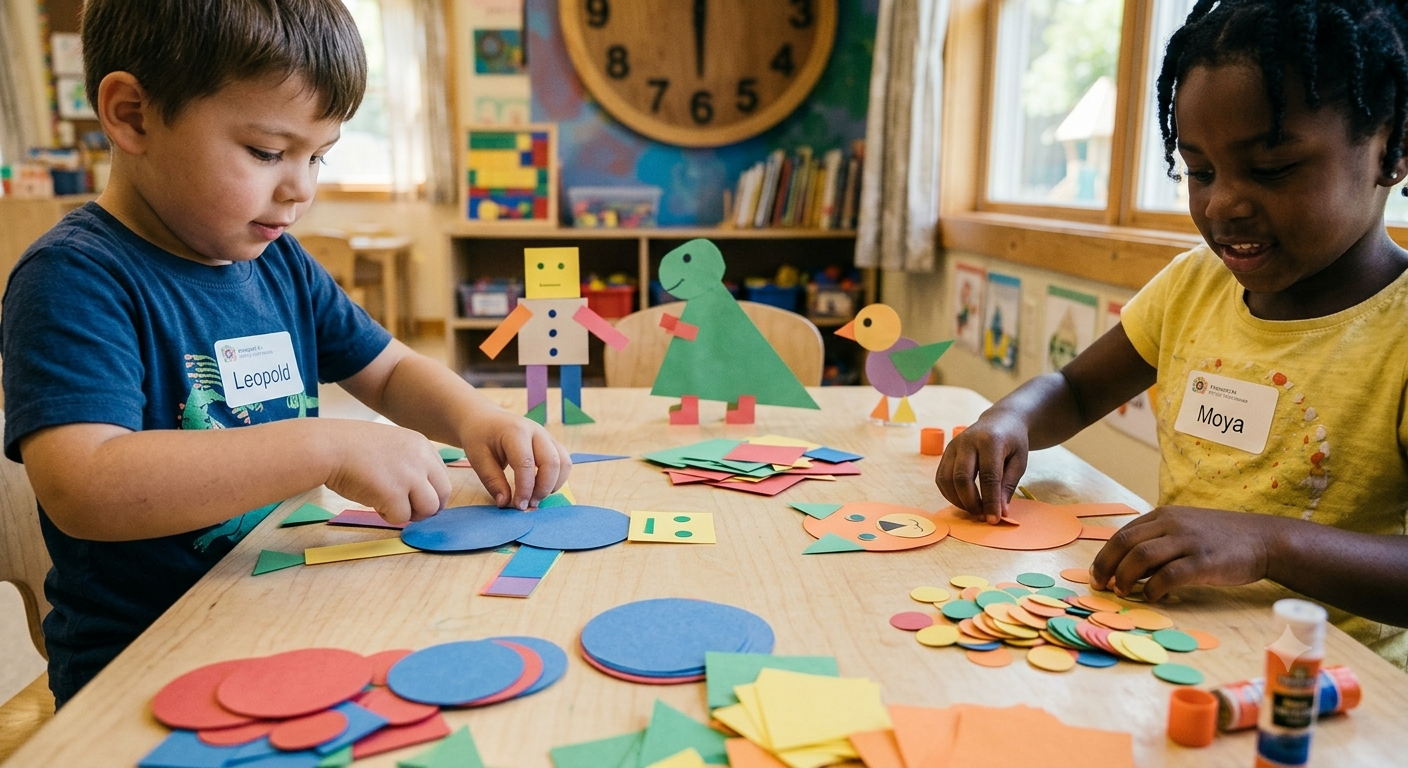
8. Build Pictures With Geometric Shapes
- Materials: Precut paper or felt shapes.
- How: Combine shapes into houses, vehicles, flowers, or imaginary creatures.
- Learning: Shape composition, creativity, and storytelling.
- Variation: Require a set number of circles, triangles, and rectangles.
Shape Crafts and Art Ideas
These shape crafts for preschoolers turn geometry into art.
9. Shape Collage
- Materials: Magazines, paper, glue, and child-safe scissors.
- How: Find, cut, or tear shape-like images and arrange them into a collage. Name each shape while gluing.
- Learning: Visual scanning, fine motor skills, and classification.
- Variation: Make one page per shape or create a mixed collage and count each type.
10. Shape Animals
- Materials: Colored paper shapes, glue, markers, and googly eyes if age-appropriate.
- How: Turn circles into caterpillars, triangles into fox ears, or ovals into fish.
- Learning: Flexible thinking and part-to-whole relationships.
- Variation: Let children invent an animal and describe which shapes they used.
11. Shape Robots
- Materials: Rectangles, squares, circles, foil scraps, and glue.
- How: Build a robot from geometric pieces, adding buttons, arms, and antennae.
- Learning: Planning, symmetry, positional words, and creative design.
- Variation: Ask children to make both sides match or create a robot that uses no circles.
12. Sponge Painting With Shapes
- Materials: Shape-cut sponges, washable paint, trays, and paper.
- How: Dip and press the sponges to make repeated prints. Compare the prints with the sponge edges.
- Learning: Cause and effect, patterning, and shape recognition.
- Variation: Make an AB pattern, such as circle-triangle-circle-triangle.
13. Shape Stamping
- Materials: Cookie cutters, blocks, bottle-cap rims, cardboard tubes, or toy wheels with washable paint.
- How: Test which household objects make circles, squares, or unusual prints.
- Learning: Observation and understanding that objects can have shaped faces.
- Variation: Predict the print before stamping, then compare the prediction with the result.
14. Paper Plate Shape Art
- Materials: Paper plates, paper shapes, glue, and crayons.
- How: Use the plate as a circle base for a clock, face, pizza, sun, or animal. Add smaller shapes as details.
- Learning: Combining shapes and noticing shapes within pictures.
- Variation: Cut a plate into halves or quarters and discuss the new pieces.
15. Shape Crowns
- Materials: Paper strips, large paper shapes, glue, and crayons.
- How: Children decorate a crown with one target shape or a repeating shape pattern. An adult can fit and staple it.
- Learning: Pattern recognition and fine motor control.
- Variation: Invite each child to present the crown and name its shapes.
16. My Personal Shape Book
- Materials: Folded paper, crayons, stickers, and optional photographs.
- How: Give each page a shape. Children draw the shape and add a real object that matches it.
- Learning: Recall, vocabulary, and connections between symbols and everyday objects.
- Variation: Add a page for “shapes I can build” or “3D shapes I found.”
For creative extensions, see our crafts for kids guide and learning toys for 4-year-olds.
Movement and Outdoor Shape Games
These shape games for preschoolers connect recognition with movement.
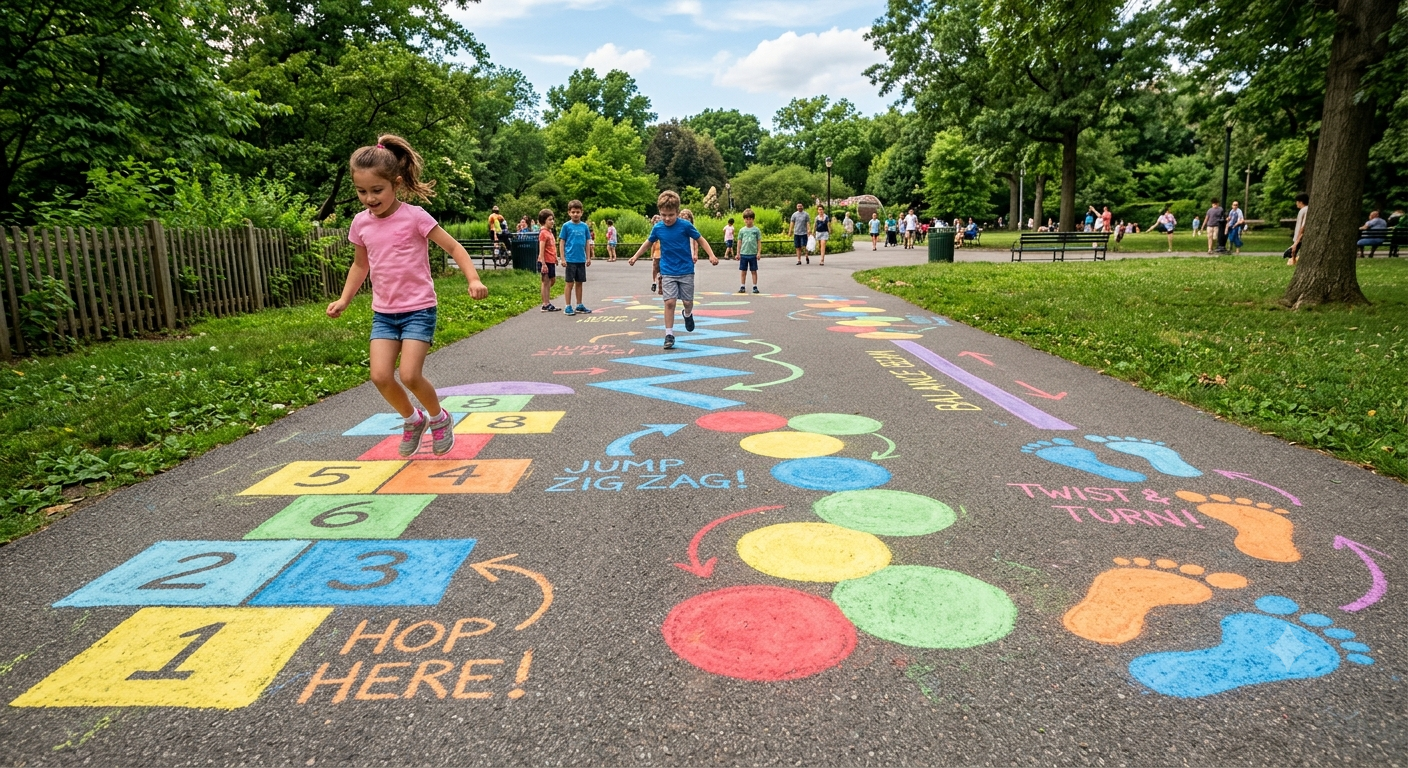
17. Shape Hopscotch
- Materials: Sidewalk chalk or painter's tape.
- How: Create a path of large shapes. Call a shape for children to jump onto, or let them move from shape to shape.
- Learning: Gross motor control, listening, and quick recognition.
- Variation: Add instructions such as “hop to a shape with three sides.”
18. Make Shapes With Your Body
- Materials: Open floor space; partners are optional.
- How: Use arms, fingers, or whole bodies to form shapes. Two or three children can work together.
- Learning: Body awareness, cooperation, and spatial planning.
- Variation: Show a shape card briefly, hide it, and ask children to recreate it from memory.
19. Outdoor Chalk Shape Path
- Materials: Sidewalk chalk.
- How: Draw a route of circles, triangles, rectangles, spirals, and arrows. Assign a movement to each shape.
- Learning: Shape recognition, motor planning, and following directions.
- Variation: Let children design the path and explain the movement rules.
20. Shape Scavenger Hunt
- Materials: Picture list or a camera used by an adult.
- How: Search a yard, park, or neighborhood for gates, signs, wheels, windows, stones, and other shaped objects.
- Learning: Observation and transferring classroom knowledge to the wider environment.
- Variation: Compare flat shapes with solid objects, such as a circle sign and a sphere-shaped ball.
21. Musical Shapes Game
- Materials: Large paper shapes and music.
- How: Place shapes around the floor. Children move while music plays and stand on a shape when it stops.
- Learning: Listening, self-control, and shape naming.
- Variation: Ask children to describe their shape before the music begins again.
Sensory and Everyday Learning Ideas
Learning shapes for preschoolers also happens through sensory play and routines.
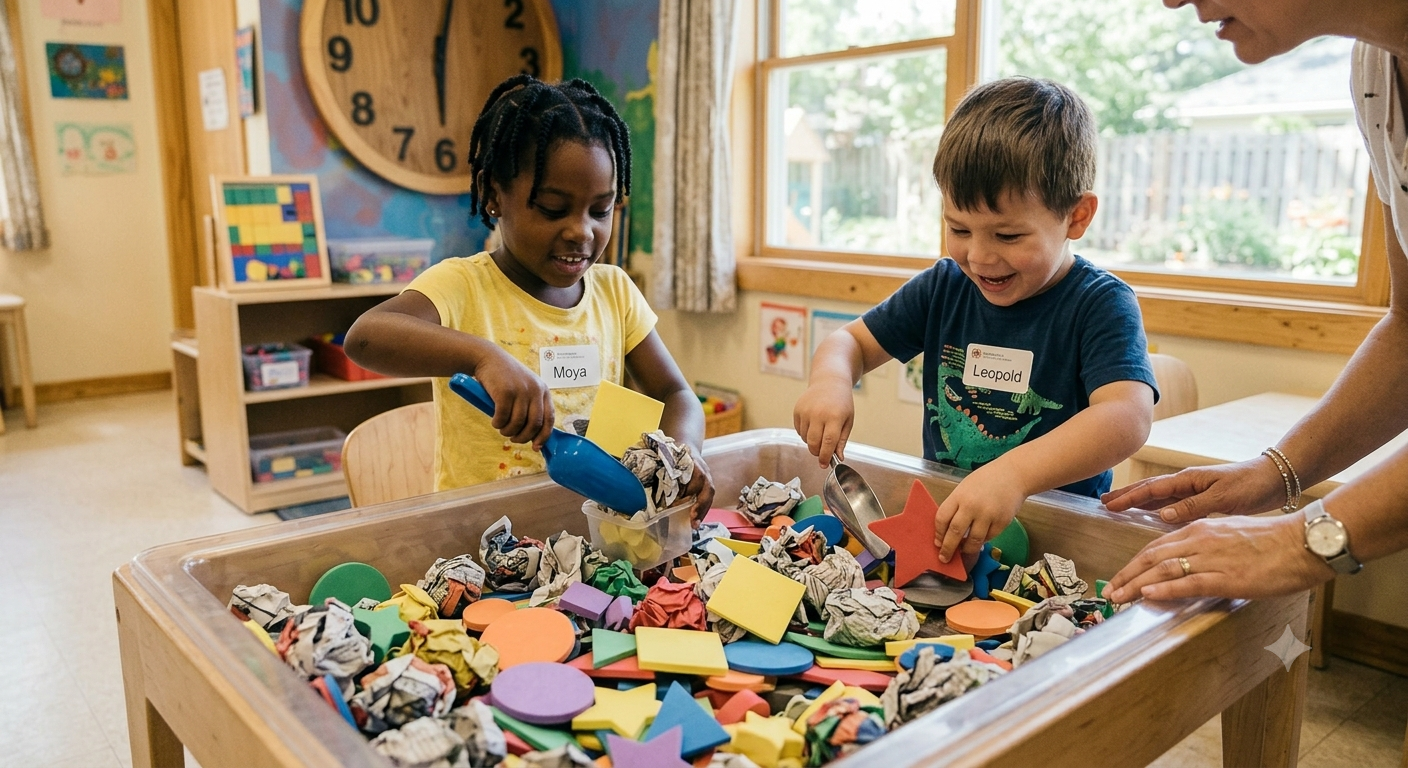
22. Shape Sensory Bin
- Materials: Large foam shapes, scoops, cups, and a safe filler such as fabric scraps or crumpled paper.
- How: Hide shapes for children to find, name, sort, and trace.
- Learning: Tactile exploration and focused attention.
- Variation: Reduce the filler or use a quiet tray for children who prefer less sensory stimulation.
23. Shape Snacks
- Materials: Age-appropriate foods and safe cutters used by an adult.
- How: Notice circles in cucumber slices, rectangles in toast, triangles in sandwiches, or spheres in berries. Sort or arrange food before eating.
- Learning: Everyday classification and descriptive language.
- Variation: Make a snack picture while considering allergies, choking risks, and family food preferences.
24. Find Shapes During Story Time
- Materials: Picture books.
- How: Pause to notice shapes in illustrations. Ask children to trace a shape in the air or find another on the page.
- Learning: Visual attention, vocabulary, and book conversation.
- Variation: Read the story first for enjoyment, then revisit selected pages for a shape hunt.
25. Shape Sorting During Cleanup
- Materials: Labeled shelves or bins.
- How: Sort blocks, puzzle pieces, lids, and classroom materials by shape as part of cleanup.
- Learning: Independence, classification, and applying math during routines.
- Variation: Change the rule: sort by shape today, then by size, material, or use tomorrow.
Easy Shape Activities Using Household Items
You can do effective shaping activities at home without any special kits. Food containers, boxes, bottle caps, paper plates, cookie cutters, blocks, magazines, painter's tape, sponges and craft sticks can be used as sorting tools, stamps, building pieces or movement games.
Use large, strong, non-toxic materials. Monitor bottle caps, food, scissors, staples and sensory bin fillers. Do not leave small loose parts around for children who put objects in their mouths and modify activities to the child's age and ability.
How to Teach Shapes to Preschoolers Effectively
When you begin to introduce shapes to preschoolers, start with familiar objects and teach only a few shapes at a time. Let children touch, trace, build, turn, sort and move shapes around. Use the same shape words at meal time, clean up time, walks, block play, and reading.
Compare sides, corners, curves, size and direction. If you rotate a triangle, it is still a triangle. If you rotate or resize a square, it is still a square. Head Start promotes comparison across sizes and orientations.
- What form do you see?
- How do you know it's a triangle?
- Can you find another object that is the same shape?
- What happens if we turn the shape the other way?
- Which shapes have straight edges?
- What shapes can roll?
Allow children time to think. Praise the effort, not the fixing of every mistake right away. Incorporate shape learning into songs, books, movement, art, blocks and pretend play. NAEYC asserts that guided play, which involves following children's interests with questions and support, can help children learn about space and geometry.
Explore our early-education activity hub and guide to why child development matters.
Adapting Shape Activities for Different Learners
For younger or beginning learners use two or three basic shapes, large high contrast pieces, simple matching, and one direction at a time. Do things you know how to do.
To make it more challenging, add less common and 3D shapes, talk about sides and corners, make patterns, combine shapes into pictures, or sort by two features.
Some inclusive adaptations might include textured outlines, raised foam shapes, picture cues, repeated demonstrations, movement breaks, quieter materials, fewer choices or a low-clutter workspace. Accept pointing, touching, matching, signing, or assistive communication rather than requiring speech. Change the support so that the activity is not a test.
Common Mistakes to Avoid
- To do too many shapes at the same time
- Solely dependent on worksheets
- Correcting children before they get to watch
- Showing a shape in only one size, colour or direction
- The emphasis is on names, without reference to features
- Turning every fun moment into a formal lesson
- Using pieces that are too small, or sharp or unsafe
Discover
Frequently Asked Questions
What shapes should a 3-year-old know?
Many three-year-olds are starting to recognise and name familiar circles and squares, and some can name triangles. They may still be confused by shapes, or only recognise them in familiar positions. Head Start refers to this as a developmental progression, not a strict test. Provide circles, squares and triangles in various sizes and directions for fun exposure.
What shapes should a 4-year-old know?
Many 4-year-olds can identify a greater variety of common shapes and start to compare their attributes. They might see that triangles have three sides or that circles have no corners. Manage expectations: progress is affected by experience, language, interests, learning needs etc. The CDC suggests helping 4-year-olds notice colours, shapes, and sizes in everyday activities.
How do you introduce shapes to preschoolers?
A plate is round, a block face is square, and a sandwich can be triangular; these are three shapes related to real objects. Let children handle and compare objects before you introduce cards or worksheets. Say the words again in a natural way. Use movement and art. Have children notice sides, corners and curves.
What is the easiest shape activity for preschool?
Usually a shape hunt is the easiest to do and requires little preparation. Select one shape, e.g., a circle, and see if you can find examples of it in the room. When the child is familiar with the game, introduce a second shape or picture. You can do this activity at home, preschool, outside, or when running errands.
How can parents teach shapes at home?
Compare plates and boxes, look for signs, sort lids, build with blocks, find shapes in books. Long lessons are not as effective as short conversations repeated over time. NAEYC suggests using everyday family activities and conversations to investigate shapes.
Should preschoolers learn 3D shapes?
Yes, preschoolers can begin hearing and using simple 3D shape words such as sphere, cube, cylinder, and cone. Keep the experience concrete: roll a ball, stack a cube, examine a can, or compare a cone with a triangle. Formal mastery is unnecessary; the goal is to notice how solid objects look, move, stack, and roll.
Why does my child confuse squares and rectangles?
Squares and rectangles have many things in common. They both have four straight sides and four corners. Children might first see them as completely different pictures instead of related shapes. Compare them side by side. Build both with sticks. Talk about what is the same and different. If you're being careful about orientation, don't call a tilted square a “diamond”.
Final Thoughts
The best shapes ideas for preschool are fun shape activities that naturally fit into play, movement, conversation, art, food, books, and routines. Children do not need expensive materials or long lessons. They need opportunities to touch, compare, build, sort, describe and create.
Follow the child's interest and revisit favorites in new ways. Explore the Talk-EarlyEd early-education resources for more preschool learning ideas, or review daycare selection guidance when comparing learning environments.
References
- NAEYC: National Association for the Education of Young Children - https://www.naeyc.org
- Head Start Early Learning Outcomes Framework - https://eclkc.ohs.acf.hhs.gov
- CDC: Milestones for 4-year-olds - https://www.cdc.gov/ncbddd/actearly/milestones/index.html