Key Summary
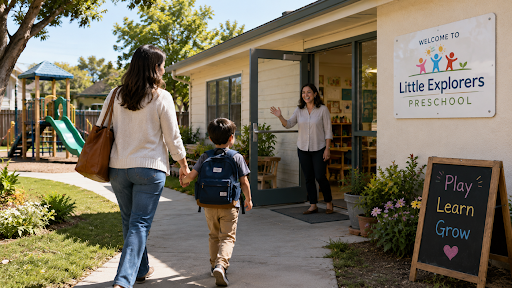
Pasadena offers diverse preschool options, including Montessori, play-based, nature-based, faith-based, and traditional early learning programs. The best preschool is the one that matches your child's temperament, your family's schedule, and the classroom environment where your child feels safe, supported, and excited to learn.
Table of Contents
Quick Answer
Pasadena offers a wide variety of preschool programs for different children and families. Whether you are looking for Montessori education, a play-based classroom, a nature-inspired learning environment, or a traditional preschool program, the best fit depends on educational philosophy, classroom environment, teacher experience, location, schedule, and your child's personality and learning style.
Choosing your child's first preschool is an exciting milestone, but it can also feel overwhelming. With so many excellent preschool programs in Pasadena, parents often wonder where to begin. Should you choose a Montessori school? Is a play-based program better? What should you look for during a school tour? And when should you start the enrollment process?
The truth is, there is not one preschool that is perfect for every child. Every family has different priorities, and every child learns, grows, and develops in their own unique way. The best preschool is one that provides a safe, nurturing environment while supporting your child's social, emotional, physical, and cognitive development.
Pasadena is home to a variety of high-quality preschool programs, including Montessori schools, play-based learning environments, faith-based programs, and child-centered early education centers. Understanding these options can help you make a confident decision that supports your child's learning journey.
This guide introduces well-known preschool options in Pasadena, explains different educational approaches, and shares practical tips to help families choose a preschool that aligns with their child's needs and their family's goals.
Key Takeaways
- Pasadena offers diverse preschool options, including Montessori, play-based, nature-based, and traditional early learning programs.
- Visiting schools in person is one of the best ways to determine whether a preschool is the right fit for your child.
- A nurturing environment, experienced teachers, and strong family communication often matter more than choosing the most popular school.
- Children develop best when learning is developmentally appropriate, engaging, and enjoyable.
- Planning ahead is important because many Pasadena preschools begin accepting applications several months before the school year starts.
Expert Reviewed
Reviewed by Daniela Morales, Special Needs and Early Intervention Contributor.
Daniela Morales writes about early learning, inclusive education, and family support systems. This guide has been reviewed to ensure it reflects developmentally appropriate practices and provides practical information that supports families making important early education decisions.
How This Guide Was Created
This guide was developed using publicly available information from preschool websites, early childhood education resources, and established best practices for preschool quality. Rather than ranking schools from best to worst, this article provides an overview of respected preschool programs in Pasadena while helping parents understand the different educational approaches available.
Because admissions requirements, tuition, age groups, and program availability may change, families should always contact each preschool directly or visit its official website for the latest information.
Preschool Directory: Well-Known Preschools in Pasadena
The following table highlights several established preschool programs serving Pasadena families. Each school has its own educational philosophy, classroom environment, and admissions process, so parents are encouraged to explore the options that best match their child's needs.
| Preschool | Educational Approach | Approximate Ages | Official Website |
|---|---|---|---|
| The Child Educational Center (CEC) | Nature-based and play-based learning | Early childhood | https://www.ceconline.org |
| Pasadena Montessori School | Montessori | Preschool to elementary | https://www.pasadenamontessori.org |
| Pacific Oaks Children's School | Progressive, child-centered | Preschool | https://www.pacificoaks.edu |
| Discovery Days Preschool | Play-based learning | Preschool | Contact school directly |
| Kiddie Academy of Pasadena | Educational childcare and STEAM | Infant to Pre-K | https://kiddieacademy.com |
| Evergreen Montessori Academy | Montessori | Preschool | Contact school directly |
| Clairbourn Preschool | Traditional early childhood education | Early childhood | https://www.clairbourn.org |
Important: Inclusion in this directory does not represent a ranking or endorsement. Every preschool has its own strengths, educational philosophy, and admissions process. Families should visit schools, meet teachers, and evaluate each program based on their child's individual needs.
Why Preschool Matters
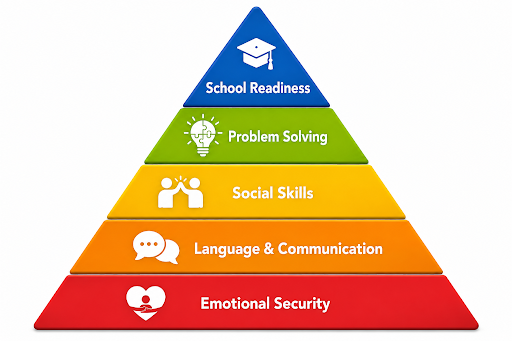
The preschool years lay the foundation for lifelong learning. During this stage, children develop essential skills that extend far beyond recognizing letters and numbers. They learn how to communicate, solve problems, build friendships, express emotions, and become more independent.
A high-quality preschool helps children build confidence, strengthen communication, practice cooperation, improve problem-solving abilities, develop fine and gross motor skills, regulate emotions, explore creativity, and build routines that prepare them for kindergarten.
What Makes Pasadena a Great Place for Early Childhood Education?
Pasadena has long been recognized for its commitment to education and family-friendly communities. Parents have access to a diverse range of preschool programs, experienced educators, museums, libraries, parks, and enrichment opportunities that support children's learning both inside and outside the classroom.
Whether you are looking for a structured academic environment, a child-led learning approach, or a balance of both, Pasadena offers programs designed to nurture curiosity, creativity, and a lifelong love of learning.
How to Choose the Right Preschool
Every child learns differently, so it is important to choose a preschool that supports your child's development while fitting your family's routine and values.
Here are some of the most important factors to consider.
1. Educational Approach
Different preschools use different teaching methods. Some emphasize child-led exploration, while others provide more structured classroom learning. Choose a program that matches your child's personality and learning style rather than simply following current trends.
2. Teachers and Classroom Environment
Pay attention to how teachers interact with children during your visit. Warm, patient, and engaged teachers often create classrooms where children feel confident, secure, and excited to learn.
Observe whether children appear happy, involved in activities, and comfortable asking questions or exploring independently.
3. Class Size
Smaller class sizes often allow teachers to provide more individual attention. Ask about the teacher-to-child ratio and how children receive support throughout the day.
4. Safety
A quality preschool should have secure entrances, supervised playgrounds, emergency procedures, and clear health policies. Do not hesitate to ask about staff training and daily safety practices.
5. Parent Communication
Strong communication between teachers and families helps children succeed. Ask how the school shares updates about your child's progress, daily activities, and important announcements.
6. Schedule and Location
Practical considerations matter too. Consider school hours, distance from home or work, transportation, and whether the daily schedule fits your family's routine.
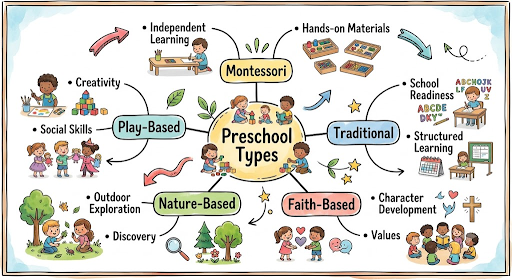
Understanding Different Preschool Approaches
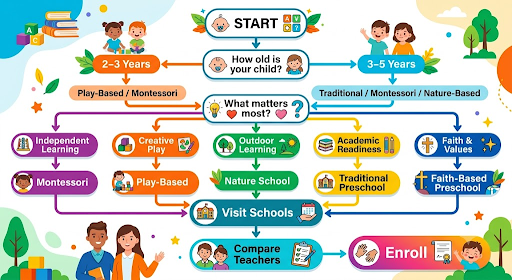
One of Pasadena's strengths is the variety of educational philosophies available. Understanding the basics of each approach can help you decide which environment feels right for your child.
Montessori
Montessori classrooms encourage children to learn independently using hands-on materials. Teachers guide rather than direct learning, allowing children to explore at their own pace while building confidence, concentration, and practical life skills.
Best for: Children who enjoy independence, routine, and hands-on learning.
Play-Based Learning
Play-based programs believe that children learn best through exploration, creativity, and meaningful play. Activities such as storytelling, art, music, dramatic play, and outdoor games help children develop communication, social, and problem-solving skills.
Best for: Children who learn through imagination, movement, and interaction with others.
Nature-Based Learning
Nature-based preschools use outdoor environments as part of everyday learning. Children explore gardens, observe nature, and participate in hands-on activities that encourage curiosity and physical development.
Best for: Families who value outdoor exploration and experiential learning.
Traditional Preschool
Traditional preschool programs combine structured lessons with play-based activities to prepare children for kindergarten. Daily routines often include early literacy, math, art, music, and group learning experiences.
Best for: Families looking for a balanced approach to school readiness.
Faith-Based Preschools
Faith-based programs combine early childhood education with religious values and character development. Many also include academic learning, creative play, and community-building activities.
Best for: Families seeking an education that reflects their faith and values.
Which Preschool Is Right for Your Child?
There is no single best preschool for every child. Instead, think about where your child is most likely to feel comfortable, confident, and motivated to learn.
If your child enjoys independence and hands-on activities, a Montessori program may be a good fit. If they love imaginative play and learning through exploration, a play-based classroom might be the better choice. Families who value outdoor experiences may prefer a nature-based program, while others may appreciate the structure of a traditional preschool or the community focus of a faith-based school.
Questions Every Parent Should Ask
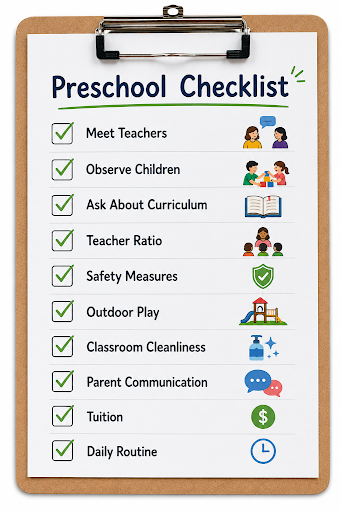
Meeting with preschool staff is an opportunity to gather information and understand whether the program aligns with your family's expectations.
- What educational approach does your preschool follow?
- What is the teacher-to-child ratio?
- What does a typical daily schedule look like?
- How do teachers communicate with parents?
- How do you help children adjust during their first few weeks?
- How do you handle conflicts between children?
- How do you support children with different learning needs?
- What safety and emergency procedures are in place?
- How do you prepare children for kindergarten?
- Are meals and snacks provided?
- What are your tuition and enrollment policies?
- How far in advance should families apply?
Preschool Readiness Checklist
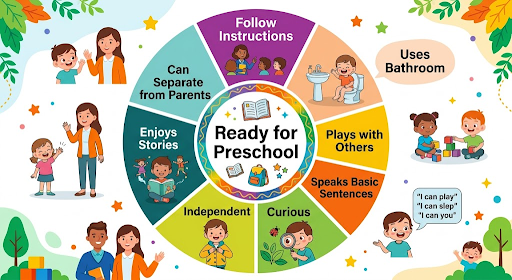
Every child develops at their own pace, so there is not a perfect age or checklist for starting preschool. However, many children are ready when they begin showing some of the following skills.
- Can spend short periods away from parents or caregivers.
- Shows curiosity about other children.
- Follows simple instructions.
- Communicates basic needs.
- Participates in simple group activities.
- Begins practicing independence, such as washing hands or putting away toys.
- Shows interest in books, stories, music, or creative play.
When Should You Apply?
Many Pasadena preschools begin accepting applications several months before the school year starts, and some popular programs have waiting lists.
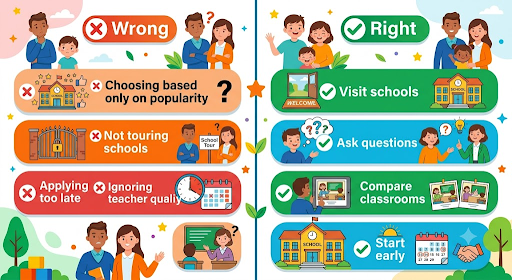
To improve your chances of securing a place, start researching schools 6-12 months before your preferred enrollment date, schedule tours early, ask about application deadlines and waitlists, prepare required documents, and keep a shortlist of two or three schools in case your first choice is full.
Common Mistakes Parents Make
Choosing a preschool is an important decision, and it is easy to focus on factors that may not matter as much in the long run.
Choosing a School Based Only on Reputation
A well-known preschool may not necessarily be the best fit for your child's personality or learning style.
Waiting Too Long to Apply
Many schools fill available spaces months before the school year begins. Starting your search early gives you more options.
Skipping the School Tour
Photos and websites are helpful, but visiting a classroom allows you to observe teacher interactions, classroom routines, and the overall environment.
Focusing Only on Academics
Preschool is about much more than learning letters and numbers. Social skills, emotional development, creativity, communication, and confidence are equally important during the early years.
Not Asking Questions
Do not hesitate to ask about curriculum, safety, discipline, parent communication, or classroom routines. A quality preschool will welcome your questions and be transparent about its program.
Discover
Frequently Asked Questions
What is the best age to start preschool?
Many children begin preschool between the ages of 2 1/2 and 4 years, depending on their developmental readiness and the requirements of individual schools.
How far in advance should I apply?
It is a good idea to begin researching schools six to twelve months before your preferred start date, especially if you are interested in a popular preschool program.
What is the difference between daycare and preschool?
Daycare primarily focuses on childcare while supporting children's daily needs. Preschool combines care with structured early learning experiences that prepare children for kindergarten through play, social interaction, and age-appropriate educational activities.
Should I choose Montessori or play-based learning?
Neither approach is better for every child. Montessori programs encourage independence and self-directed learning, while play-based programs emphasize learning through exploration, creativity, and social interaction. Consider your child's personality and learning style when making your decision.
How long is a typical preschool day?
Schedules vary by school. Some offer half-day programs, while others provide full-day options to accommodate different family needs.
What should I bring to a preschool tour?
Bring a notebook or use your phone to take notes, prepare a list of questions, and, if possible, bring your child so you can observe how they respond to the classroom environment.
Final Thoughts
Choosing a preschool is about finding a place where your child feels safe, supported, and excited to learn. While every family has different priorities, the best preschool is one that encourages curiosity, builds confidence, and nurtures your child's social, emotional, and academic development.
Pasadena offers a variety of excellent early learning programs, each with its own strengths and educational philosophy. By researching your options, visiting schools, asking thoughtful questions, and considering your child's unique personality, you can make a decision that supports a positive start to their educational journey.
Remember that no preschool is perfect for every child. Focus on finding an environment where your child feels welcomed, valued, and encouraged to grow. With the right foundation, preschool can become the beginning of a lifelong love of learning.
For related guidance, explore browse the full LA resources directory.