
Key Summary
This blog explores three foundational approaches to child development: Piaget’s cognitive stages, Erikson’s psychosocial stages, and Vygotsky’s sociocultural theory. Each model offers unique insights into how children think, feel, and learn. Together, they provide a complete framework for understanding a child’s mental, emotional, and social growth. These theories help parents and educators respond effectively to developmental needs.
Table of Contents
Parents frequently find it difficult to understand their child’s behavior, ability to learn, or emotional needs. And all too often, this results in frustration and guilt on the part of the parents and even missed signals about delayed development. Without a strong foundation, it is impossible to bring out the full potential and capacities of a child.
Understanding the three main techniques of child development, parents can tailor strategies to improve communication and better lead children. These theories are maps of the world that lead to better parenting, whether we’re talking about preschool temper tantrums or preteen attitude swings.
1. Cognition: The Stages of Cognitive Development - Piaget's Theory
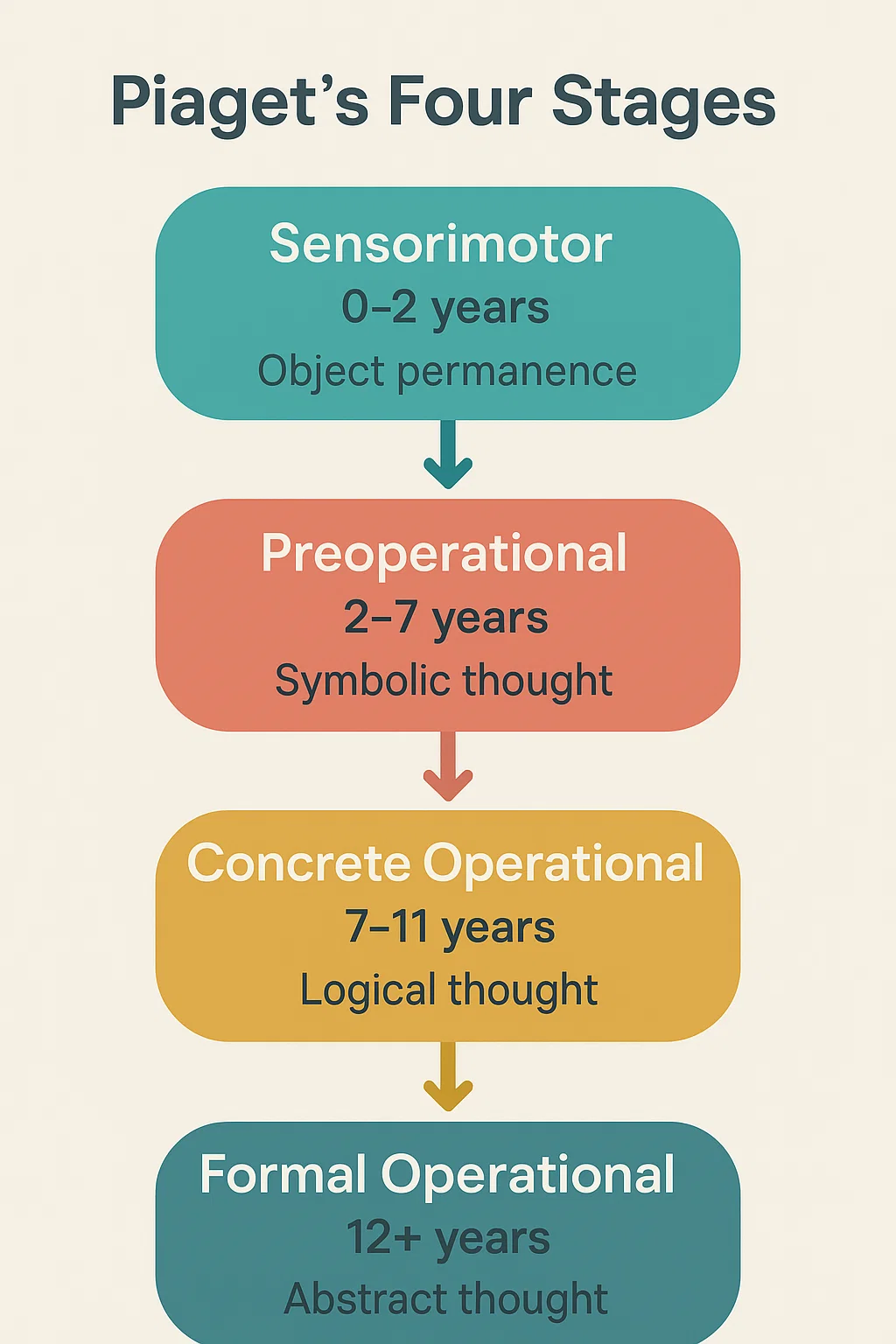
Jean Piaget's theory of cognitive development explains how a child constructs a mental model of the world around them. Piaget referred to the four stages that occur in a child's development as being pre-operational, sensorimotor, formal operational, and concrete operational.
And each represents a major shift in how the child is making sense of the world, and each builds on the one before it.
- Sensorimotor stage: It covers the span of time of 0–2, when the child learns to interact with the physical self by interacting with the world. Object permanence then develops: that things continue to exist even when out of sight.
- Preoperational stage: Symbolic thought develops during this stage (2–7 years). Reasoning is still developing, and children often struggle to see things from others’ point of view.
- Concrete operational stage: Experienced between 7 and 11 years of age. Children begin to understand logical concepts such as conservation.
- Formal operational stage: From about age 12 onward, children can think abstractly and hypothetically.
These stages are outlined in Piaget’s influential book, "The Origin of Intelligence in Children" (1952). He stressed that children are not little adults—they think differently and progress through unique phases. Understanding the theory helps parents reset expectations about what kids are capable of during play. A 2-year-old who throws a fit about sharing is not being “bad”; they may not yet fully understand empathy.
This is why resources like Two Positive Parenting Tips for Toddlers (2–3 Years) align well with Piaget’s stages, offering age-appropriate responses to behavior.
2. Erikson and the Eight Stages of Man
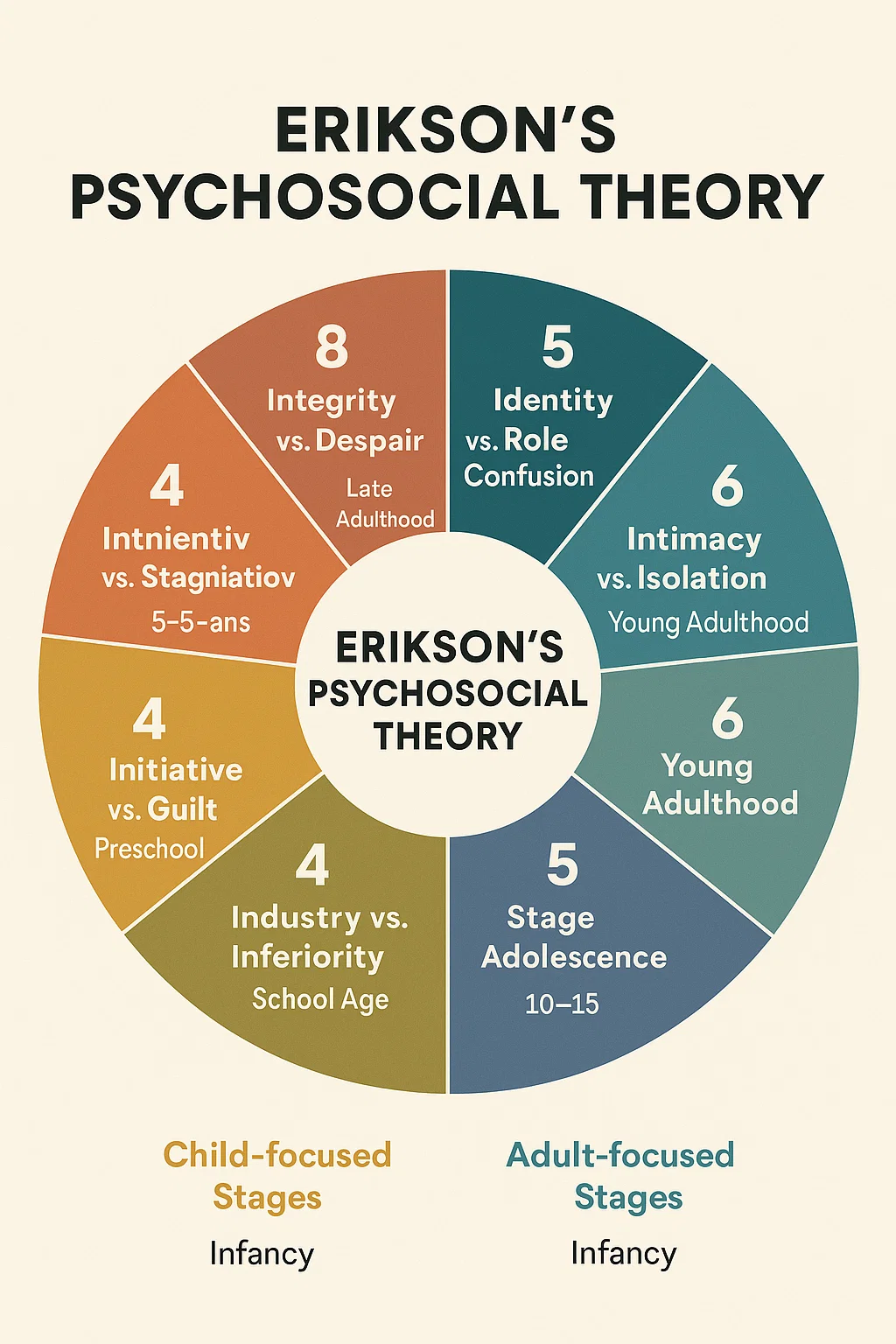
Erik Erikson’s theory is distinct in that it focuses on the psychosocial tasks that children encounter at various stages of life. Erikson’s theory describes 8 stages, and every stage is associated with a conflict that has to be resolved in order to develop healthily both emotionally and psychologically.
In early childhood, toddlers move through the Autonomy vs. Shame and Doubt stage (around ages 2–3). Here, toddlers push for independence—selecting clothes or serving themselves. Supportive guidance helps them build confidence without feeling overly controlled.
In middle childhood (6–12 years), a child goes through the industry vs. inferiority stage. Success breeds confidence and competence; failure can breed feelings of inferiority. Which is why practices from What Are Two Positive Parenting Tips for Middle Childhood (6–8 Years) are so essential to raise resilient and capable children.
Erikson’s developmental model, outlined in his landmark book Childhood and Society (1963), emphasizes the central role of emotion in development and the importance of positive attachment, praise, and support.
3. Vygotsky and His Theory of Sociocultural Development
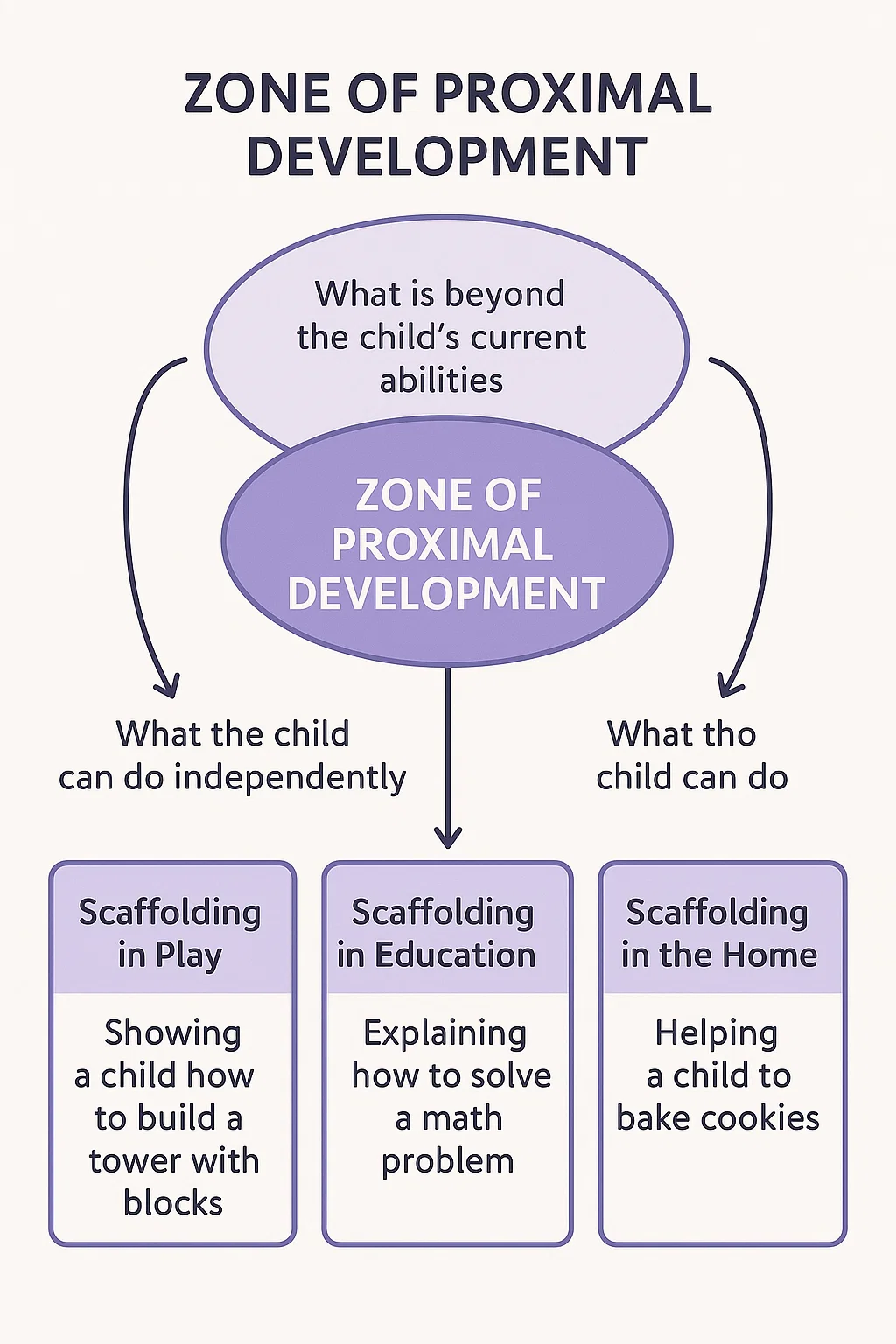
According to Lev Vygotsky, a child's cognitive development is significantly influenced by their culture and social interactions. Vygotsky concentrated on the Zone of Proximal Development (ZPD), which is the area between what a child can accomplish on their own and what they can accomplish with assistance, in contrast to Piaget, who placed more emphasis on stages.
This theory places a strong emphasis on scaffolding, in which older peers, parents, or teachers offer direction until a child masters a skill. Scaffolding is, for instance, guiding a child through a sentence while gradually urging them to read on their own. This method promotes peer interaction, cooperative learning, and language acquisition as essential components of growth.
In Mind in Society: The Development of Higher Psychological Processes (1978), Vygotsky lays out his revolutionary viewpoint and emphasizes the role that adult guidance and cultural tools play in speeding up mental processes. His theory fits in nicely with contemporary teaching methods like differentiated instruction and guided learning. It also explains why childcare facilities like Little Munchkins Daycare, which promote socialization and interactive learning, are essential for development.
Quick Compare Table: Three Developmental Approaches
| Theory | Key Focus | Key Contributor | Strengths | Limitations |
|---|---|---|---|---|
| Piaget’s Cognitive | Internal cognitive stages | Jean Piaget | Clear milestones; structured progression | Ignores social/cultural influences |
| Erikson’s Psychosocial | Emotional and social conflicts | Erik Erikson | Emotional depth covers the lifespan | Lacks cognitive specificity |
| Vygotsky’s Sociocultural | Social interaction & cultural context | Lev Vygotsky | Encourages collaborative learning | Less structured; difficult to measure progress |
Discover
Frequently Asked Questions
Why should one know several theories of child development?
Every theory provides different perspectives on how children develop and learn, therefore guiding parents in their provision of assistance.
Can I combine all three theories?
Exactly. Combining components from all three will provide you with a comprehensive parenting and teaching toolkit.
Are these theories still applicable now?
Certainly. Even now, modern studies and parenting advice still cite these fundamental ideas in child psychology.
Final Thoughts
Parents, teachers, and other caregivers can make well-informed decisions regarding children's development by having a thorough understanding of these three distinct approaches to child development. These theories provide useful resources, whether you're promoting social interactions, emotional resilience, or structured milestones to support your child's learning.
Choosing the appropriate support network is another aspect of modern parenting, which is where childcare facilities and other similar options come in. The environment required for social, cognitive, and emotional learning can be created in a well-equipped daycare center, particularly if it integrates the ideas of Erikson's emotional development and Vygotsky's social learning.
References
- Piaget, J. (1952). The Origins of Intelligence in Children. - https://archive.org/details/originsofinte00piag
- Erikson, E. H. (1963). Childhood and Society. - https://archive.org/details/childhoodsociety00erik
- Vygotsky, L. S. (1978). Mind in Society: The Development of Higher Psychological Processes. - https://archive.org/details/mindinsocietydev00vygo