
Key Summary
Stimming is a broad term for repetitive movements or sounds that can occur in children with or without autism. Frequency, intensity, safety, and overall development matter more than one behavior alone. Do not punish self-regulating behaviors—focus on safety, triggers, and supportive alternatives, and talk with a pediatrician when harm, disruption, sudden change, or other developmental concerns appear.
Table of Contents
Quick Answer
Chewing, fidgeting, rocking, hand-flapping and other repetitive behaviours may happen in both typically developing and neurodivergent kids. They can assist a child to manage excitement, stress, sensory input or focus. The behaviour itself is not diagnostic of autism or any other condition. If it causes injury, interferes with eating, sleep, learning or participation, or occurs along with concerns about communication, social interaction, play or development, it is worth talking to your child’s paediatrician.
This guide walks you through what these behaviours can mean, how stimming differs from fidgeting and tics, what parents can safely try at home, and where families in Los Angeles can turn for developmental support.
Key Takeaways
- Stimming is a broad term for repetitive movements or sounds, and it can occur in children with or without autism.
- One behavior on its own rarely tells the whole story. Frequency, intensity, safety, and the child’s overall development matter more.
- Do not punish or shame a child for a self-regulating behavior. Focus on safety, triggers, and supportive alternatives.
- Talk with a pediatrician when the behavior causes harm, disrupts daily life, increases suddenly, or appears with other developmental concerns.
- California families with children under age 3 can contact Early Start or their local Regional Center for information about early-intervention evaluation and services.
What Is Stimming?
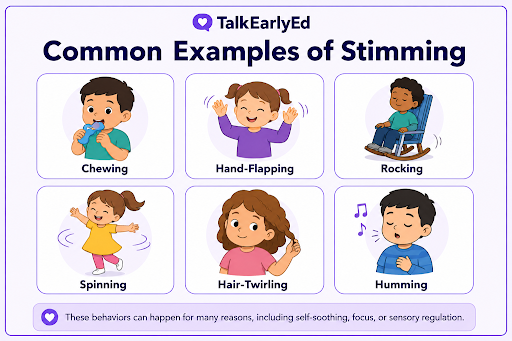
Stimming is short for self-stimulatory behaviour. It's often about repeated movements, sounds or actions that help a person regulate emotions, deal with sensory input, maintain attention, or just feel comfortable. Common examples are:
- Chewing clothing, pencils or toys
- Hand-flapping, finger movements or repeated tapping
- Rocking, swaying or spinning
- Hair-twirling, nail-biting or rubbing textures
- Humming, repeating sounds or repeating short phrases
Repetitive behaviours aren’t only for autistic kids. Mild forms, such as tapping a foot, clicking a pen or twirling hair while thinking, occur in adults and children without a diagnosis as well. Stereotyped movements and sounds are common and usually not a cause for concern unless they cause injury or interfere with everyday life, says Great Ormond Street Hospital.
Why Do Children Chew, Fidget or Stim?
Sensory regulation
Chewing, squeezing and repetitive movement can give strong body feedback. Some children seek this input when they are overwhelmed, understimulated or disorganised.
Self-soothing
Repetition can help a child manage excitement, anxiety, tiredness, transitions or new environments.
Focus
Children move more when they are focused. The movement may help focus rather than distract attention.
Exploration
Babies and toddlers learn naturally through mouthing, touching, moving and repeating actions. Whether a behaviour is expected depends on age and safety.
Communication
A behaviour may be a sign that the environment is too loud, a task is too difficult, a transition is stressful or the child needs a break.
Related Talk-EarlyEd guide: Sensory Activities for Infants explains how touch, movement, and other sensory experiences support early exploration.
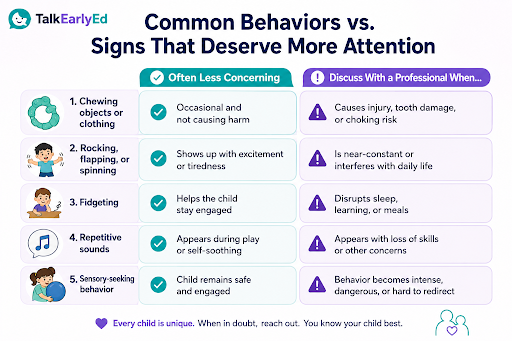
Common Behaviors vs. Signs That Deserve More Attention
| What you notice | Often less concerning when… | Discuss it with a professional when… |
|---|---|---|
| Chewing objects or clothing | It is occasional, occurs during focus or stress, and is not harmful. | It damages teeth or skin, creates a choking risk, replaces eating, or is difficult to redirect safely. |
| Rocking, flapping or spinning | It happens with excitement, fatigue or concentration and the child is happy and interested. | It causes injury, severe distress or prevents participation in everyday activities. |
| Fidgeting | It keeps the child engaged and can be supplemented with movement breaks or a safe object. | It consistently disrupts learning, sleep, meals or relationships. |
| Repetitive sounds | They happen during play, excitement, or self-soothing; no other concerns. | They appear with language regression, loss of skills or other developmental concerns. |
| Sensory-seeking behavior | The child is safe and continues to play, communicate and do routines. | The behavior becomes increasingly intense, dangerous or replaces important daily activities. |
Is Stimming a Sign of Autism?
Stimming by itself is no proof a child is autistic. According to the CDC, autism, also referred to as autism spectrum disorder or ASD, is characterised by variations in social communication and social interaction, as well as repetitive or restrictive behaviours or interests. Some non-autistic people also show similar behaviours.
Clinicians look at the child’s global developmental pattern including communication, gestures, shared attention, play, flexibility, sensory responses and repetitive behaviors. Concerns may be more significant when repetitive behaviors are accompanied by differences such as not consistently responding to one’s name, limited use of gestures, delayed language, difficulty sharing attention or interests, reduced reciprocal social play, or strong distress around changes in routine.
Don’t diagnose your child with one checklist or one behavior. If you are concerned about several areas of development, take the complete pattern to your child's pediatrician.
Stimming, Fidgeting and Tics Are Not the Same
| Behavior | Common pattern |
|---|---|
| Stereotypy or stimming | Often rhythmic, patterned, and repetitious. It could be soothing, fun, or grounding. |
| Fidgeting | Typically smaller movements related to waiting, restlessness, or concentration. |
| Tics | Sudden, brief, repetitive movements or sounds that may come and go or “wax and wane.” |
Related Talk-EarlyEd guide: Why Has My Child Suddenly Developed a Tic? provides a separate overview of sudden motor and vocal tics.
How to Help a Chewer or Stimulator Child
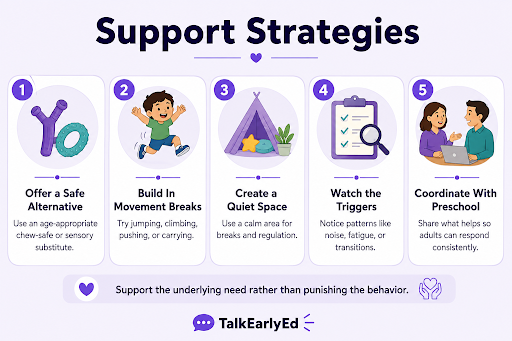
- Don’t shame or punish the behavior. If the behavior is helping the child to self-regulate, taking it away without support could create more distress.
- Keep an eye on the triggers. Notice if it increases with noise, changes, tiredness, hunger, hard tasks, or excitement.
- Offer a safe alternative. Ask a pediatrician, dentist, or occupational therapist about age-appropriate choices. All chewable products should be designed to be chewed and should be appropriate for the age of the child and used according to the safety instructions.
- Include breaks for movement. Jumping, climbing, pushing, pulling, carrying and outdoor play may help some children to meet movement needs.
- Change the environment. Eliminate unnecessary noise, give advance notice for transitions, provide a quiet area, and break difficult tasks down into smaller steps.
- Work with child care or preschool. Share what sets it off, what helps, and any safety plan so that adults respond consistently.
Related Talk-EarlyEd guide: Social-Emotional Activities for Infants covers responsive interaction and early co-regulation. For safe oral sensory tools, see Autism Chewing Toys.
Safety: When to Get Urgent Help
Seek urgent medical help if your child:
- Is choking, having difficulty breathing, or cannot swallow normally
- May have swallowed a button battery, magnet, sharp object or toxic material
- Has significant bleeding or injury from chewing
- Shows a sudden loss of skills, marked weakness, confusion or another abrupt health change
Button batteries and magnets can cause serious internal injury and require urgent evaluation. Do not delay emergency care while searching online. See the American Academy of Pediatrics guidance on swallowed foreign objects for more information.
When to Talk to a Professional
Consider contacting your child’s pediatrician when:
- Chewing or repetitive behavior is constant or increasing
- The behavior causes injury, tooth damage, skin irritation or a choking risk
- It interferes with eating, sleeping, learning, preschool or family routines
- It appears with concerns about speech, gestures, social interaction, play or other milestones
- Your child has lost a skill they previously used
- You are worried, even if the behavior does not fit a checklist
Who Can Help?
Pediatrician
A good first contact for developmental, behavioral, eating, sleep or autism concerns. The pediatrician can review the full picture and recommend screening or referrals.
Pediatric dentist
Helpful when chewing is damaging teeth, gums or the inside of the mouth.
Occupational therapist
Can evaluate how sensory and motor differences affect everyday activities and recommend individualized strategies.
Speech-language pathologist
Appropriate when there are concerns about speech, language, feeding or social communication.
Developmental specialist
May be recommended when several developmental areas need a more complete assessment.
An occupational therapist may recommend a personalized set of movement and sensory strategies for daily routines. These plans are sometimes called a “sensory diet,” but they should be based on an individual assessment rather than a generic online checklist.
Next Steps for Los Angeles Families
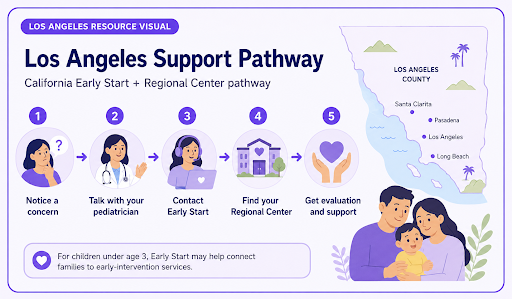
Parents and caregivers do not need to wait for a formal diagnosis before discussing developmental concerns. For children under age 3, California’s Early Start program coordinates early-intervention evaluation and services through Regional Centers and local education agencies. The California Department of Developmental Services states that evaluation, assessment, and service coordination are provided at no cost.
Before calling, write down:
- The behavior you are noticing
- When it began and how often it happens
- What usually happens before and after it
- Whether it causes injury or disrupts daily life
- Any concerns about speech, play, social interaction, eating, sleep or movement
- Questions you want to ask the pediatrician or intake coordinator
What to Track for One Week
A brief observation log can help you describe the pattern without trying to diagnose it. Record only what you see and what was happening around the behavior.
| Date/time | Behavior | What happened before? | Mood/environment | Duration | What helped? | Safety/daily-life impact |
|---|---|---|---|---|---|---|
| Day 1 | ||||||
| Day 2 | ||||||
| Day 3 |
Discover
Frequently Asked Questions
Is it normal for a 2- or 3-year-old to chew on everything?
Mouthing and chewing can be common in toddlers, especially during exploration, teething, concentration, or stress. Talk with a pediatrician or dentist when chewing is constant, unsafe, damages teeth or skin, replaces eating, or appears with other developmental concerns.
Does stimming always mean autism?
No. Repetitive movements and sounds can occur in autistic and non-autistic children. Clinicians consider the child’s full pattern of communication, social interaction, play, flexibility, sensory responses, and development.
What is the difference between fidgeting and stimming?
The terms overlap. Fidgeting often describes smaller movements during waiting or concentration, while stimming usually describes more repetitive, patterned movements or sounds that may provide sensory or emotional regulation.
Can stimming be stopped completely?
Stopping every repetitive behavior is not usually the goal. The priority is safety, comfort and participation. Harmful or disruptive behaviors may need supportive alternatives and professional guidance.
When should I request a developmental evaluation?
Request help when the behavior causes harm, interferes with daily life, increases suddenly, appears with loss of skills, or occurs alongside concerns about speech, gestures, play, social interaction or other milestones.
Final Thoughts
Chewing, fidgeting, and stimming are often ways children regulate sensory input, emotions, or focus. Looking at the full developmental picture—and prioritizing safety and support over shame—helps families decide when home strategies are enough and when professional guidance is the next step.
Medical disclaimer: This article is for educational purposes only and does not diagnose or treat any condition. Contact a qualified healthcare professional for advice about your child. Seek emergency help for breathing difficulty, choking, suspected battery or magnet ingestion, or other urgent symptoms.
For related guidance, explore safe chewing options for sensory-seeking behavior.
References
- CDC: Signs and Symptoms of Autism Spectrum Disorder - https://www.cdc.gov/autism/signs-symptoms/index.html
- CDC: Developmental Monitoring and Screening - https://www.cdc.gov/ncbddd/actearly/screening.html
- CDC: Concerned About Your Child’s Development? - https://www.cdc.gov/ncbddd/actearly/concerned.html
- Great Ormond Street Hospital: Stereotypies—Repetitive Movements or Sounds - https://www.gosh.nhs.uk/conditions-and-treatments/conditions-we-treat/stereotypies-repetitive-movements-or-sounds/
- American Academy of Pediatrics: Swallowed Foreign Object / Button Batteries - https://www.healthychildren.org/English/health-issues/conditions/abdominal/Pages/Dangerous-Button-Batteries.aspx
- California DDS: What Is Early Start? - https://www.dds.ca.gov/services/early-start/
- California DDS: Regional Center Listings - https://www.dds.ca.gov/rc/listings/