




Key Summary
Chewing is a common sensory-seeking behaviour in children with autism; it provides oral sensory input that helps the nervous system regulate.
Autism chewing toys (also called chewelry or chew tools) offer a safe, durable, and socially appropriate alternative to chewing on clothing, furniture, or non-food items. Choosing the right chew toy depends on the child’s age, chewing intensity, and specific sensory needs. Always prioritise food-grade silicone materials and age-appropriate designs.
If your child with autism frequently chews on their shirt collar, pencils, fingers, or any object within reach, you are not alone. Chewing is one of the most common sensory-seeking behaviours seen in children on the autism spectrum, and it serves a very real neurological purpose. Rather than trying to stop the behaviour entirely, many occupational therapists and early childhood specialists recommend redirecting it, and that is exactly where autism chewing toys come in.
This guide explains why children with autism chew, what makes a chewing toy safe and effective, and which options are best suited to different ages and chewing intensities. For a broader look at sensory tools for children with autism, see our guide on sensory toys for autism.
Table of Contents
Why Do Children with Autism Chew?
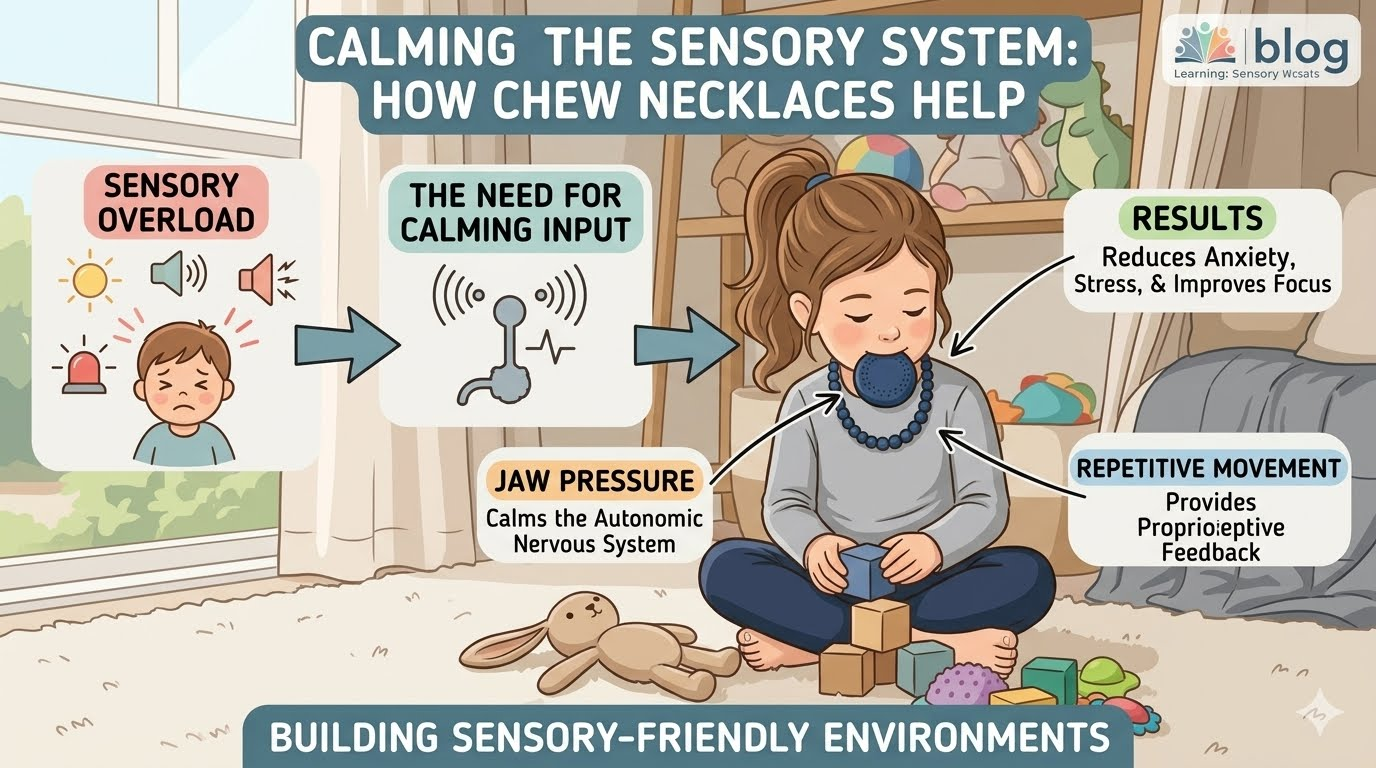
Chewing is an oral sensory behaviour rooted in the nervous system’s need for proprioceptive input, the deep pressure feedback that comes from the muscles and joints of the jaw. For many children with autism, the sensory processing system works differently. Chewing provides a calming, regulating input that helps the brain manage sensory overload, anxiety, stress, or simply the need for stimulation.
According to occupational therapists, oral sensory seeking through chewing is particularly common in children who are sensory-seeking (actively looking for more input) as opposed to sensory-avoiding (withdrawing from input). It is not a behavioural problem — it is the child’s nervous system communicating a need.
Common triggers for increased chewing include transitions between activities, loud or overstimulating environments, times of emotional stress or excitement, and periods of intense concentration. Understanding these triggers helps parents and caregivers use chewing tools proactively rather than reactively.
What to Look for in an Autism Chewing Toy
1. Food-Grade Silicone Material
Safety is non-negotiable. The best autism chewing toys are made from 100% food-grade silicone, the same material used in baby teethers and medical equipment. This means they are free of BPA, phthalates, PVC, and latex. Always verify the material certification before purchasing, especially for younger children.
2. Chewing Intensity Rating
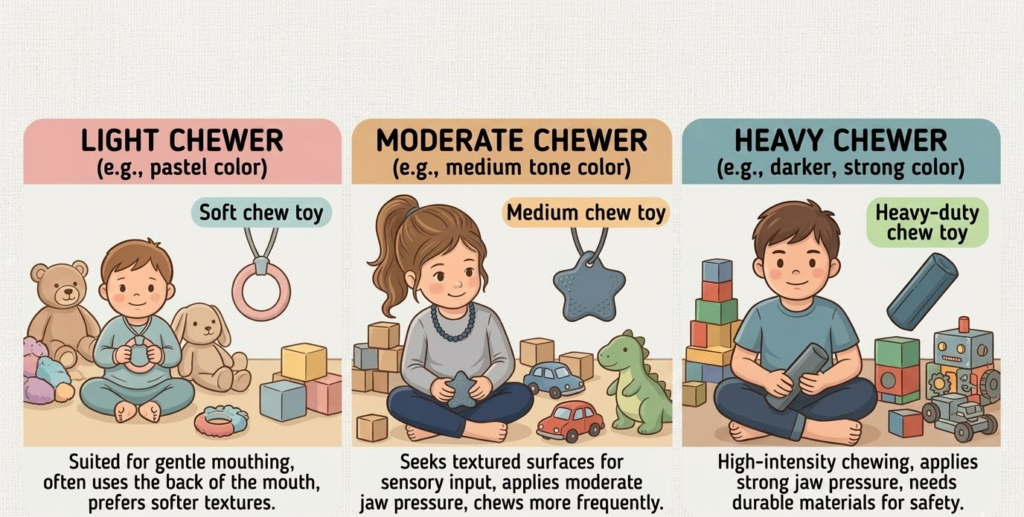
Chewing toys come in different durability levels designed for light, moderate, and heavy chewers. A child who chews lightly can use a softer, more pliable toy, while a child who bites with significant force needs a firmer, more durable option. Using a toy that is too soft for an intense chewer creates a choking hazard if pieces break off.
3. Age-Appropriate Design
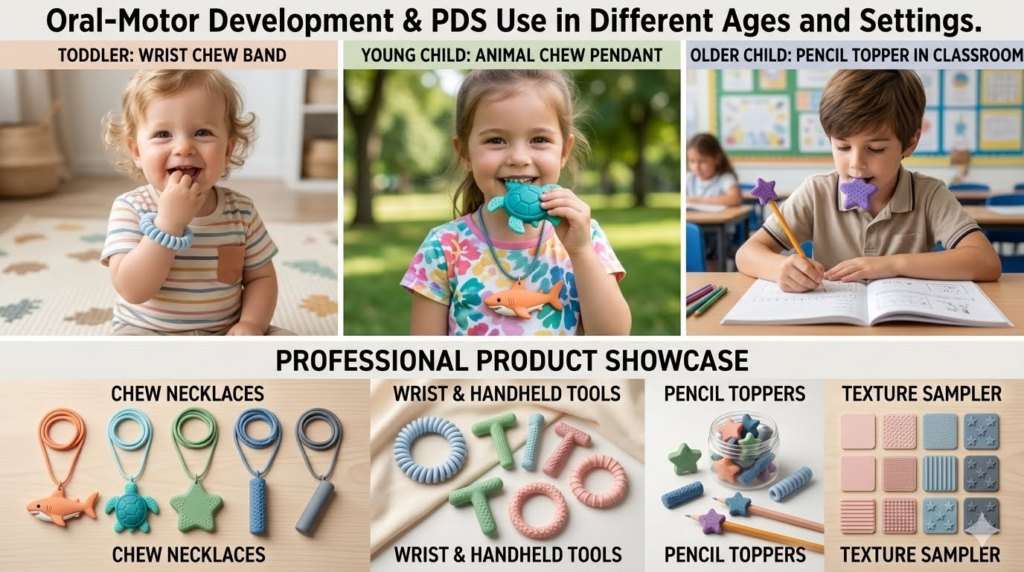
For younger children (2 to 5 years), pendant-style or wearable chew toys that attach to clothing or wrists keep the tool accessible without creating a distraction. For school-age children, pencil toppers and discreet necklace designs allow the child to use the tool in classroom settings without drawing attention.
4. Easy to Clean
Chewing toys are used frequently and need to be cleaned regularly. Look for toys that are dishwasher safe or can be boiled for sterilisation. Avoid designs with textured grooves or crevices that are difficult to clean thoroughly.
5. Appropriate Size
The toy must be large enough that it cannot be accidentally swallowed or become a choking hazard. For children under 3, ensure the toy meets relevant safety standards for that age group.
Best Types of Autism Chewing Toys by Age
| Age Group | Recommended Chew Type | Key Features |
|---|---|---|
| 2–3 years | Wrist chew bands, teether-style silicone toys | Soft grade, attached to wrist or clothing, bright colours |
| 3–5 years | Chewelry pendants, animal-shaped chews | |
| 5–8 years | Pencil toppers, discreet pendants | Medium-firm grade, classroom-friendly, neutral designs |
| 8+ years | Firm chew necklaces, P-shaped or T-shaped chews |
Top Autism Chewing Toy Recommendations
1. ARK Therapeutic Chew Necklaces
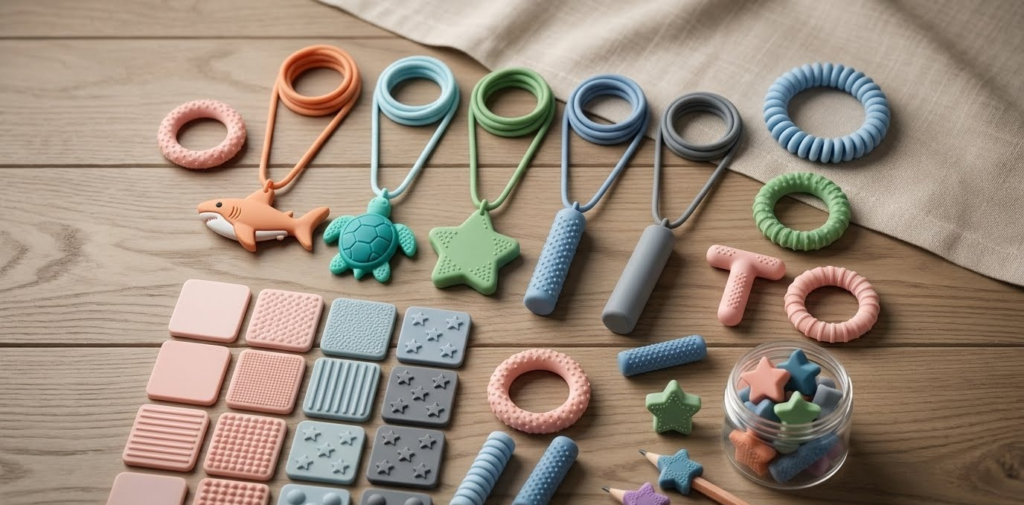
ARK Therapeutic is one of the most trusted brands in the speech and occupational therapy community. Their chew necklaces come in three firmness levels (soft, medium, and firm/XT) and are made from medical-grade silicone. Particularly popular with school-age children as they are discreet and durable.
2. Chewigem Sensory Chew Jewellery
Chewigem offers a wide range of wearable chewing tools designed to look like ordinary jewellery. This is particularly helpful for older children and teenagers who want a chewing tool that does not draw attention. Available in pendant, bracelet, and dog-tag styles.

3. SentioCHEW Sensory Chew Necklace
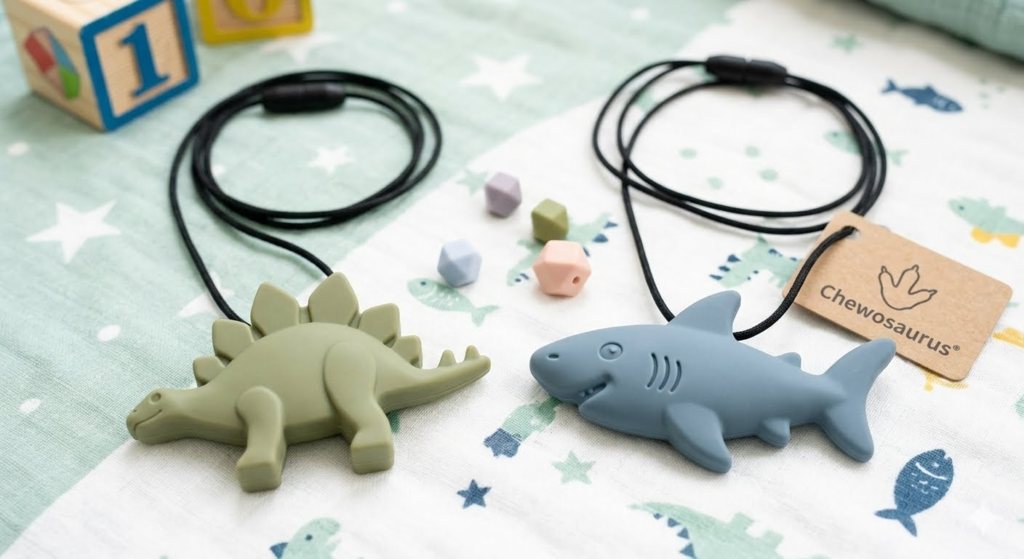
A popular choice for toddlers and preschoolers, the SentioCHEW necklace features a breakaway safety clasp, food-grade silicone construction, and a range of shapes (dinosaur, shark, star) that children find engaging. Available in light and medium chewing intensities.
4. Munchables Chew Necklaces
Designed specifically for autism and sensory processing needs, Munchables chew necklaces feature themed designs (dinosaurs, sports, nature) that appeal to specific interests. Made from FDA-approved silicone with a reinforced breakaway necklace cord.
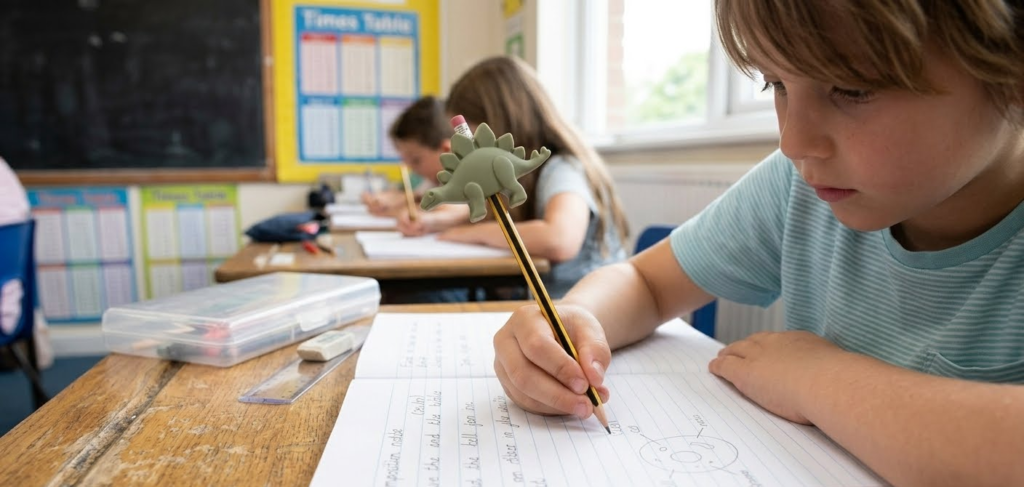
5. Pencil Top Chewers for Classroom Use
For children who chew during focused work, pencil top chewing tools attach to any standard pencil or pen and provide oral sensory input discreetly during class. Brands like ARK and Chewigem both offer pencil-top versions that are widely used in school settings.
Tips for Introducing Chewing Toys to Your Child
- Let the child choose: Offer 2 to 3 different shapes and let the child pick the one that appeals to them. Ownership and preference increase the likelihood of consistent use.
- Make it a positive transition: When redirecting chewing from clothing or objects, calmly offer the chew toy as an alternative without shaming the child for the original behaviour.
- Work with their occupational therapist: An OT can conduct a sensory assessment and recommend the right chewing intensity and tool type for your specific child.
- Have a rotation: Keep 2 to 3 different chew toys available and alternate them to maintain the child’s interest.
- Check for wear: Inspect chewing toys regularly for bite marks, thinning, or damage, and replace them before they become a safety risk.
Frequently Asked Questions
Are chewing toys safe for children with autism?
Yes, when purchased from reputable brands and chosen for the appropriate chewing intensity. Always select food-grade silicone toys, verify safety certifications, and check for wear regularly. Replace any toy that shows significant bite marks or deterioration.
What is the difference between light, medium, and heavy chew toys?
The firmness rating reflects the toy’s durability and resistance. Light chew toys are soft and pliable for gentle chewers. Medium toys have more resistance for moderate chewers. Heavy or XT-grade toys are the firmest and are designed for children who bite with significant force. Choosing the wrong grade, particularly one that is too soft for a heavy chewer, creates a safety risk.
Can chewing toys help with speech and language development?
Oral motor activities, including chewing, can support the muscle coordination and awareness needed for speech production. Oral motor work is often used alongside speech therapy for children with autism. Consult a speech-language pathologist for guidance specific to your child.
What age can children start using chew toys?
Age-appropriate chewing tools are available from toddler age (12 months+). Always choose a toy rated for your child’s age and size, and supervise young children during use. For children under 3, always choose toys that meet applicable safety standards for that age group.
My child only chews on their clothing. How do I transition them to a chew toy?
Start by placing the chew toy in the same location the child typically begins chewing — attached to their collar area or wrist. Gently redirect with the chew toy each time clothing chewing occurs, offering the toy as a positive alternative. Consistency and patience are key — transitions typically take 1 to 3 weeks of regular redirection.
Final Thoughts
Chewing is a valid and meaningful sensory behaviour for many children with autism — and providing a safe, appropriate outlet for it is one of the most straightforward ways to support your child’s sensory regulation. The right chewing toy, chosen for your child’s specific needs and chewing intensity, can reduce anxiety, improve focus, and give your child a tool they can rely on throughout their day.
For more on supporting children with autism through play and sensory tools, explore our full resource library at Talk Early Ed, including our guide on the best toys for kids with autism
References
ASHA – Oral Sensory Processing in Children: https://www.asha.org/practice-portal/clinical-topics/pediatric-feeding-and-swallowing/?srsltid=AfmBOop6SzneBmqrYYQwhgynQr-RnGZff1MRXrRfekgCXN-eo7UwIJnI
Autism Speaks – Sensory Issues in Autism: https://www.autismspeaks.org/sensory-issues
ARK Therapeutic – Chewing and Oral Sensory Seeking: https://www.arktherapeutic.com/?srsltid=AfmBOopRLhYNNA0mBQjT2nmyOrAxVzjSjlr3PRjvXEYlzVZfHp5zgTqT
Comments are closed